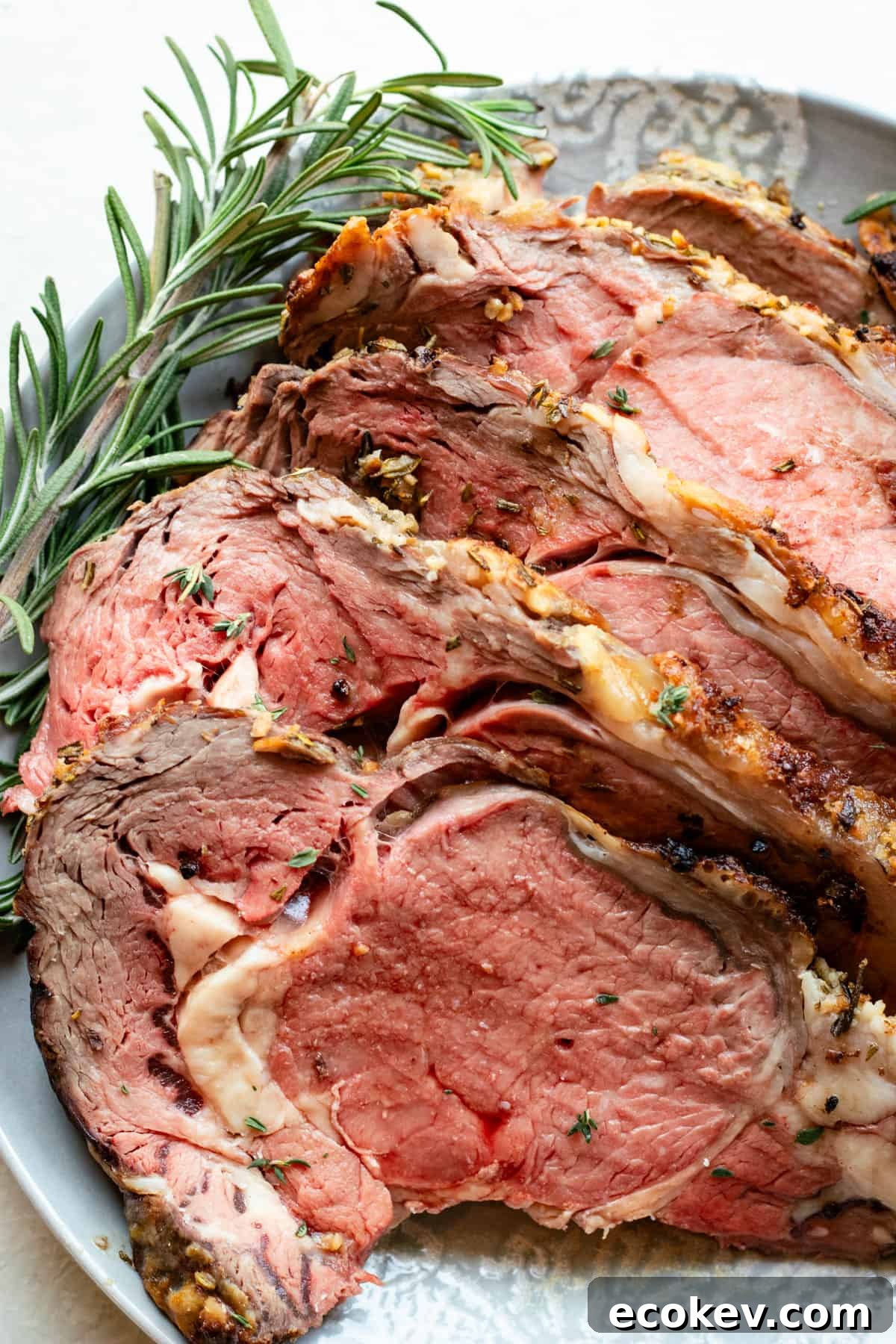
Our Prime Rib recipe uses a simple garlic and herb seasoning and clear, step-by-step instructions to help you roast a perfect boneless or bone-in standing rib. The interior stays tender and juicy while the exterior develops a flavorful, seasoned crust.
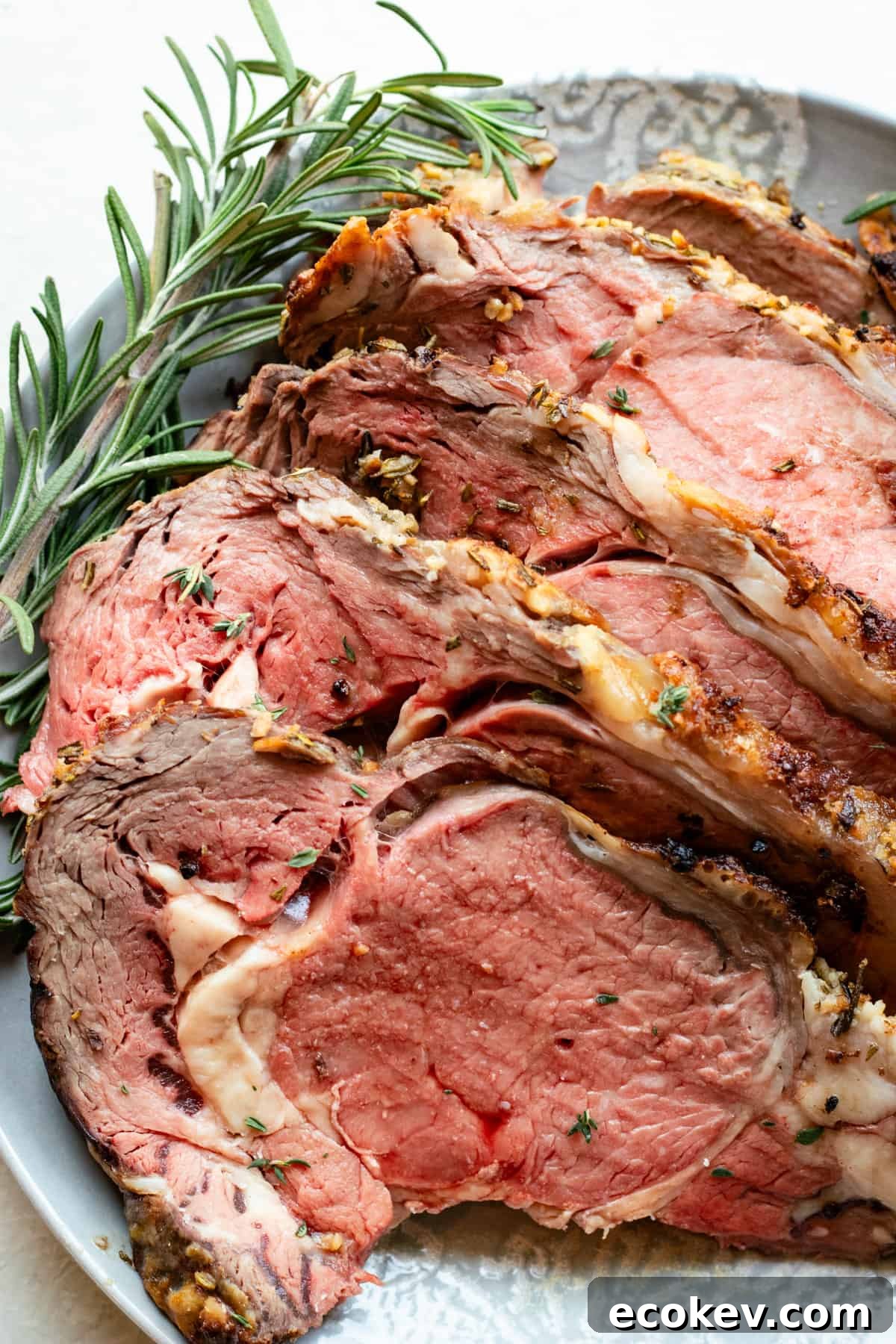
Why you’ll love this recipe
- Easy: Despite its reputation, prime rib is straightforward to prepare with this reliable method. Follow the steps and you’ll get restaurant-quality results without unnecessary fuss.
- Minimal ingredients: The seasoning is simple — butter, garlic, fresh herbs, and salt — letting the quality of the beef shine.
About the cut
The prime rib comes from the upper back ribs of the animal and typically includes multiple ribs. This muscle is well-marbled and not heavily worked, which makes it naturally tender, juicy, and full of flavor.
At the store you’ll often see USDA Choice and USDA Prime grades. USDA Prime has more marbling and costs more, but the term “prime rib” on a package doesn’t always mean the beef is USDA Prime—check the label if the grading matters to you.
Bone-in or boneless?
This recipe works with either option, though bone-in is preferred. The bones lift and insulate the roast during cooking, helping the meat retain moisture. If you buy a bone-in roast but want easier carving, ask your butcher to remove the bones and tie them back on for roasting. For boneless roasts, use a rack so air and heat circulate underneath.
How much to buy
Plan about one pound of roast per person. For bone-in roasts, estimate roughly two people per rib. A four-rib roast will feed about eight people. Ask your butcher to portion the roast to the weight you need.
How to cook prime rib
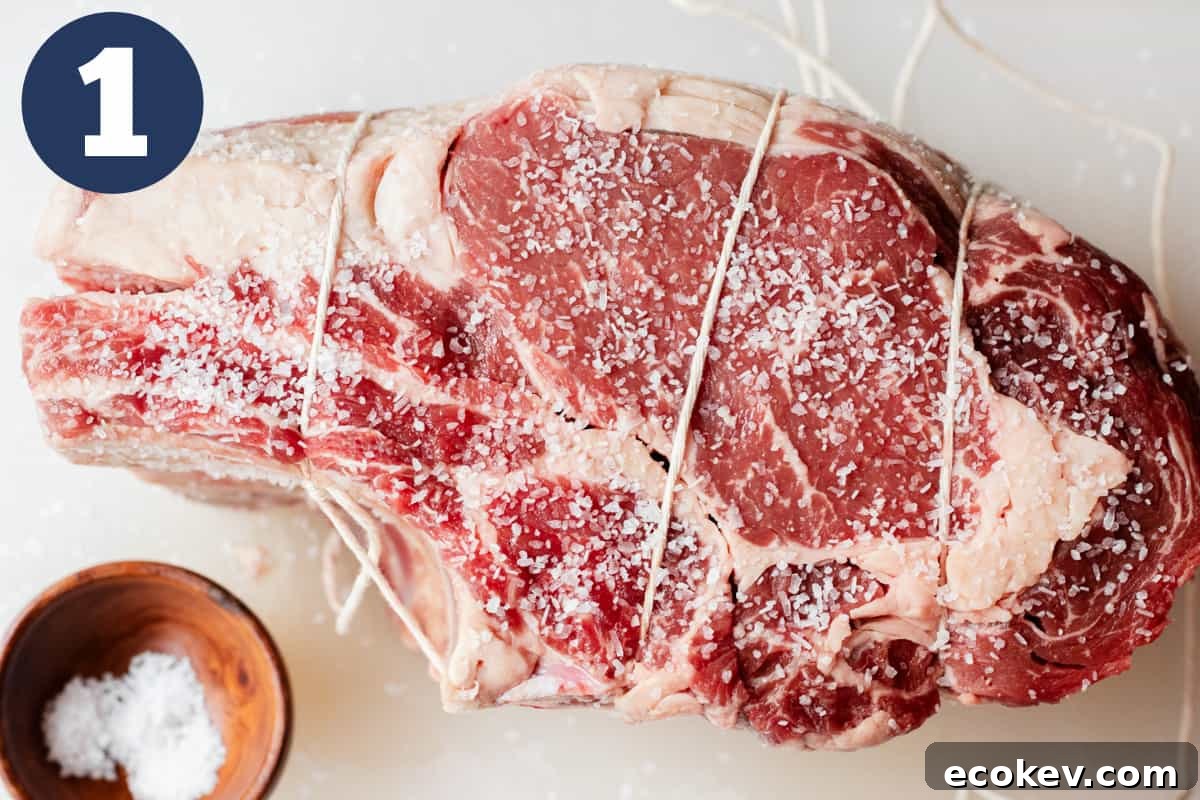
- Prepare the roast: If using bone-in and the butcher did not remove and reattach the bones, trim them yourself, salt under the bones, and use food-grade twine to tie the bones back on so they act as a rack.
- Let it sit: After salting, allow the roast to rest at room temperature for at least 45 minutes. This time lets the salt draw out surface moisture and then be reabsorbed, improving flavor and tenderness.
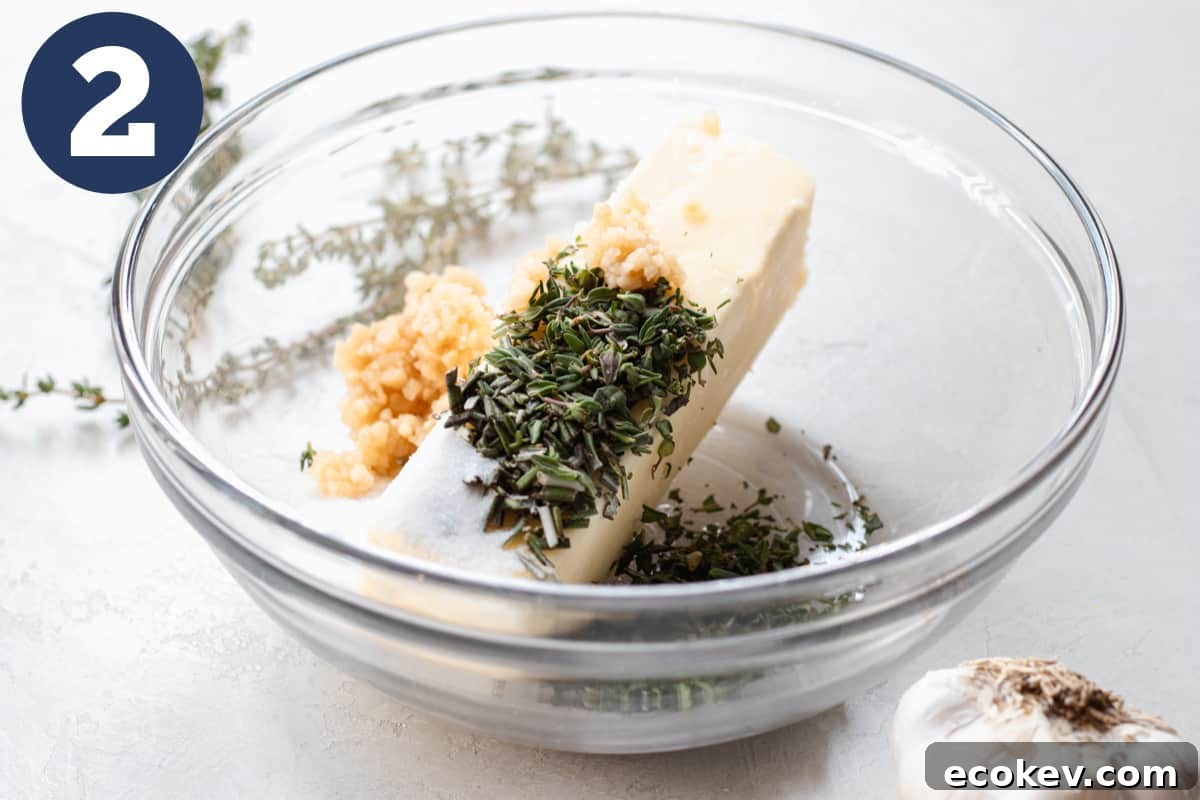
Make the garlic herb butter: Soften unsalted butter and mix in minced garlic, chopped fresh thyme and rosemary, and salt. Pat the roast dry and rub the herb butter all over the exterior. Place a bone-in roast bone-side down in a cast-iron skillet or roasting pan; put a boneless roast on a rack inside the pan.
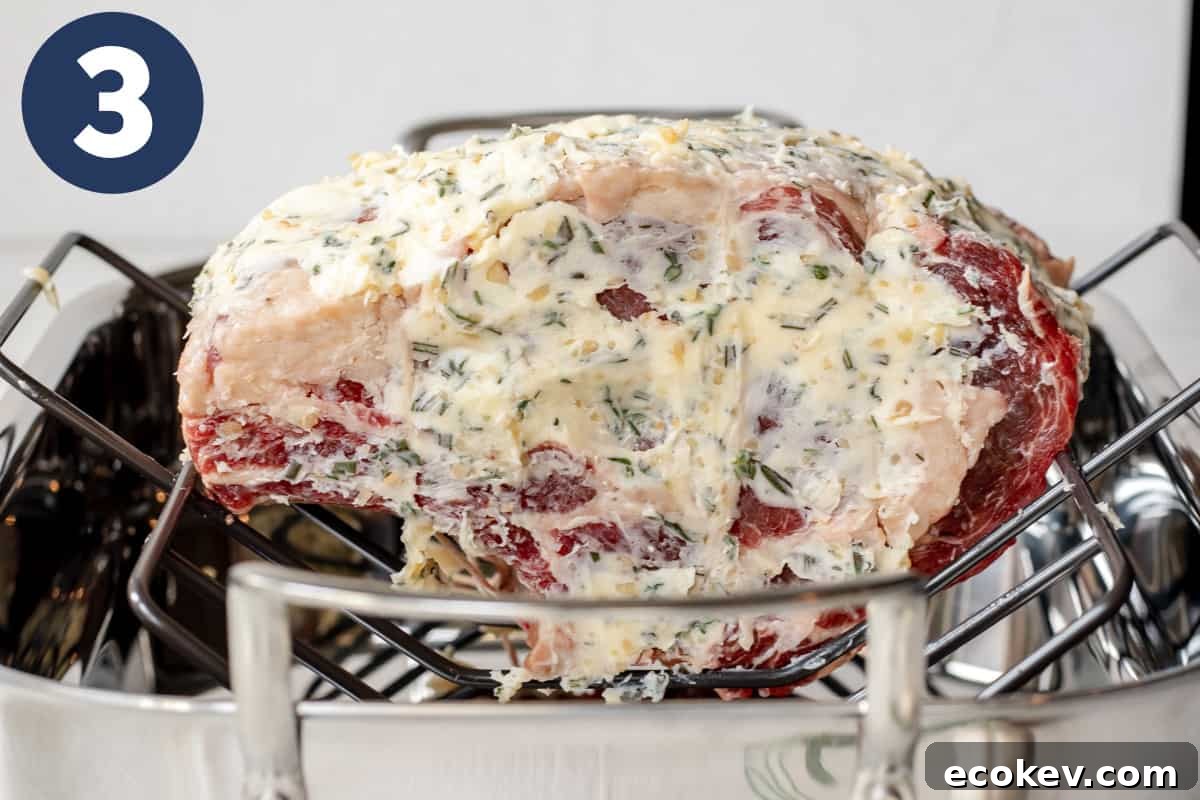
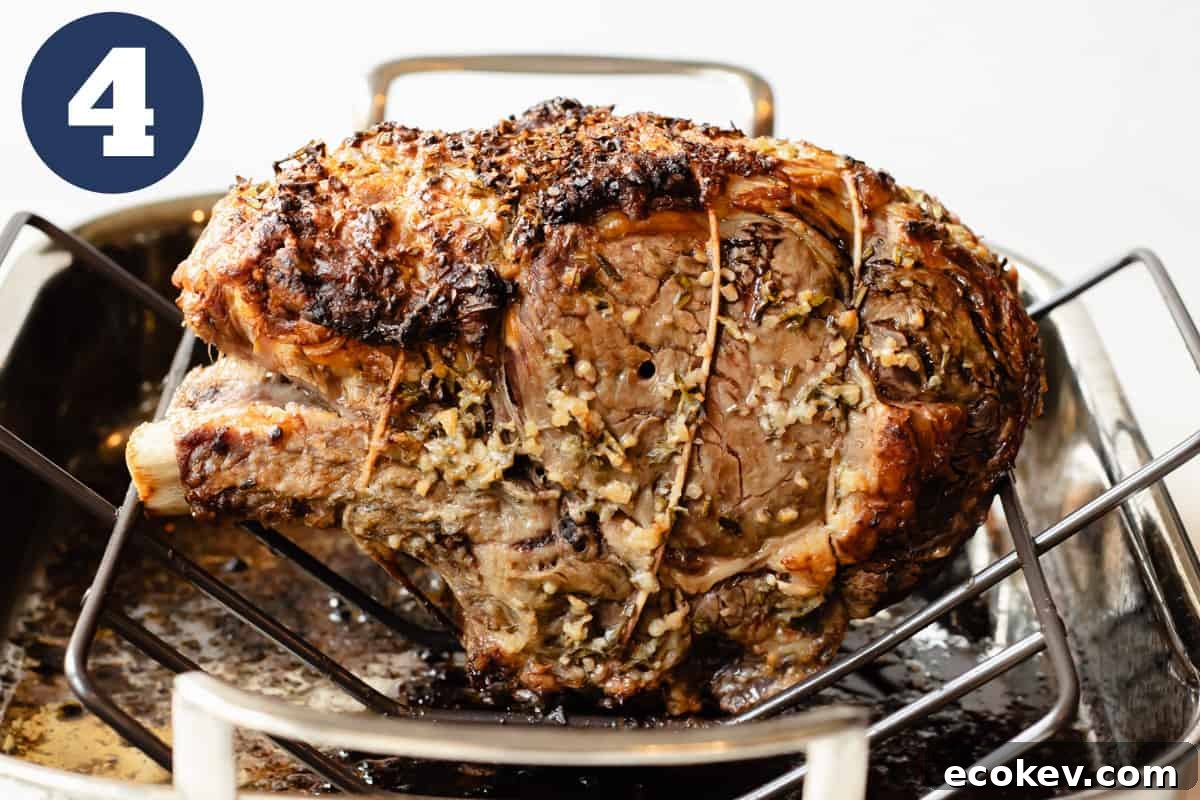
- Sear then roast: Start the roast at 500°F for 15 minutes to develop a crust, then lower the oven to 325°F and continue cooking until the roast reaches your desired internal temperature. Use a reliable digital thermometer to track doneness.
- Rest before slicing: Tent the roast with foil and let it rest for about 30 minutes after removing it from the oven. Resting allows the juices to redistribute so slices remain moist.
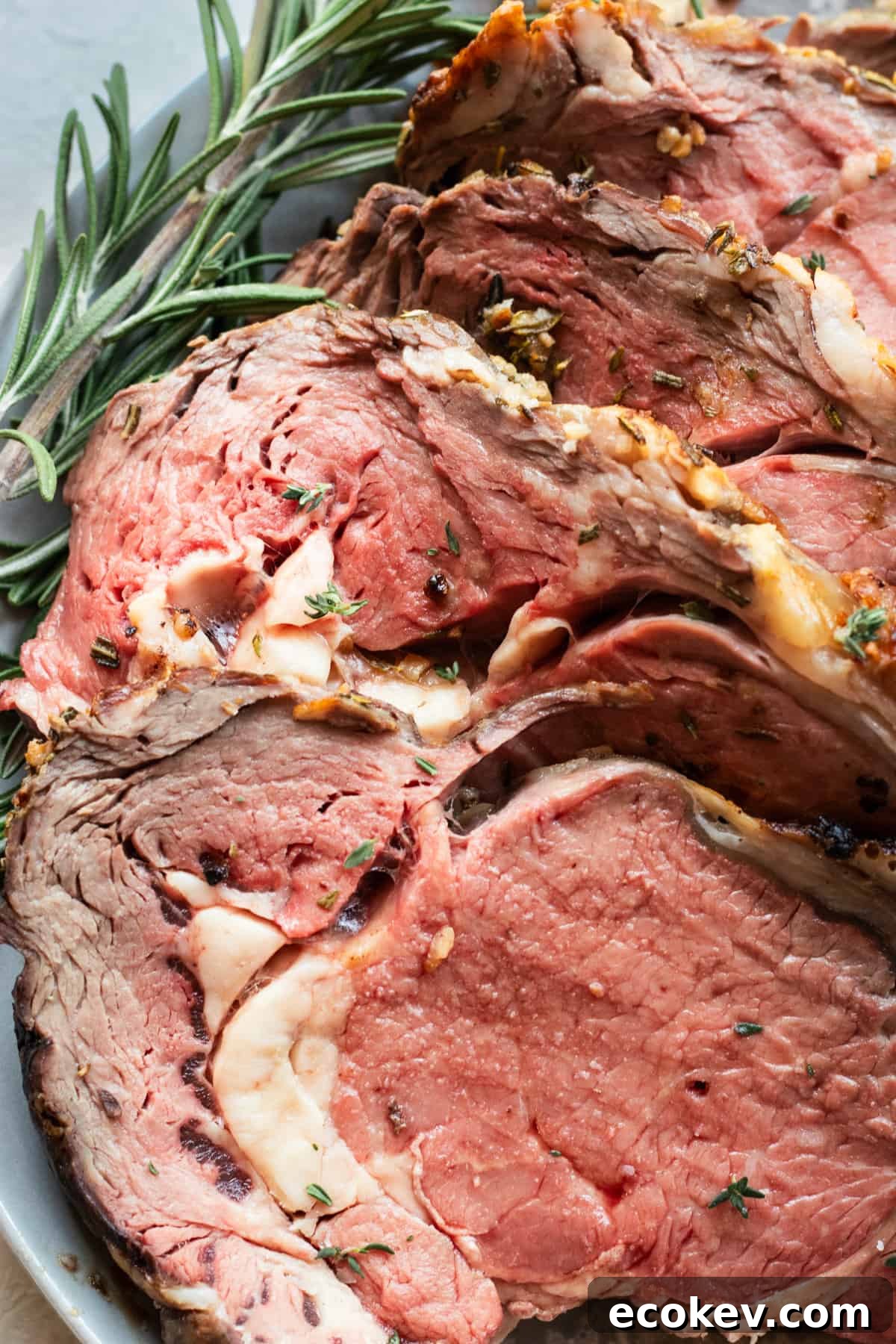
- Slicing: Always cut against the grain for the most tender slices. Identify the grain direction and slice perpendicular to it to avoid chewy pieces.
Cook time and temperature
Cooking time varies with roast size and desired doneness. As a guideline, medium-rare usually requires about 13–15 minutes per pound after the initial high-heat sear. Rely on internal temperature for accuracy:
- 115–120°F for rare
- 125–130°F for medium-rare
- 135–140°F for medium
- 145–150°F for medium-well
Remember carryover cooking will raise the internal temperature by about 5–7°F during resting, so remove the roast from the oven slightly below your target.
Storage and reheating
- Refrigerate: Store cooked prime rib in a sealed container in the refrigerator for 3–4 days.
- Freeze: Cool to room temperature, package in a freezer-safe container, and freeze for 2–3 months. Thaw overnight in the refrigerator before reheating.
- Reheat: Arrange slices in a baking pan with 2 tablespoons of beef broth or water, cover with foil, and warm in a 250°F oven for 10–20 minutes until heated through.
What to serve with prime rib
- Mashed potatoes
- Garlic herb smashed potatoes
- Wedge salad
- Green beans
- Creamed corn
Ingredients
- 1 Bone-in rib roast (3–7 ribs) — estimate 1 rib per 2 people
- Salt (about 1 tablespoon for a 4 lb roast)
Garlic Herb Butter (for 4 lb roast)
- 1/2 cup unsalted butter, room temperature
- 1 tbsp minced garlic
- 1 tbsp minced fresh thyme
- 1 tbsp minced fresh rosemary
- 2 tsp salt
Instructions
- Remove the bones from a bone-in roast with a sharp knife if needed. Salt beneath the bones and tie them back on with food-grade twine. Salt the rest of the roast.
- Let the roast sit at room temperature for 45 minutes after salting.
- Preheat the oven to 500°F.
- Pat the roast dry and place it bone-side down in a roasting pan (or on a rack for boneless).
- Mix the garlic herb butter ingredients in a bowl and spread the mixture over the outside of the roast.
- Roast at 500°F for 15 minutes to form a crust, then reduce the oven to 325°F and continue roasting while monitoring internal temperature.
- Remove the roast when it reaches your target temperature (115°F rare; 125°F medium-rare; 130°F medium; 140°F medium-well; 150°F well done).
- Tent the roast with foil and let it rest for 30 minutes before slicing.
- Slice against the grain and serve immediately.
Notes
- Bone-in: Removing and reattaching bones provides a built-in rack and makes carving easier.
- Boneless: Use a roasting rack so the roast cooks evenly.
- Internal temperature: Expect roughly 11–15 minutes per pound after searing, but always use a thermometer for accuracy.
- Target temperatures: 115–120°F rare; 125–130°F medium-rare; 135–140°F medium; 145–150°F medium-well.
Nutrition
Serving: 1 | Calories: 550 kcal | Protein: 51 g | Fat: 50 g
Nutrition information is an estimate and should be used as a guideline.
Recipe first published December 10, 2019. Updated December 16, 2020 and October 4, 2023.