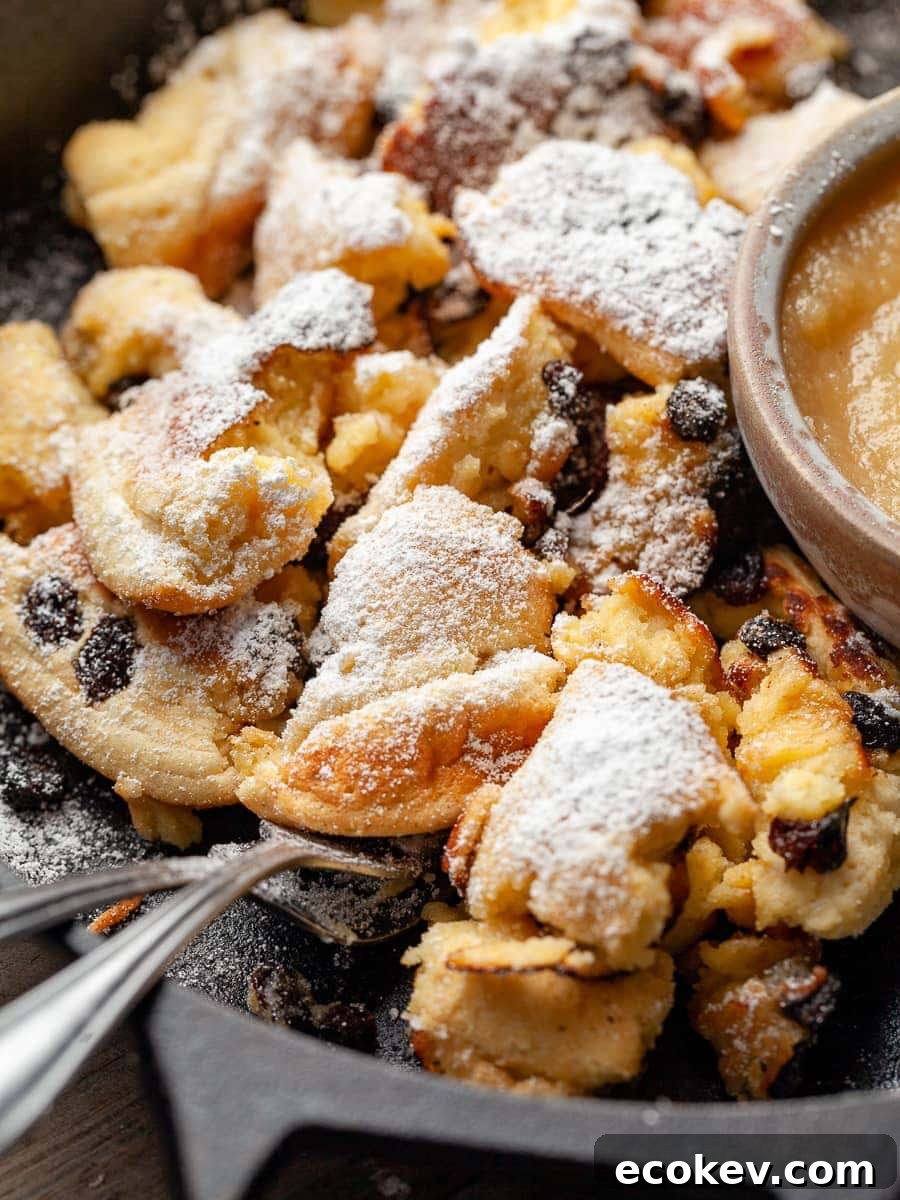
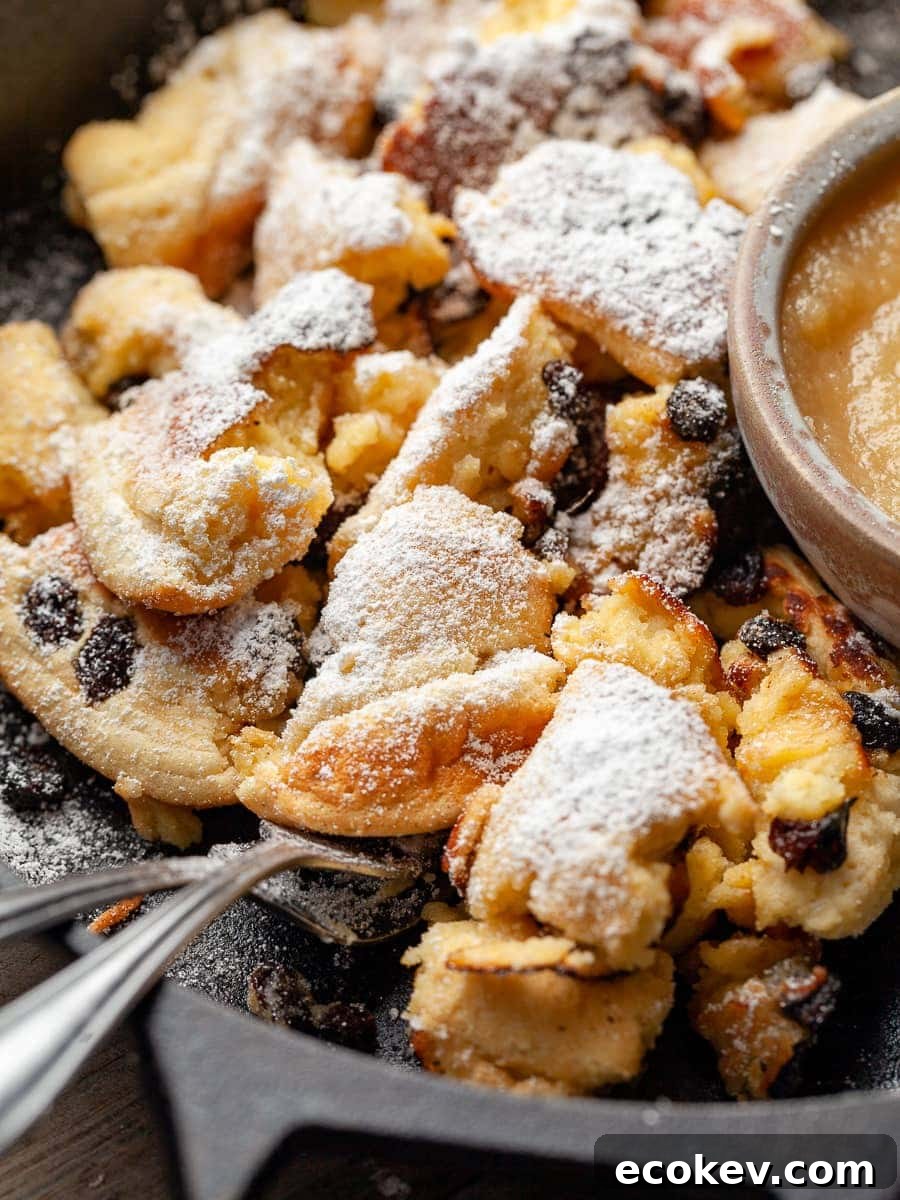
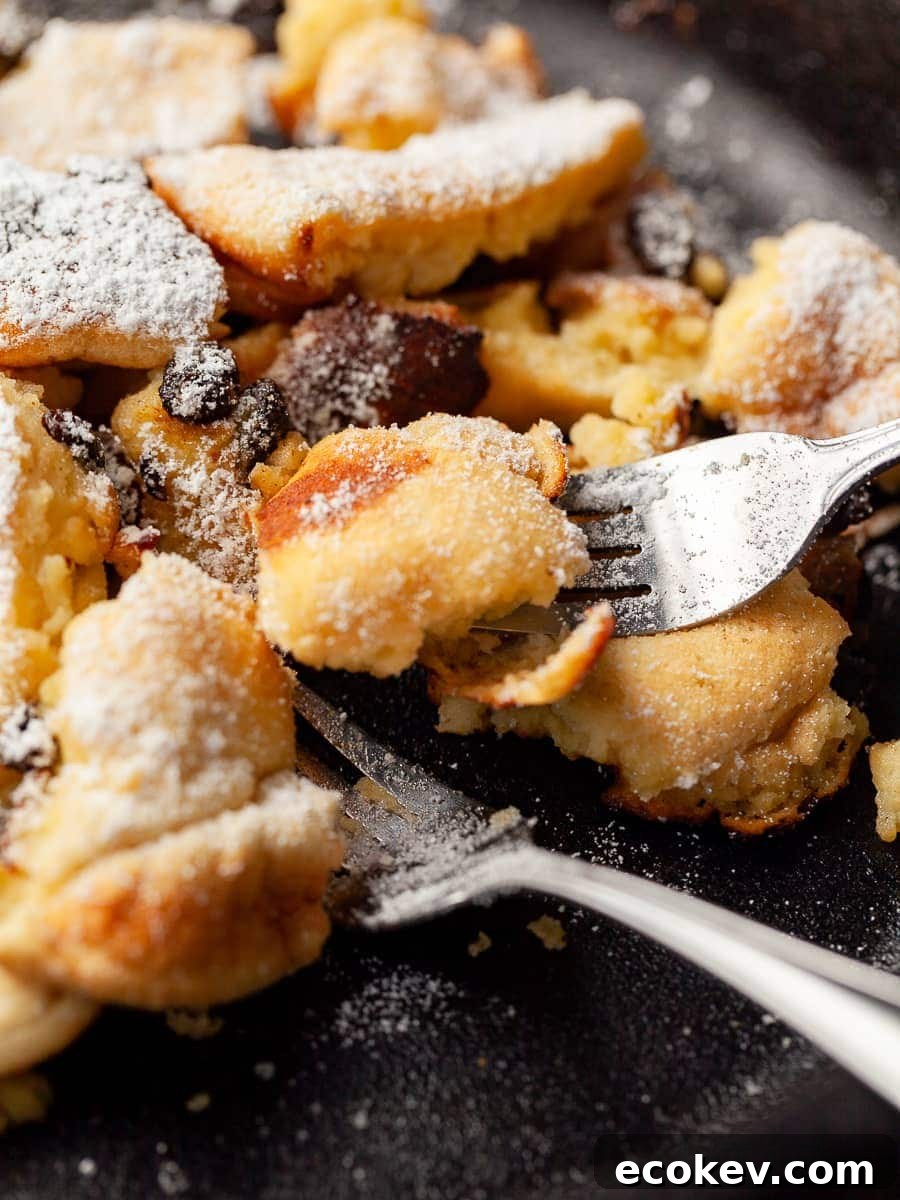
Kaiserschmarrn is a beloved Austrian dessert: fluffy torn pancakes studded with rum-soaked raisins, caramelized in butter, dusted with powdered sugar and traditionally served with fruit compote or stewed fruit. This gluten-free Kaiserschmarrn offers the same comforting flavors and satisfying texture while accommodating a gluten-free diet.
Unlike American-style pancakes, Kaiserschmarrn is more often enjoyed as a hearty lunch or dinner in Austria, especially after a day in the mountains. It’s typically served family-style straight from the skillet for a rustic, communal experience.
[feast_advanced_jump_to]
Recipe Ingredients Notes
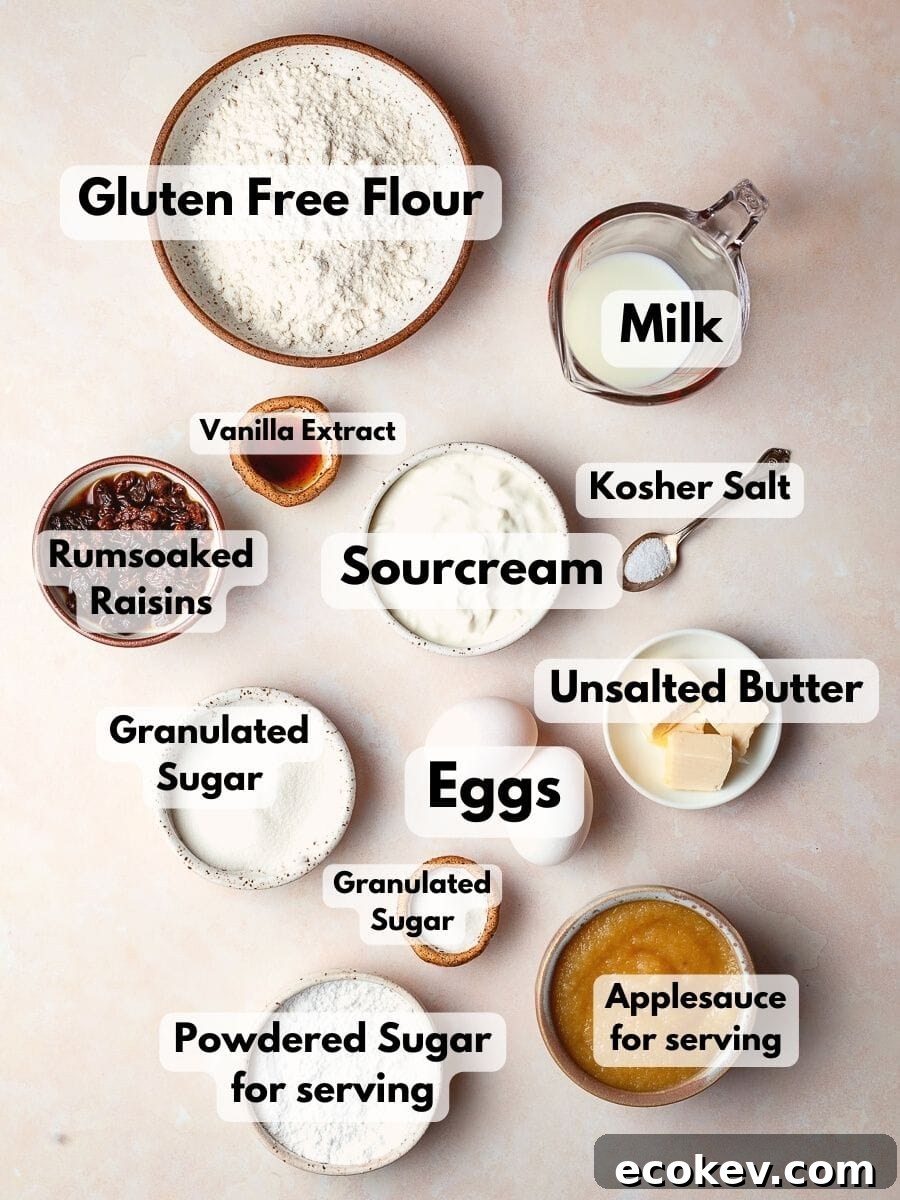
Gluten-free flour: This recipe has been tested with several blends, including King Arthur Measure for Measure, Cup4Cup, Bob’s Red Mill, and a homemade gluten-free blend. All worked well; Cup4Cup batter can appear slightly gummy raw but bakes up fine. If you do not need a gluten-free version, the recipe can be made with 75 g of regular all-purpose flour.
Raisins: Dark, seedless raisins are traditional, but you may use any raisins you prefer. If you don’t like raisins, dried cranberries or cherries are a fine substitute, or you can omit dried fruit entirely.
Rum for soaking raisins: Rum, bourbon or whiskey are suitable for soaking and are generally gluten-free. For a non-alcoholic version, soak the raisins in warm water or apple juice. Allow the raisins to soak at least 30 minutes so they plump and stay moist during baking.
Sour cream: Adds tang and keeps the Kaiserschmarrn tender and moist, balancing the sweetness of the dish.
Milk: Any milk or non-dairy milk works in this recipe—use what you have on hand.
Why is it called Kaiserschmarrn?
The name Kaiserschmarrn literally translates to “Emperor’s mess.” One popular tale says Emperor Franz Joseph I was served a torn, rustic pancake during a mountain visit; despite its untidy appearance, he enjoyed it and the name stuck. Another version credits a court pastry chef whose failed pancake was served to the imperial couple by a quick-thinking servant who called it “Kaiserschmarrn.” Both stories highlight the dessert’s humble, accidental origin and royal endorsement.
How to make Kaiserschmarrn
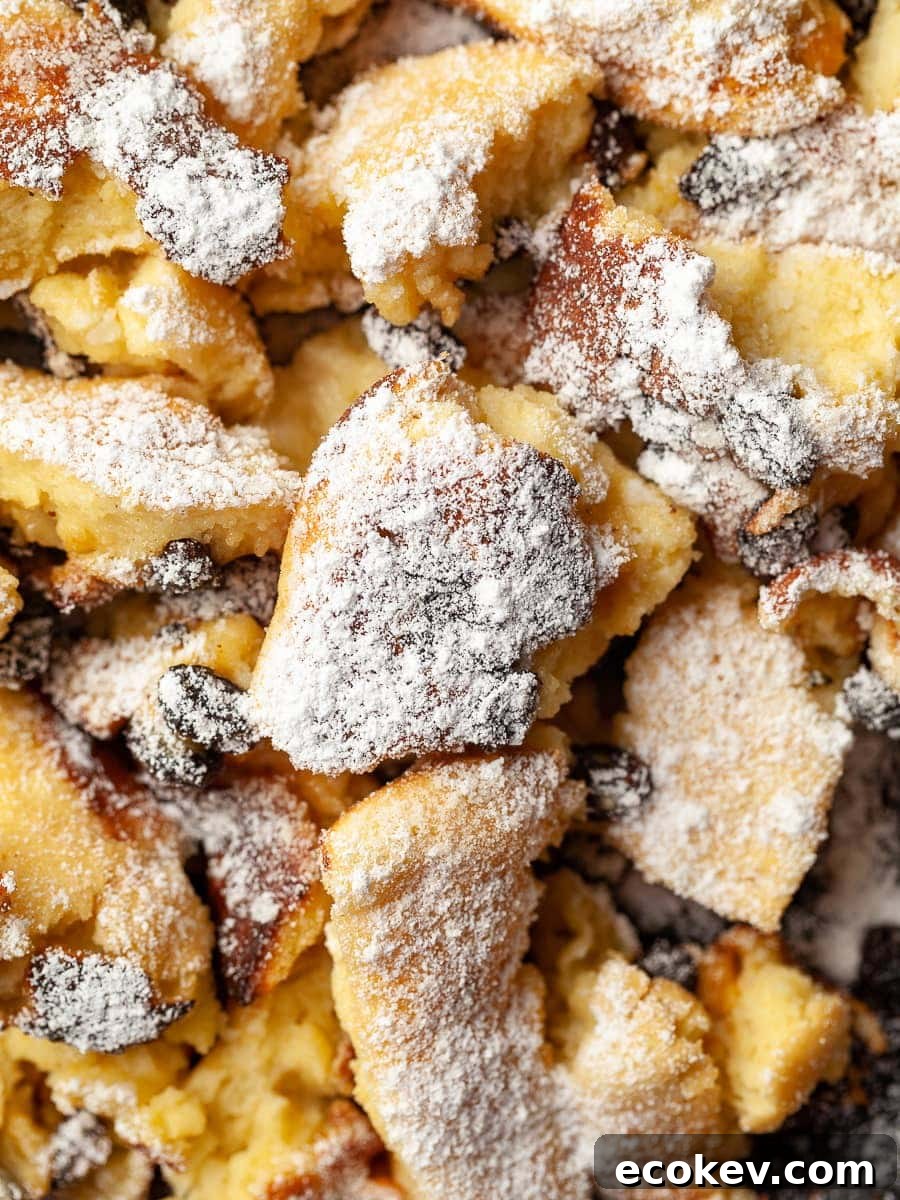
Kaiserschmarrn relies on whipped egg whites rather than chemical leavening to achieve its airy texture. The batter is baked or finished in a skillet, torn into bite-sized pieces, then caramelized with sugar and butter for a crisp, sweet exterior.
Equipment that makes the process easier: a 10″ oven-safe skillet and a hand or stand mixer for whipping egg whites.
Step 1: Preheat the oven to 400°F (200°C). If using raisins, soak them in rum (or water/apple juice) for at least 30 minutes; warming the liquid speeds this up.
Step 2: Separate the eggs. Place the whites in a clean bowl for whipping and set the yolks aside in another bowl.
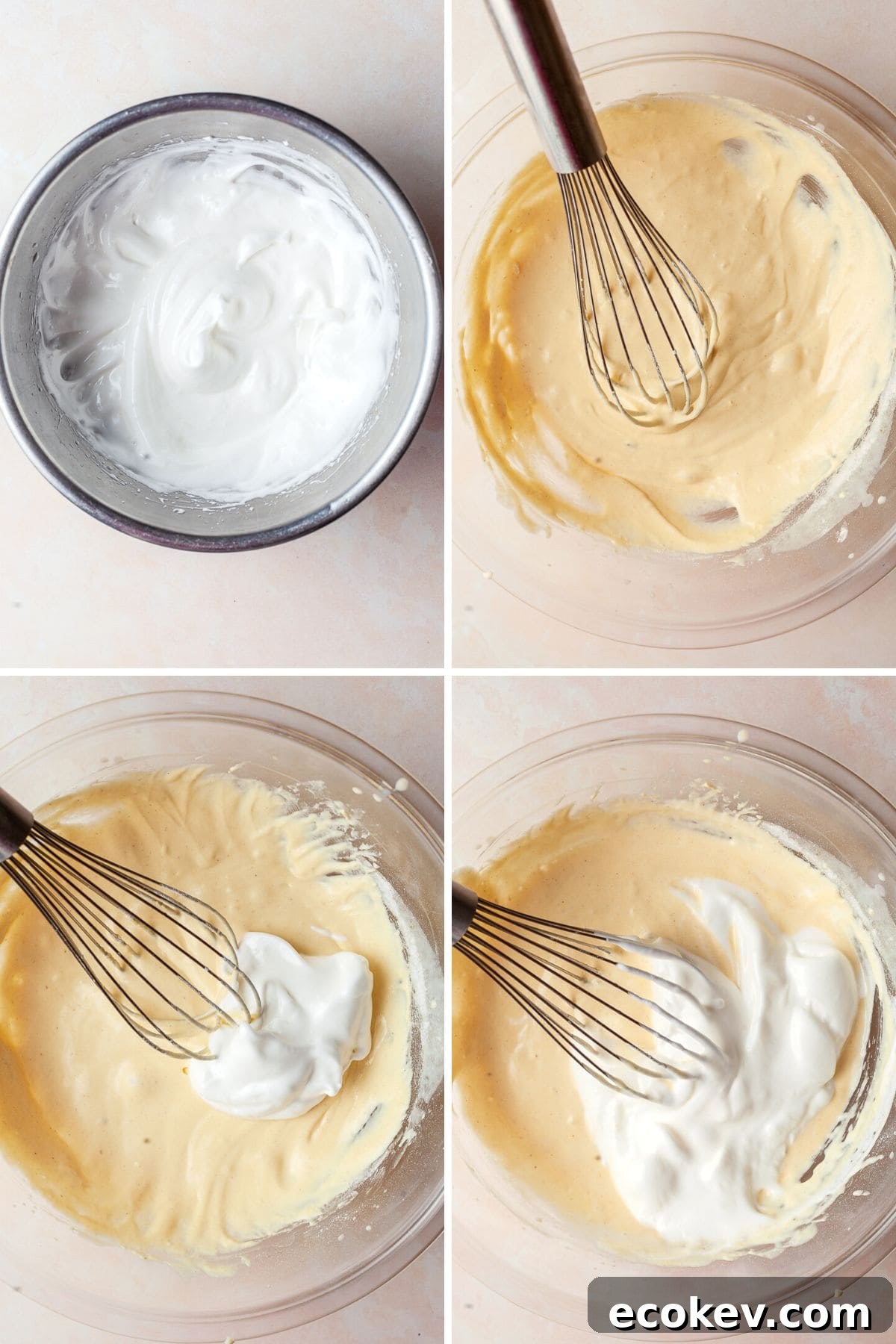
Step 3: Whisk the egg whites with the granulated sugar and a pinch of salt until stiff, glossy peaks form. Avoid overwhipping, which makes the whites dry.
Step 4: In the bowl with yolks, whisk together sour cream, milk and vanilla until smooth. Add the gluten-free flour and kosher salt, whisking to a lump-free batter.
Step 5: Fold about one-third of the beaten egg whites into the yolk batter to loosen it, then gently fold in the remaining whites until the mixture is light and airy. Some streaks of white are fine.
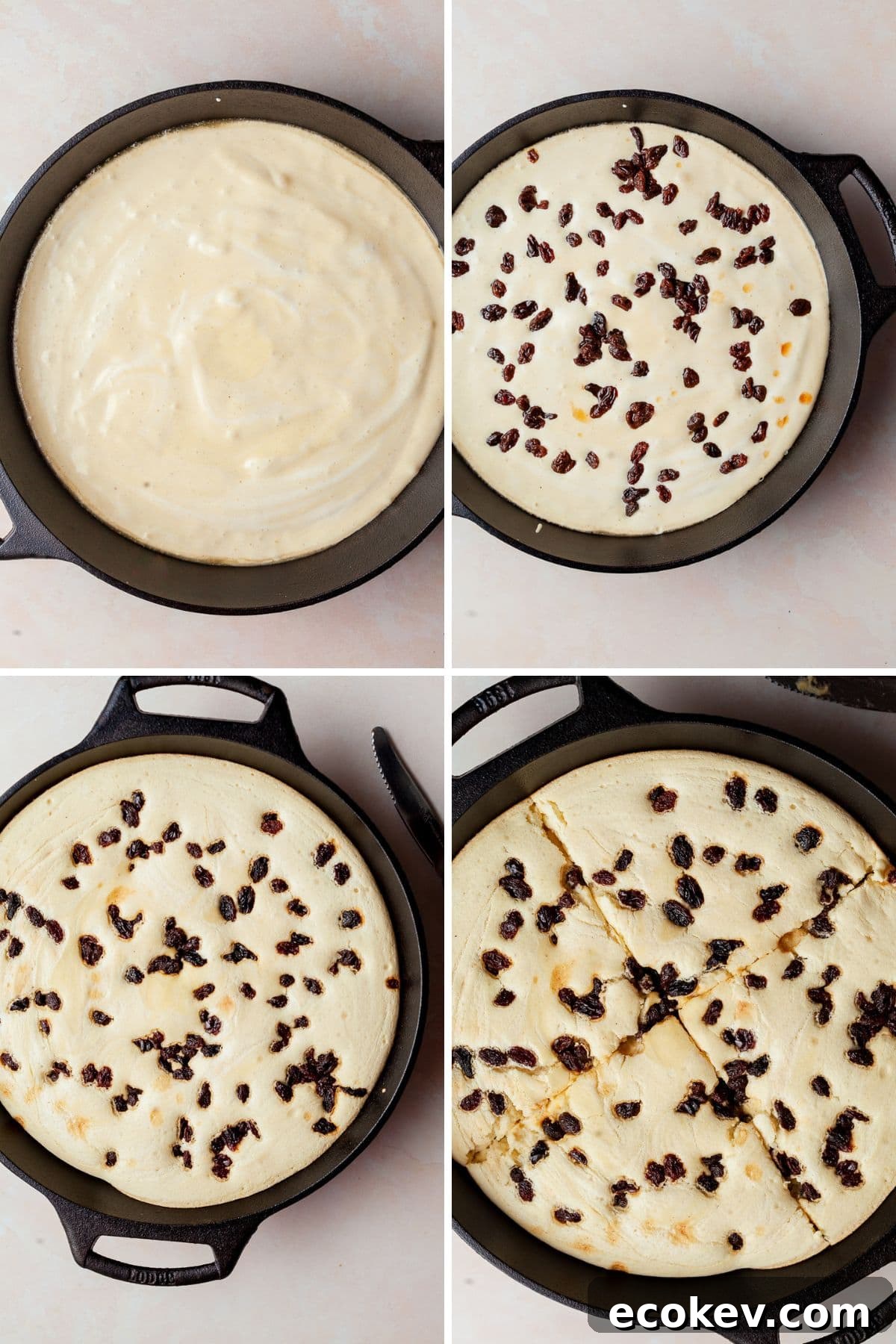
Step 6: Melt roughly 2 teaspoons of butter in an oven-safe skillet over medium-low heat. Pour in the batter.
Step 7: Drain the soaked raisins and scatter them over the batter.
Step 8: Cook on the stovetop for 2 minutes, then transfer the skillet to the preheated oven.
Step 9: Bake for about 12 minutes, until the pancake is set and springy. Remove the skillet and return it to the burner. Cut the pancake into quarters with a spatula or knife.
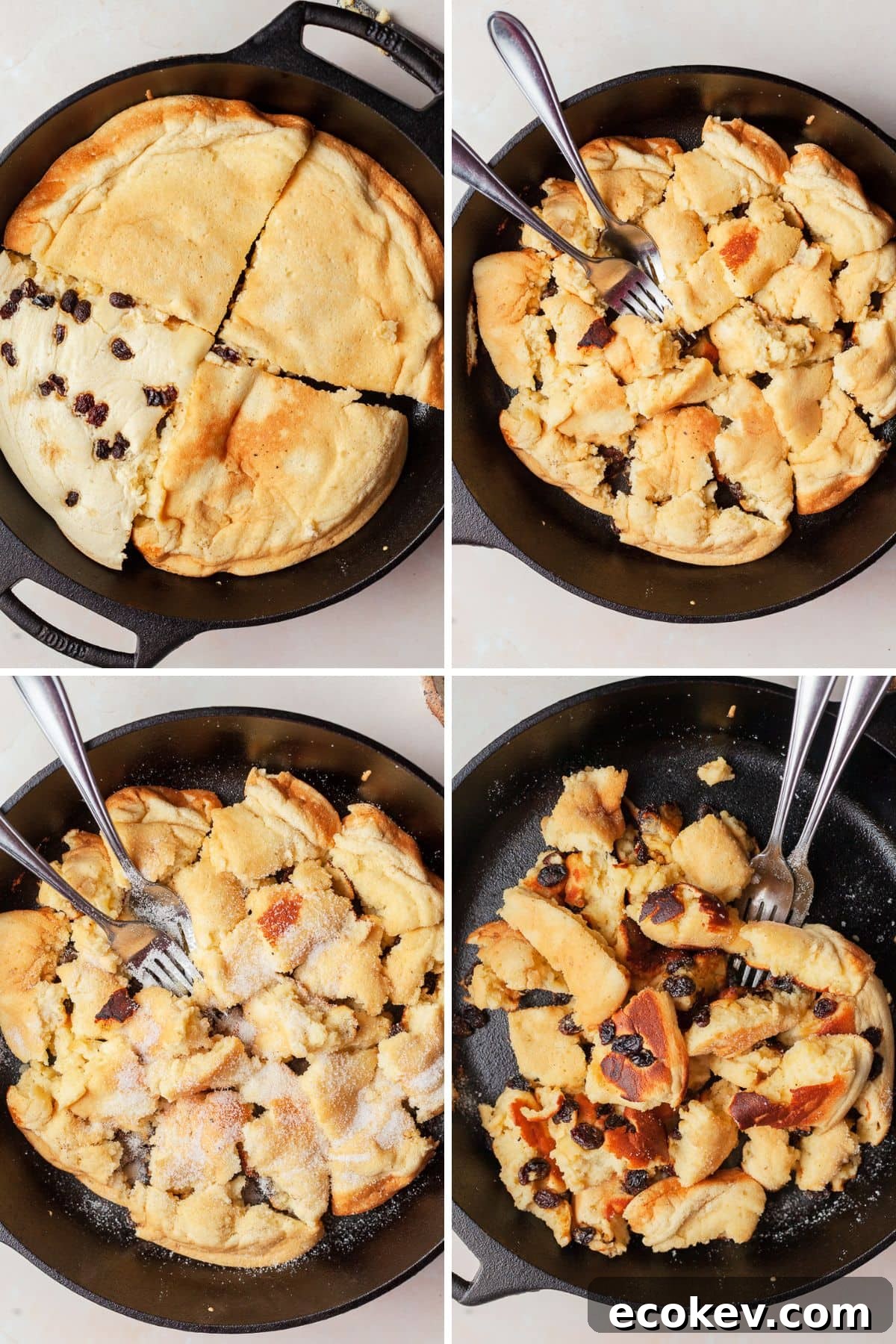
Step 10: Flip each quarter and cook briefly over low heat until the bottom is golden, about 1–2 minutes.
Step 11: Tear the cooked pancake into bite-sized pieces using two forks or spoons.
Step 12: Sprinkle the pieces with granulated sugar and add a few small dabs of butter. Increase heat slightly and toss or flip the pieces so the sugar melts and caramelizes, developing glossy, lightly crisp edges.
Step 13: Once the sugar has melted—usually under a minute—remove the skillet from heat.
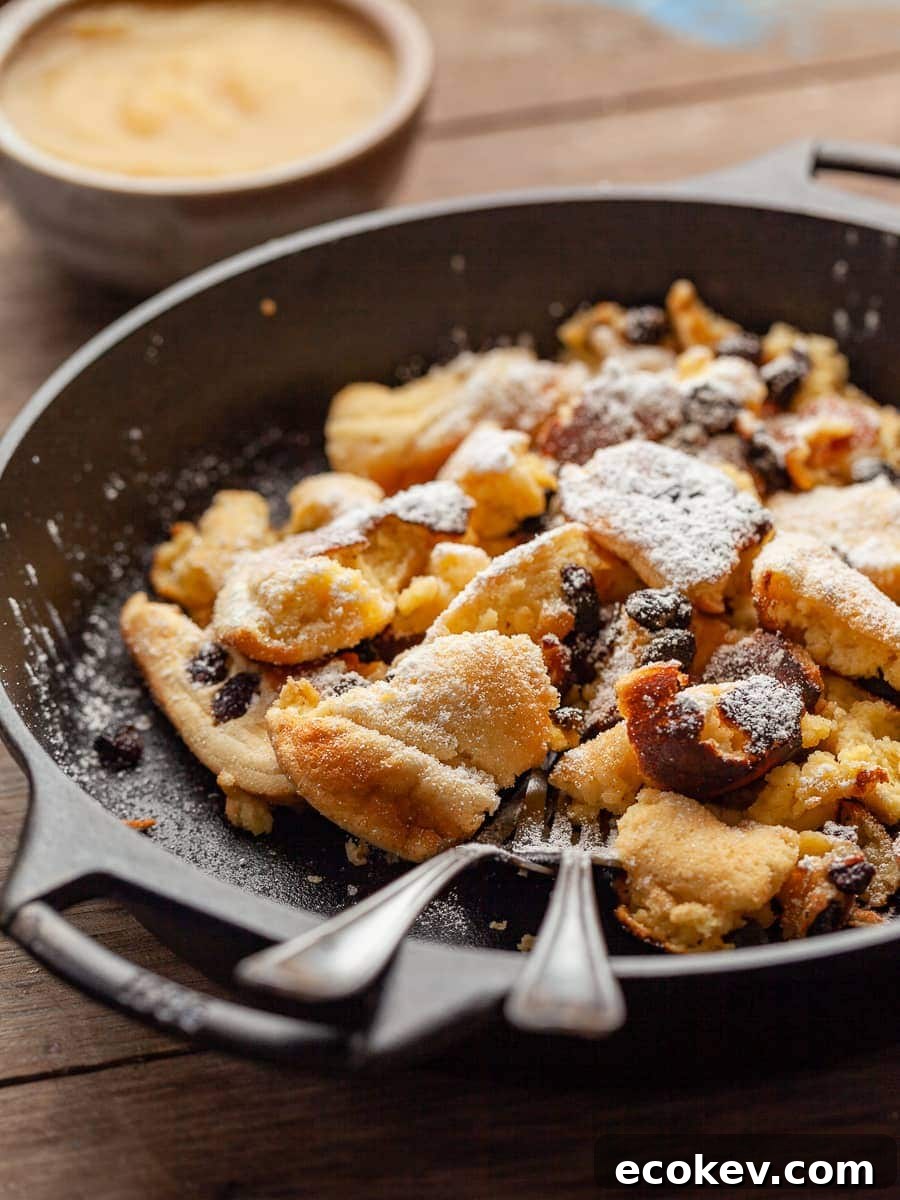
Step 14: Dust generously with powdered sugar and serve immediately.
How to serve Kaiserschmarrn
Kaiserschmarrn is best served warm and fresh to preserve its delicate, airy texture. Pair it with a fruit compote—applesauce, plum compote, or roasted strawberry-rhubarb compote are traditional and delicious choices. Leftovers can be refrigerated in an airtight container and gently reheated in a skillet with a little butter; reheating may make the texture slightly denser than when freshly made.
FAQ – Gluten Free Kaiserschmarrn Recipe
Kaiserschmarrn is often described as sweet scrambled pancakes; the name combines “Kaiser” (emperor) and “Schmarrn” (mess or scrambled dish).
Kaiserschmarrn is an Austrian dessert that became popular during the imperial era and remains a classic in Austrian cuisine.
More Gluten Free Austrian Recipes to try
-
Gluten Free Palatschinken
-
Gluten Free Plum Cake
-
Gluten Free Marble Cake (Marmorkuchen)
-
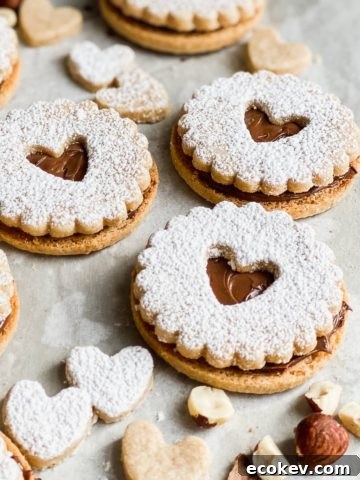
Gluten Free Linzer Cookies
📖 Recipe
Gluten Free Kaiserschmarrn
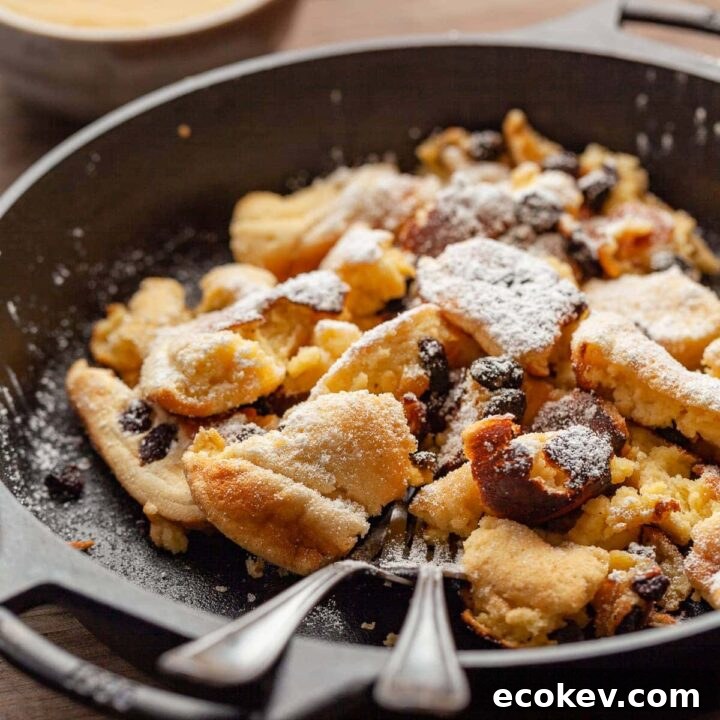
Fluffy torn pancakes with rum-soaked raisins, caramelized in butter and finished with powdered sugar. Serve with applesauce or fruit compote for a classic Austrian treat.
15 minutes
20 minutes
35 minutes
Ingredients
Rum Soaked Raisins
- 40 grams dark raisins
- 2 tablespoons rum (or gluten-free whiskey/bourbon) or water/apple juice for non-alcoholic version
Gluten Free Kaiserschmarrn
- 2 large eggs
- 40 grams granulated sugar
- 115 g full-fat sour cream
- 60 grams milk (any type)
- 2 teaspoons vanilla extract
- 80 grams gluten-free all-purpose flour (or 75 g regular AP flour)
- ½ teaspoon kosher salt
- 20 grams unsalted butter
For Caramelizing and Serving
- 10 grams granulated sugar
- additional butter for caramelizing
- powdered sugar for dusting
- Applesauce or fruit compote to serve
Instructions
Rum Soaked Raisins
- Combine raisins and rum in a small bowl. Let sit at least 30 minutes; warm the liquid to speed soaking. Drain before adding to batter.
Gluten Free Kaiserschmarrn Batter
- Preheat oven to 400°F (200°C).
- Separate eggs. Place whites in a clean bowl to whip; keep yolks in a separate bowl.
- Whip egg whites with 40 g sugar and a pinch of salt to stiff, glossy peaks. Set aside.
- Whisk yolks with sour cream, milk and vanilla until smooth. Add flour and salt and whisk until combined.
- Fold one-third of the whipped egg whites into the yolk batter to loosen it, then gently fold in the remainder until light and airy.
Cooking Kaiserschmarrn
- Melt about 2 teaspoons butter in an oven-safe skillet over medium-low heat and pour in the batter.
- Scatter drained raisins evenly over the batter.
- Cook on the stove for 2 minutes, then transfer to the preheated oven.
- Bake about 12 minutes until set and springy. Remove skillet and return to the burner; cut the pancake into quarters.
- Flip each quarter and cook on low until the bottom is golden, about 1–2 minutes.
- Tear the pancake into bite-sized pieces using forks or spoons.
- Sprinkle pieces with 10 g sugar and add small dabs of butter. Increase heat and toss or flip to caramelize the sugar and crisp the edges.
- When the sugar has melted and caramelized, remove from heat and dust generously with powdered sugar. Serve immediately with applesauce or fruit compote.
Notes
Flour: If gluten is not a concern, use 75 g regular all-purpose flour.
Raisins: Substitute dried cranberries or cherries, or omit if preferred.
Make-ahead batter: For best texture, cook the batter right after mixing; whipped egg whites lose volume if left too long.
Nutrition Information:
Yield:
2
Serving Size:
1
Amount Per Serving:
Calories: 500
Calories are an estimate.