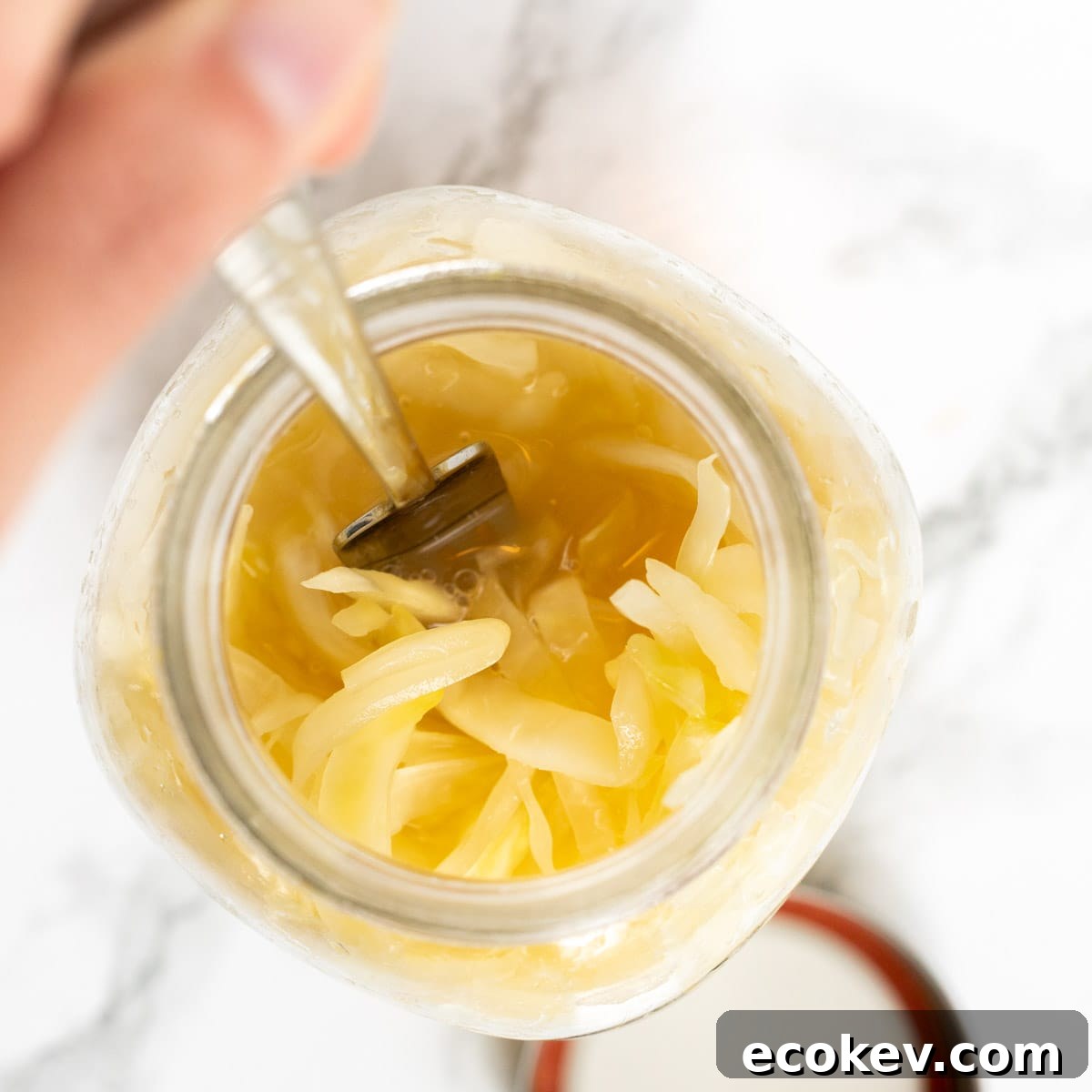
All you need are three simple ingredients and a little patience to make delicious, healthy sauerkraut at home. Homemade sauerkraut tastes fresher than store-bought versions, is rich in beneficial probiotics, and is far easier to prepare than many people expect.
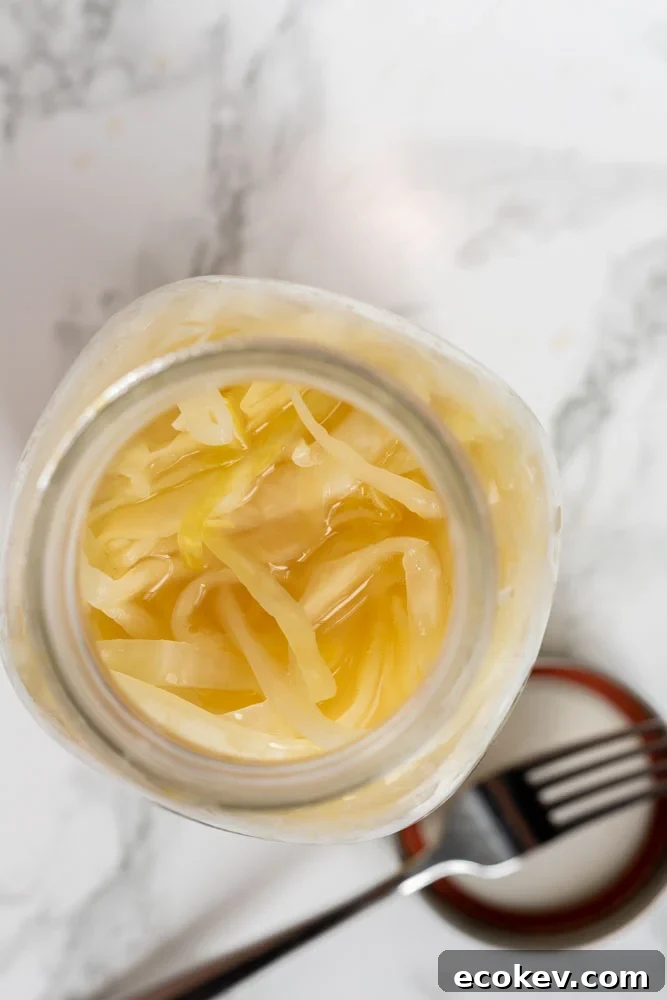
If making sauerkraut sounds intimidating, you’re not alone—fermenting food can seem daunting at first. But the process is straightforward and safe when you use fresh ingredients and clean equipment.
I started making sauerkraut after seeing how easy my sister-in-law Nicky made it look (she even grows her own cabbage). Since then I’ve been making it regularly and prefer it to any jarred variety. Because homemade sauerkraut is typically unpasteurized, the healthy bacteria survive, making it a natural source of probiotics to support a healthy gut.
What do I need to make homemade sauerkraut?
You can buy specialty crocks or fermentation lids, but to begin you really only need three items:
- cabbage
- salt
- a mason jar
Cheesecloth or a paper towel can be used to cover the jar while fermenting. Fermentation weights are optional tools that help keep the cabbage submerged in brine; I usually just press the cabbage down firmly to ensure it stays beneath the liquid.
Specialized equipment can be convenient, but it isn’t necessary—start with the basics and add tools later if you continue fermenting regularly.
How is sauerkraut fermented?
Sauerkraut ferments through lactic acid fermentation. Naturally occurring bacteria, primarily lactobacillus, live on cabbage and other produce. These bacteria consume the sugars in cabbage and produce lactic acid, which preserves the cabbage and creates the characteristic tangy flavor.
Salt plays two roles in this process: it helps draw moisture from the cabbage to form the brine, and it inhibits unwanted bacteria while allowing lactic acid bacteria, which tolerate higher salt levels, to thrive.
How to make homemade sauerkraut
For a successful ferment, work with fresh cabbage and clean equipment to reduce the risk of spoilage by undesirable microbes.
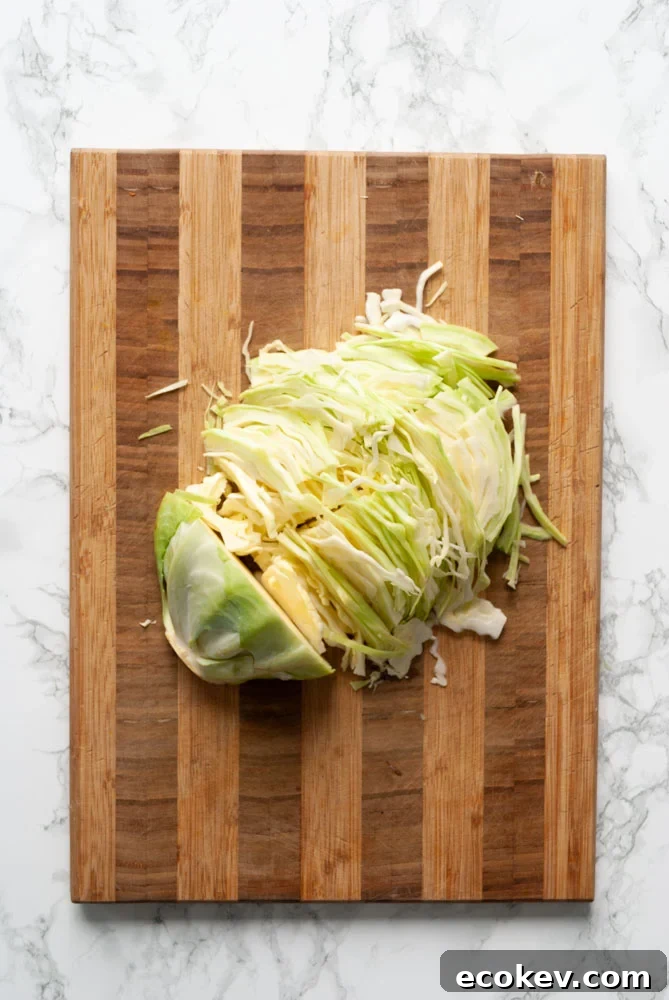
Start by thinly slicing the cabbage with a knife or mandolin.
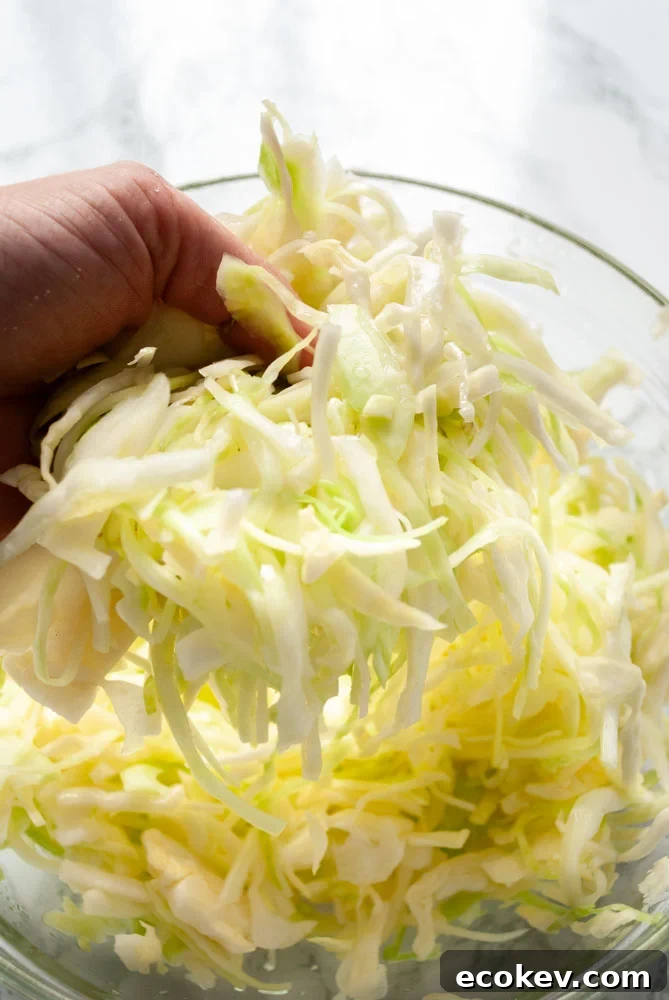
Put the shredded cabbage into a large, clean bowl and sprinkle it with sea salt. With clean hands, gently massage the salt into the cabbage. As you work it, the cabbage will release moisture and become limp.
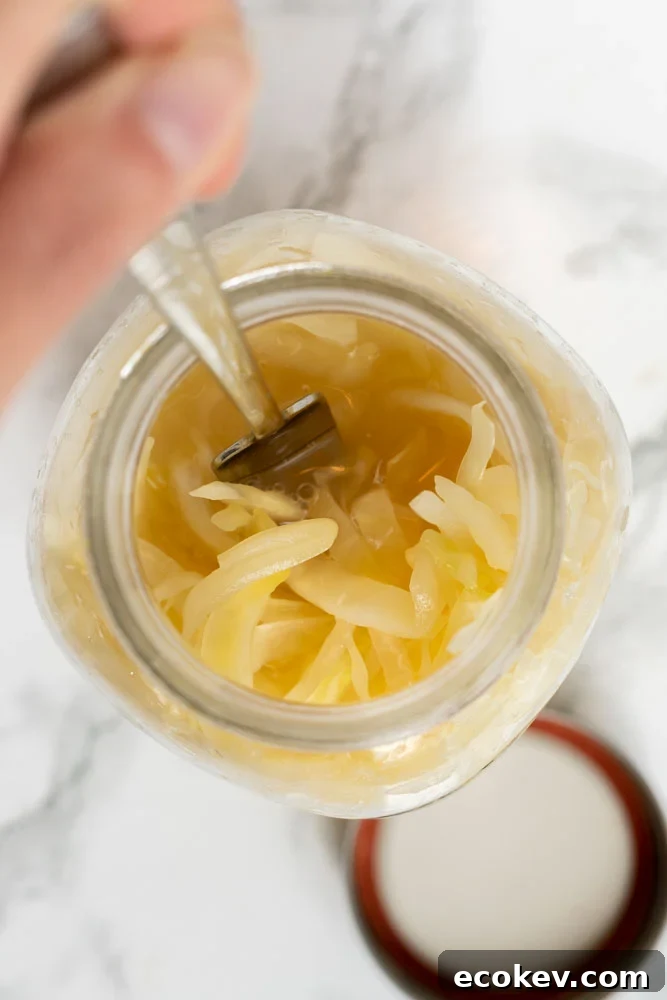
When the cabbage has softened and there is liquid at the bottom of the bowl, transfer the cabbage and all the liquid into a mason jar. Press the cabbage down firmly with the back of a spoon or fork so it’s compacted and no pieces are stuck to the jar sides. The expelled liquid forms the brine that protects the ferment.
Cover the jar with folded cheesecloth or a paper towel and secure it with an elastic band.
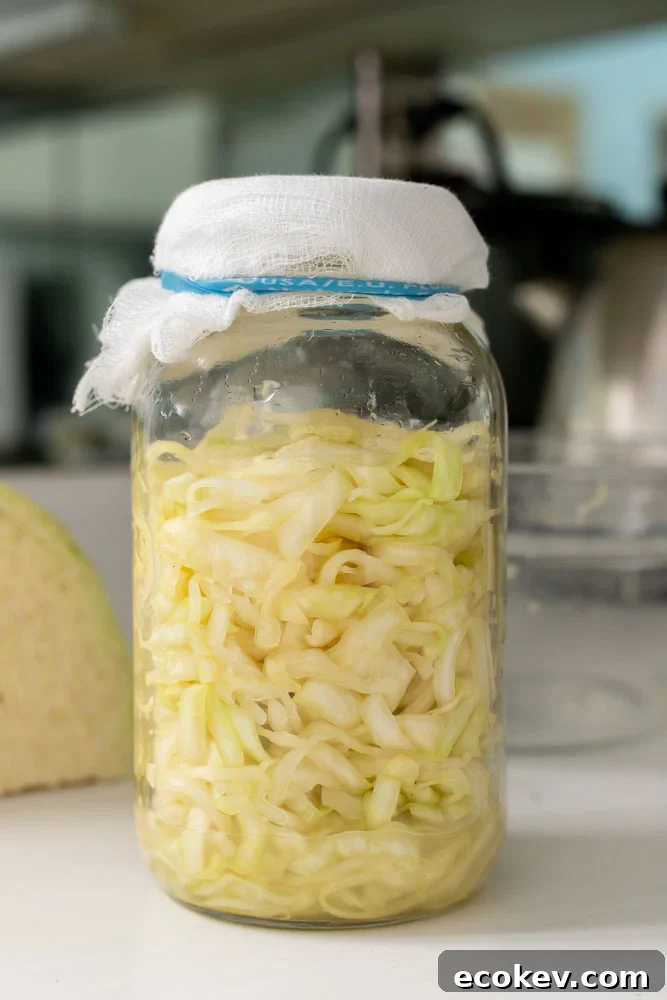
Keep the jar out of direct sunlight in a slightly warm spot, such as a countertop corner. After 24 hours, if there isn’t enough brine to cover the cabbage, mix 1 teaspoon of sea salt into 1 cup of water and add enough to submerge the cabbage. Tamp it down so everything stays below the liquid—exposed cabbage risks spoilage during the early days of fermentation.
How will I know that it is ready?
Fermentation time varies with temperature: warmer spaces speed up fermentation and cooler spaces slow it down. I usually ferment mine for about 4–5 days, but it can take anywhere from one day to two weeks or more depending on temperature and how strong you want the flavor.
Check your sauerkraut each morning for a few things:
- That the cabbage remains submerged in brine. If it rises, press it back down. Bubbles are normal and a sign of active fermentation.
- Any mold or scum on the surface. If you see this, remove the affected parts and continue fermenting.
- The aroma. The smell will change over time and become more sour but should not smell rotten.
The most reliable test is taste. Begin sampling around day three and let it ferment until the flavor suits you. When you’re happy with the taste, remove the cheesecloth, seal the jar with a lid, and refrigerate. Fermentation will continue in the fridge but at a much slower rate.
Can anything go wrong?
Not usually. If you notice small amounts of mold or scum on the surface, simply remove them and continue. If the sauerkraut develops an unpleasant, off smell for several days in a row, it’s safer to discard that batch and start again. Keeping everything clean and starting with fresh cabbage greatly reduces the chance of problems.
Dietary Considerations and Accommodations
This simple sauerkraut recipe fits well with several dietary preferences:
- vegan & vegetarian
- gluten free & dairy free
Are you on Pinterest? Follow the author for more fresh and tasty recipe ideas.
Want to see more recipes like this? Sign up for a newsletter or follow on social platforms to get new recipes delivered to your inbox.
More recipes you’ll love!
If you enjoy making sauerkraut, you may also like other simple condiments and preserves such as quick pickled carrots, kale pesto, chickpea hummus, or chimichurri sauce.
-
Quick Pickled Carrots
-
Kale Pesto
-
Chickpea Hummus
-
Easy Chimichurri Sauce




If you make this recipe, share a photo on Instagram and tag the author. If you enjoyed it, please consider rating it below.

Print Recipe
Homemade Sauerkraut
Equipment
Ingredients:
- 1 lb shredded cabbage
- 1 tablespoon fine sea salt
- water
Instructions
-
Start by ensuring all tools are clean and the mason jar is sterilized.
-
Finely shred the cabbage using a knife or mandolin.
-
Place the shredded cabbage in a bowl and sprinkle with sea salt.
-
Using clean hands, mix the salt through the cabbage and gently massage it to encourage moisture release. Massage for about 5 minutes or until the cabbage becomes limp and releases a good amount of liquid.
-
Transfer the cabbage and all released liquid into the mason jar and press down to compact it. Ensure no cabbage is stuck to the jar walls.
Cover the jar with folded cheesecloth or a paper towel and secure with an elastic band.
-
Place the jar in a warm, shaded spot and leave overnight.
-
The next day, if the cabbage is not fully submerged, dissolve 1 teaspoon sea salt in 1 cup water and add enough to cover the cabbage. Tamp it down again and replace the cover.
-
Check the kraut daily to ensure it remains submerged and to remove any surface scum or mold if needed. The color, smell, and taste will change as fermentation progresses. Start tasting around day 3 to decide when it’s ready.
-
When the flavor suits you, remove the cheesecloth, screw on a lid, and refrigerate. The sauerkraut will continue to slowly ferment in the fridge.
Notes
- If you find mold or scum on the surface, remove it and continue fermenting; small amounts can be removed safely.
- The aroma will become more sour as fermentation proceeds. If the sauerkraut smells off for several days, discard it and start again.
- Cleanliness matters. Use fresh cabbage and clean hands and tools to minimize the introduction of unwanted bacteria.
* Nutritional information is an estimate generated by online tools and may not be 100% accurate.