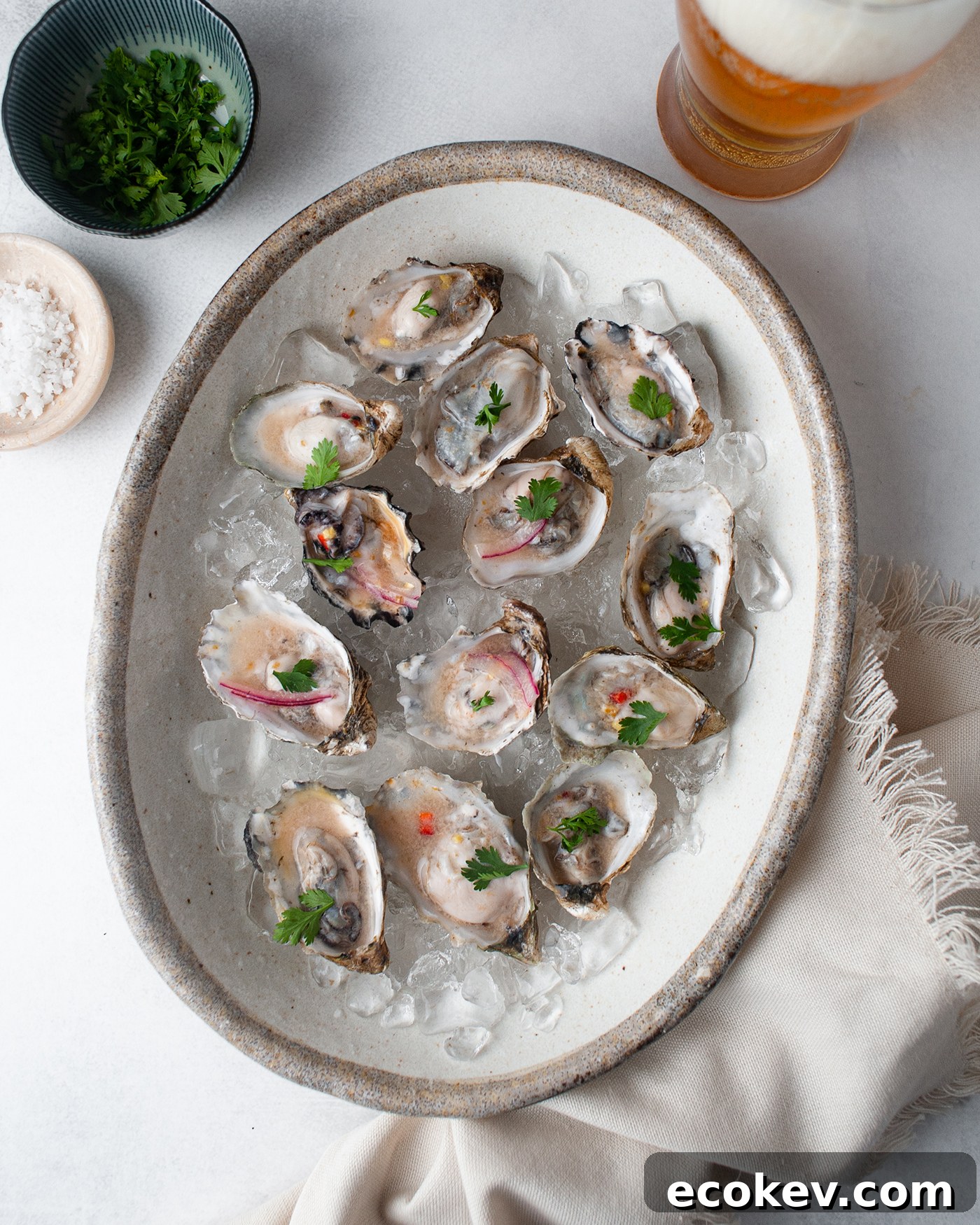
There’s nothing like the bright, briny flavor of fresh seafood, and oysters are a standout.
If you want something vibrant and different, try kinilaw na talaba — the Filipino oyster ceviche.
Kinilaw na talaba is a Filipino version of ceviche made with fresh oysters quickly marinated in vinegar, aromatics, and citrus. It’s a popular pulutan (snack to enjoy with drinks) in Filipino food culture.
This article explains kinilaw, its background, and how to make oyster kinilaw at home. You’ll also find practical tips to ensure your dish is flavorful and safe.
Read on for the recipe and serving suggestions.
Table of Contents
- What are the origins of Kinilaw?
- What is the difference between Kinilaw and Ceviche?
- What is Kinilaw na Talaba?
- What does Kinilaw na Talaba taste like?
- What to serve with Oyster Kinilaw
- Ingredients
- Recipe
- Basic Oyster Preparation Tips and Tricks
- Final Thoughts
- More Recipes You’ll Love
- References & Further Reading
What are the origins of Kinilaw?
Kinilaw is an indigenous Filipino dish that uses acid to cure raw seafood. Archaeological and historical records suggest versions of this technique have existed for centuries, with Spanish accounts mentioning similar preparations in the 1600s.
The term kinilaw comes from the Visayan word kilaw, meaning “to eat raw,” and the dish is traditionally associated with the Visayas region. Across the Philippines you’ll find many regional kinilaw variations that use fish, shrimp, oysters, unripe mango, coconut milk, or sea grapes.
What is the difference between Kinilaw and Ceviche?
Both kinilaw and ceviche are raw seafood preparations cured in acid, but they are not identical. Kinilaw typically relies on vinegar (often coconut vinegar or sukang tuba) as the primary curing agent, while many ceviche recipes use citrus like lime.
Their origins are different as well: kinilaw is native to the Philippines, while ceviche is most often associated with Peru.
What is Kinilaw na Talaba?
Kinilaw na talaba is oyster kinilaw made by briefly marinating fresh oysters in a tangy, spiced vinegar sauce.
This version combines spiced coconut vinegar, coconut milk, citrus, ginger, chilies, and onion for a lively sauce that highlights the oyster’s natural sweetness and brine. Because oysters are tender, the curing time is short — just minutes — making this a fast and impressive dish.
Get 15% Off OSMO Salt
What does Kinilaw na Talaba taste like?
Kinilaw na talaba tastes like a seaside moment — bright, tangy, and aromatic.
The vinegar and citrus bring a clean sourness, chili adds heat, and coconut milk lends a gentle creaminess. Oysters contribute a salty, oceanic sweetness and a plump texture that makes each bite pop.
Enjoy it chilled on the half shell with a cold beer or a light cocktail for an authentic pulutan experience.
What to serve with Oyster Kinilaw:
Oyster kinilaw works as an appetizer, a shared platter, or a pulutan alongside drinks. Filipino lagers like San Miguel or Red Horse pair naturally, but any crisp, refreshing drink will balance the dish’s acidity.
Serve it with fried or grilled finger foods and small plates. Suggested pairings include:
- pork belly sisig
- soy-marinated quail eggs
- veggie lumpia
- a citrus-forward frozen cocktail
Basic Oyster Preparation Tips and Tricks
Freshness is essential. Below are straightforward handling and shucking tips to keep oysters safe and flavorful.
Oyster Preparation and Handling
Store oysters refrigerated on a bed of ice and covered with a damp towel. Avoid letting them sit in melted ice water. Oysters are alive and need air circulation and moisture, so do not store them in a sealed container.
Always check oysters for freshness before preparing. Tap one oyster against another: a live oyster sounds firm or solid when tapped, while a hollow sound can indicate it’s dead. Discard any oyster with an open or damaged shell.
Rinse oysters with cold water to remove dirt and shell fragments.
Keep oysters on ice while preparing and serving.
Shucking Oysters
Use an oyster knife or a flat-head screwdriver to shuck oysters, and protect your hand with a thick towel. Insert the tool into the hinge at a 45-degree angle, then twist or work the tool until the shell opens. Keep shucked oysters chilled on ice until you’re ready to marinate them.
Shucking takes practice; take care to avoid slipping and handle tools safely.
Ingredients
- 24 fresh oysters (any variety)
Marinade
- ½ cup spiced coconut vinegar
- 2 tbsp full-fat coconut milk
- 2 tbsp calamansi juice or lemon juice
- 1 tsp sugar
- 1 tbsp minced ginger
- 1 fresh Fresno chili (or Thai chili / siling labuyo), minced
- 2 tbsp thinly sliced red onion
Garnish and Serve
- young cilantro
- coarse sea salt
Spiced coconut vinegar (sukang tuba) provides a bold, slightly sweet acidity that works beautifully in kinilaw. If unavailable, a good-quality vinegar plus a splash of citrus will still produce excellent results.
Fresno chilies offer moderate heat and fruitiness; substitute Thai chilies or siling labuyo for more intensity. Any fresh East or West Coast oyster will work — choose varieties you enjoy for brine and finish.
Recipe
- Shuck the oysters and discard the top shells.
- Remove oyster meat and place in mixing bowl(s). If using different varieties, keep them separate. Reserve bottom shells for serving.
- In a separate bowl, combine the spiced coconut vinegar, coconut milk, calamansi or lemon juice, sugar, ginger, minced chili, and sliced red onion.
- Pour the marinade over the oysters, stir gently, and let sit for about 5 minutes.
- Return one oyster to each bottom shell, add a spoonful of the marinade, garnish with cilantro and a pinch of coarse sea salt. Serve on a bed of ice.
Final Thoughts
A bite of kinilaw na talaba brings bright, tropical flavors and a touch of seaside nostalgia. This quick recipe is a great way to showcase fresh oysters — simple, bold, and memorable.
If you liked this, explore other snacks, sides, and pulutans for more Filipino-inspired appetizers.
Get 15% Off OSMO Salt
Thank you for reading! If you try this recipe, consider rating it and sharing your photos on Instagram.
Kinilaw na Talaba (Filipino Oyster Ceviche)
Equipment
- mixing bowl(s)
- oyster knife or flathead screwdriver
- bed of ice to preserve oysters
Ingredients
- 24 fresh oysters — any type
Marinade
- ½ cup spiced coconut vinegar
- 2 tbsp full fat coconut milk
- 2 tbsp calamansi or lemon juice
- 1 tsp sugar
- 1 tbsp minced ginger
- 1 Fresno chili (or Thai chili / siling labuyo), minced
- 2 tbsp thinly sliced red onion
Garnish and Serve
- young cilantro
- coarse sea salt
Instructions
- Shuck the oysters and discard the top shells.
- Place oyster meat in mixing bowl(s) and reserve bottom shells for serving.
- Combine marinade ingredients in a separate bowl.
- Pour the marinade over the oysters, stir gently, and marinate for 5 minutes.
- Return one oyster to each bottom shell, add a spoonful of marinade, garnish with cilantro and sea salt, and serve on ice.
Notes
Basic Oyster Preparation Tips and Tricks
The best kinilaw starts with the freshest oysters. Store them on ice, check for live shells, rinse before shucking, and keep them chilled while preparing and serving.
To shuck safely, use an oyster knife, protect your hand with a towel, insert the knife into the hinge at a 45-degree angle, and work until the shell opens. Keep shucked oysters on ice and handle tools carefully.
Did you make this recipe?
Share your results and tag the source if you post photos.
Sharing this recipe is encouraged with proper attribution. Fork & Spoon by Noelle Noriesta is licensed under CC BY-NC-SA 4.0.
More Recipes You’ll Love
Check out this recipe
Check out this recipe
Check out this recipe
References & Further Reading
Relevant sources and additional reading on kinilaw, vinegar varieties, and oyster preparation are available from culinary and historical references.