Searching for an ancestor’s divorce records can challenge even experienced genealogy researchers.
Finding marriage records is often one of the first steps in family history research.
But what happens when the marriage ended?
What if your ancestors divorced?
Divorce records are generally not filed with birth, marriage and death vital records. Below are strategies and sources to help you locate an ancestor’s divorce documentation.
Why Did Ancestors Divorce?
Divorce was less common historically than it is today, but ancestors still divorced for many reasons: abuse, abandonment, financial problems, or lack of support, among others.
Finding Clues That Your Ancestors Divorced
As you research, you may uncover clues suggesting a marriage ended. Look for indicators in a variety of records.
- Beginning with the 1880 census, check the marital status column for a “D.”
- Marriage records that list a previous marriage for the bride or groom.
- Children in census records with a different surname than the mother.
- Deeds or land records showing a married woman acting as a femme sole (a legal status for a woman acting independently). Note: a single woman called a femme sole could own property and sue or be sued.

Where to Find an Ancestor’s Divorce Record
Divorce was sometimes considered scandalous, but petitions were still pursued by spouses. Locating these records can be time-consuming, so patience and a focused plan are essential.
Before searching, learn how divorce was handled in the place and era your ancestor lived. Laws and customs determined where cases were recorded. Divorce records were often kept in county courts or state legislative records. For example:
- In early 19th-century North Carolina, divorces were granted by the state General Assembly.
- In colonial New England, civil courts handled divorces.
- In Spanish-influenced colonies, couples might seek a dissolution through church or civil mechanisms aligned with Catholic practice.
Understanding local procedures for divorce during the relevant period is crucial to locating records.
This is an example of a divorce petition to the North Carolina legislature filed by Lucy Hendricks in 1824.
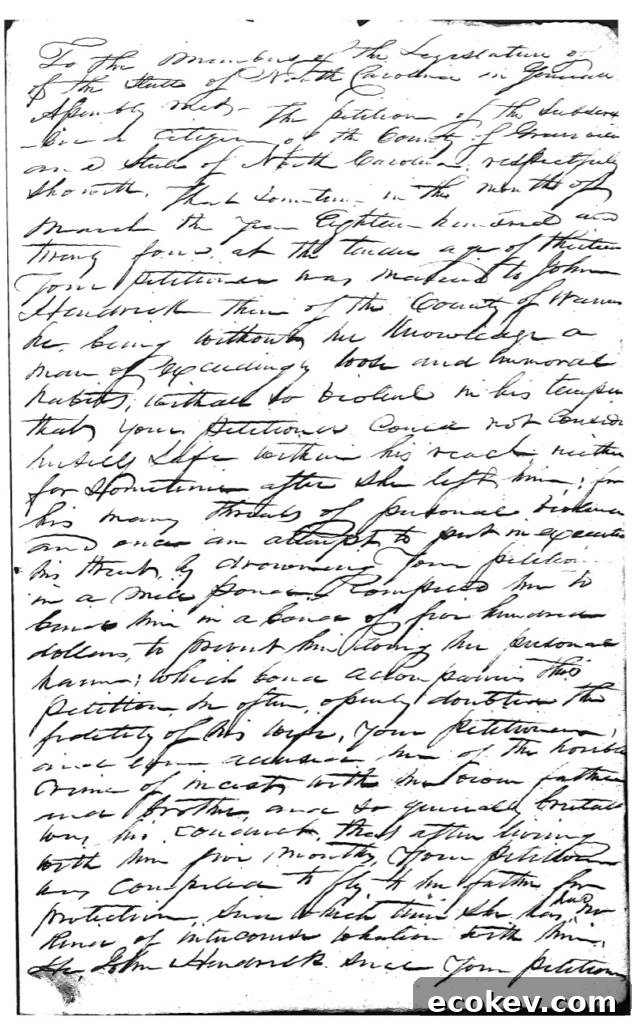
Divorce Petition of Lucy Hendricks (Source: NC Digital Collections)
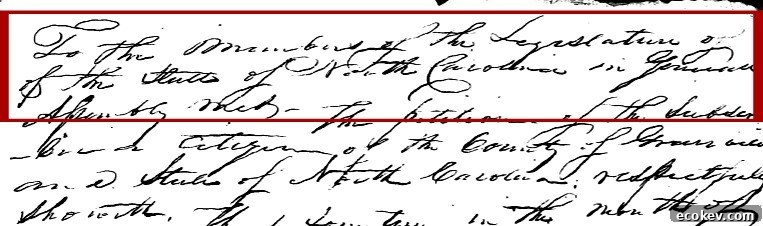
“To the members of the Legislature of the State of North Carolina in General Assembly met ….”
Lucy Hendricks petitioned the North Carolina General Assembly for a divorce from John Hendricks of Warren County. She alleged abuse and left him to return to her father. The petition sought legal freedom to remarry, though the record does not clearly state whether the divorce was granted.
In another case from 1818, Charlotte Street of Orange County petitioned the North Carolina General Assembly after her husband abandoned the family due to debts. At that time married women had limited legal status and were often exposed to their husbands’ financial obligations; Charlotte sought either a divorce or protection from her husband’s creditors so she could support her children.
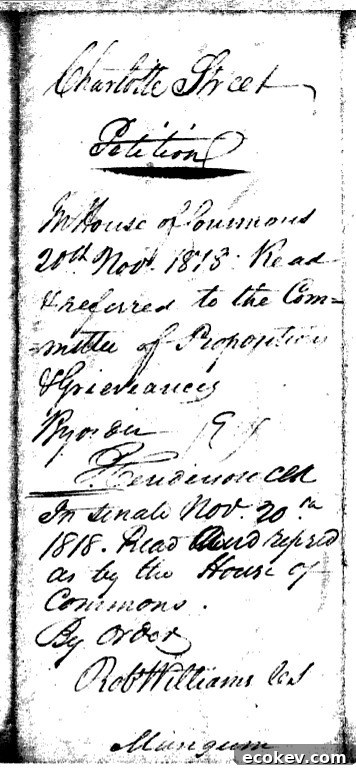
In short, Charlotte Street sought relief so she would not be held liable for her husband’s debts.
Tips for Finding Divorce Records in State Legislative and County Court Records
Searching legislative or county court archives can be tedious. Use these tactics to improve your chances:
- Consult a state archivist to learn which collections—state or county—hold divorce records for your ancestor’s region and time period.
- Determine whether indexes, abstracts, or finding aids exist.
- When indexes are available, use them to locate the original record.
- If no finding aids exist, narrow your search by creating a timeline of the couple’s lives and read records from that time frame. This is the most time-consuming part, but it often yields results.
Even if you do not find a divorce record, examining these sources improves your understanding of the local community, legal practices, and the historical context affecting your ancestors—and it sharpens your skill at reading older handwriting.
“Read All About It” in the Newspapers

Local newspapers are an important resource for divorce evidence. Look in legal notices, court proceedings, and local news sections. Content ranges from short announcements to longer, detailed accounts when cases were particularly contentious.
For example, an announcement appeared in the “City Bulletins” section of The Washington Post on 10 February 1906 reporting a divorce notice. Another item from 1911 described an appeal in a divorce case and pointed researchers to the state supreme court records for more information. Higher court records sometimes include summaries or copies of lower-court documents—especially valuable when county records were lost or destroyed.
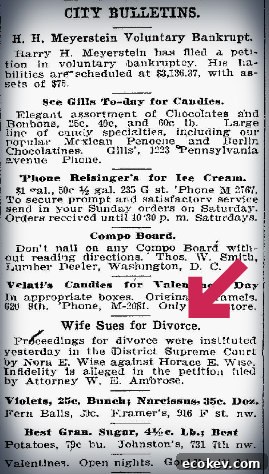
The Washington Post, 10 Feb 1906 (Source: Ancestry.com)
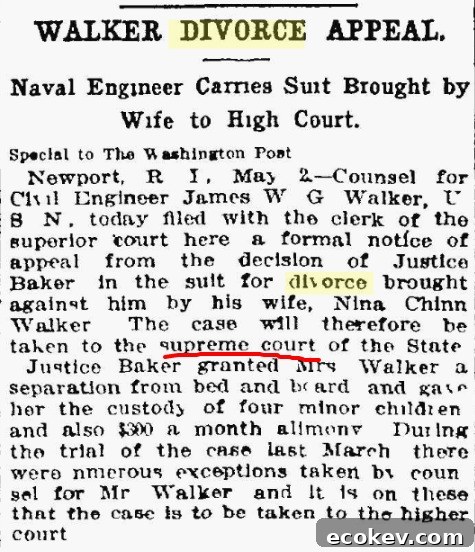
The Washington Post, 3 May 1911 (Source: Ancestry.com)
5 Practical Tips to Find Your Ancestor’s Divorce Records
Follow these steps to structure your search:
- 1. Create a clear research plan before you begin.
- 2. Gather as much information as possible about your ancestors from traditional records.
- 3. Narrow the likely date range for a divorce using the couple’s other records.
- 4. Identify where divorce records for that place and time are held and determine how to access them. If you cannot visit in person, explore alternatives such as contacting local repositories or hiring a local researcher.
- 5. Begin the research and be persistent.
Even when a divorce record is not found, the process often uncovers valuable contextual documents and improves your overall research skills.
Other Posts of Interest
- How To Confidently Research Your Ancestor’s Marriage Records – Part 1
- How To Confidently Research Your Ancestor’s Marriage Records – Part 2
- How to Determine Your Ancestor’s Birth Date (Even If No Birth Record Is Found)
***Please note this post originally disclosed the presence of affiliate links and referenced site policies. The information above focuses on locating divorce records and understanding historical procedures without any external links included here.