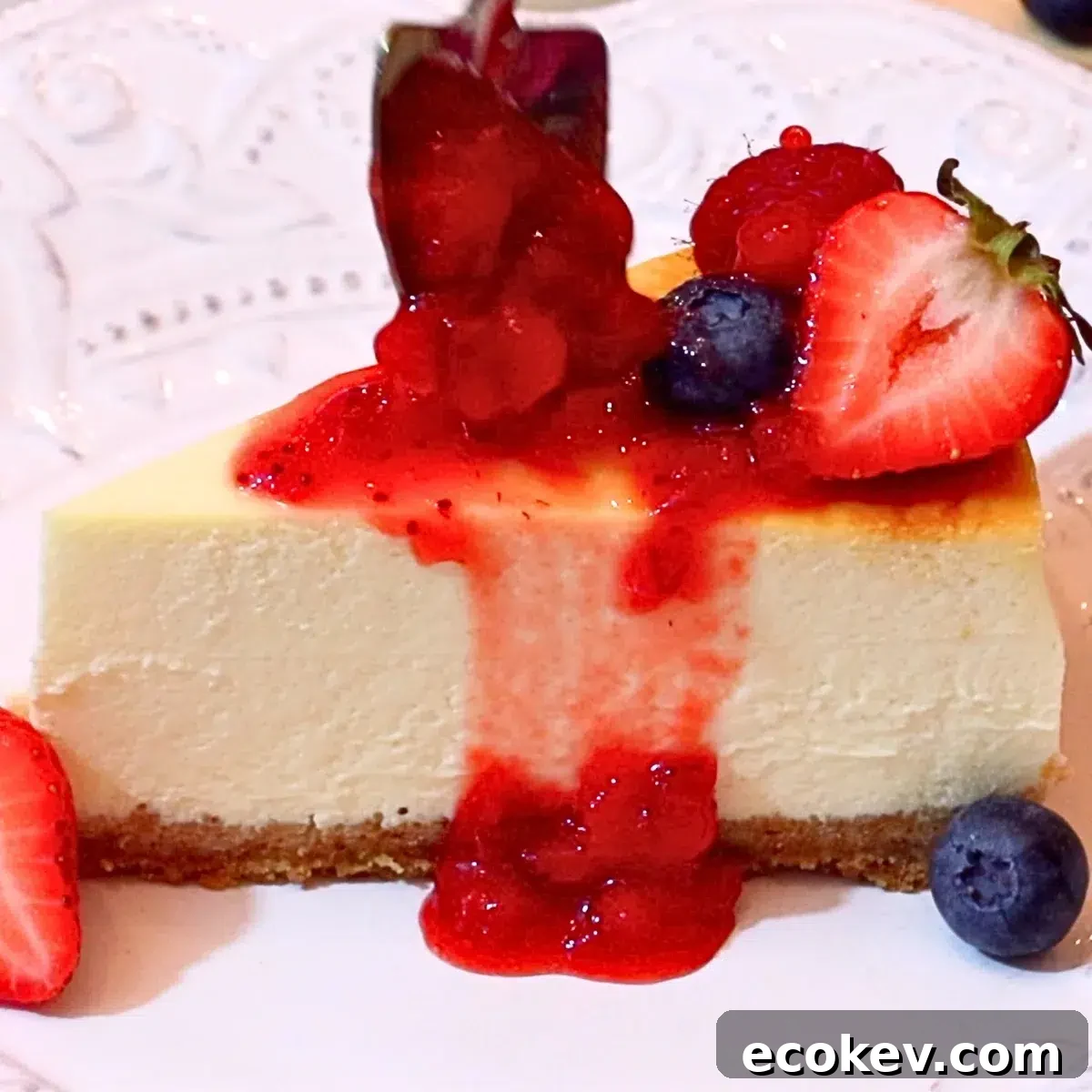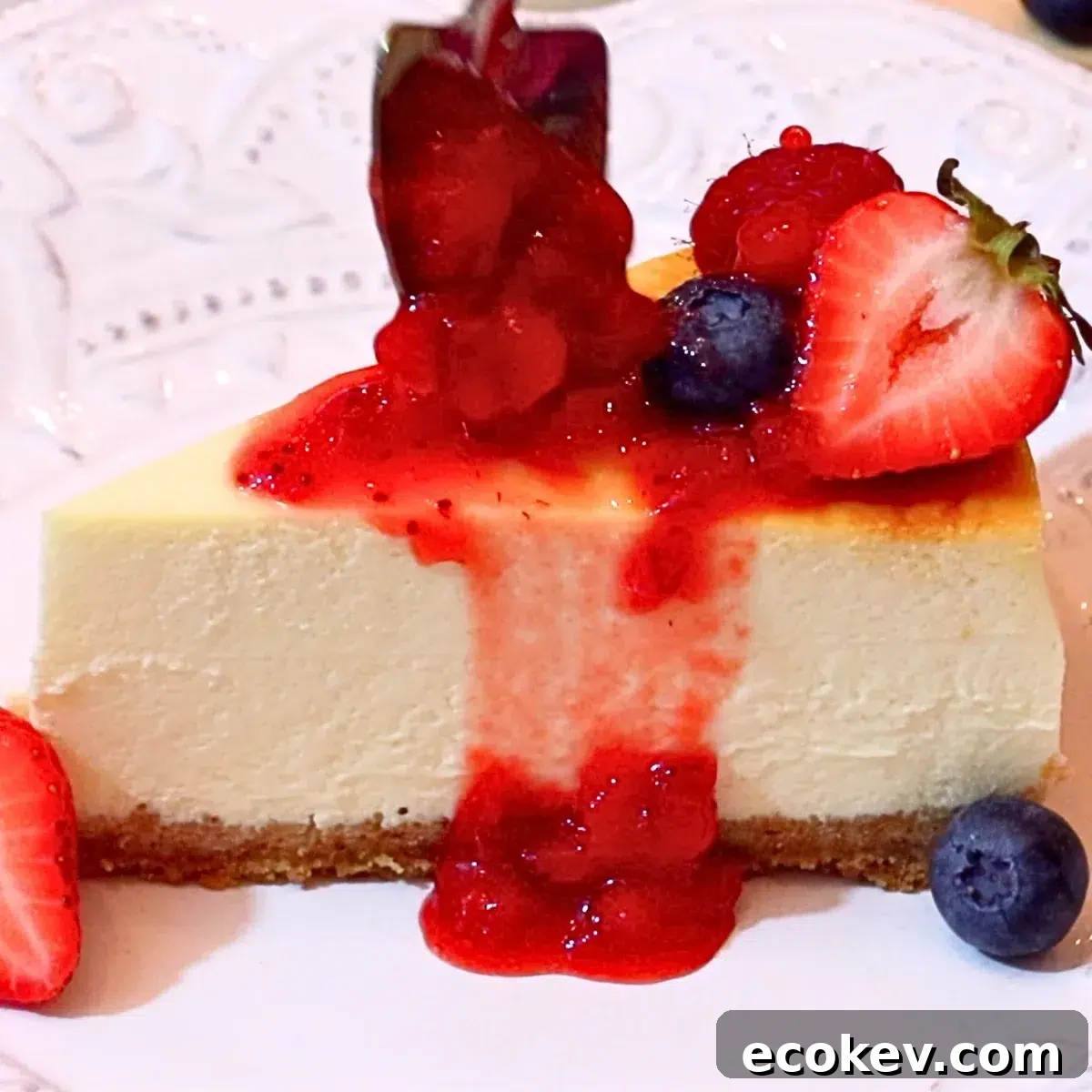
Looking for the best classic New York cheesecake? Here’s a clear, polished guide to making a smooth, creamy baked cheesecake with a buttery graham cracker crust.
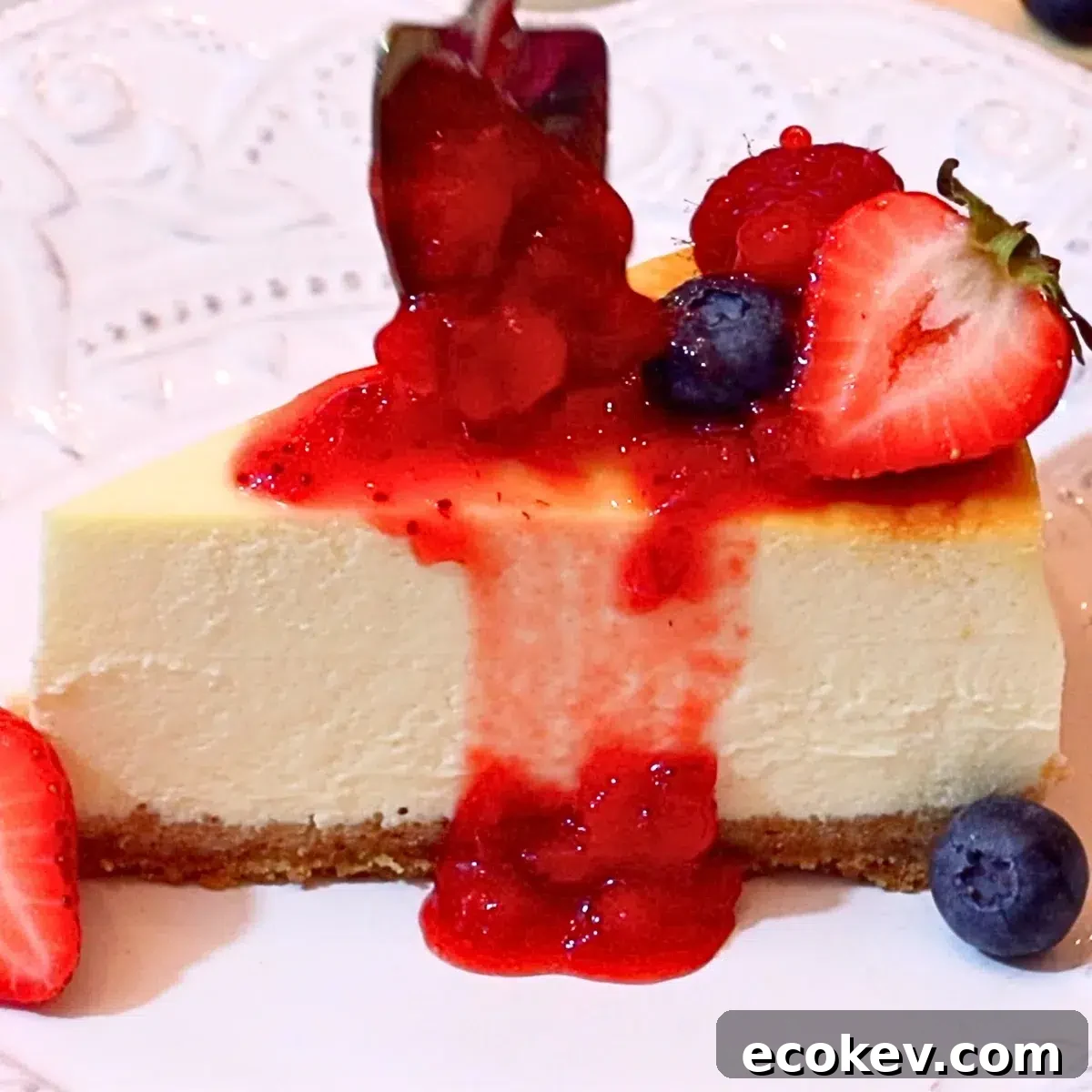
The Best New York Cheesecake
Baked cheesecake remains a beloved dessert because of its tangy, velvety filling paired with a toasty, buttery crust. One bite delivers a rich, indulgent moment that stands apart from other sweets. Over many years of testing and tasting — and after visiting numerous bakeries across New York — I developed a reliable recipe that yields a tall, creamy, and smooth cheesecake you can make at home any time.
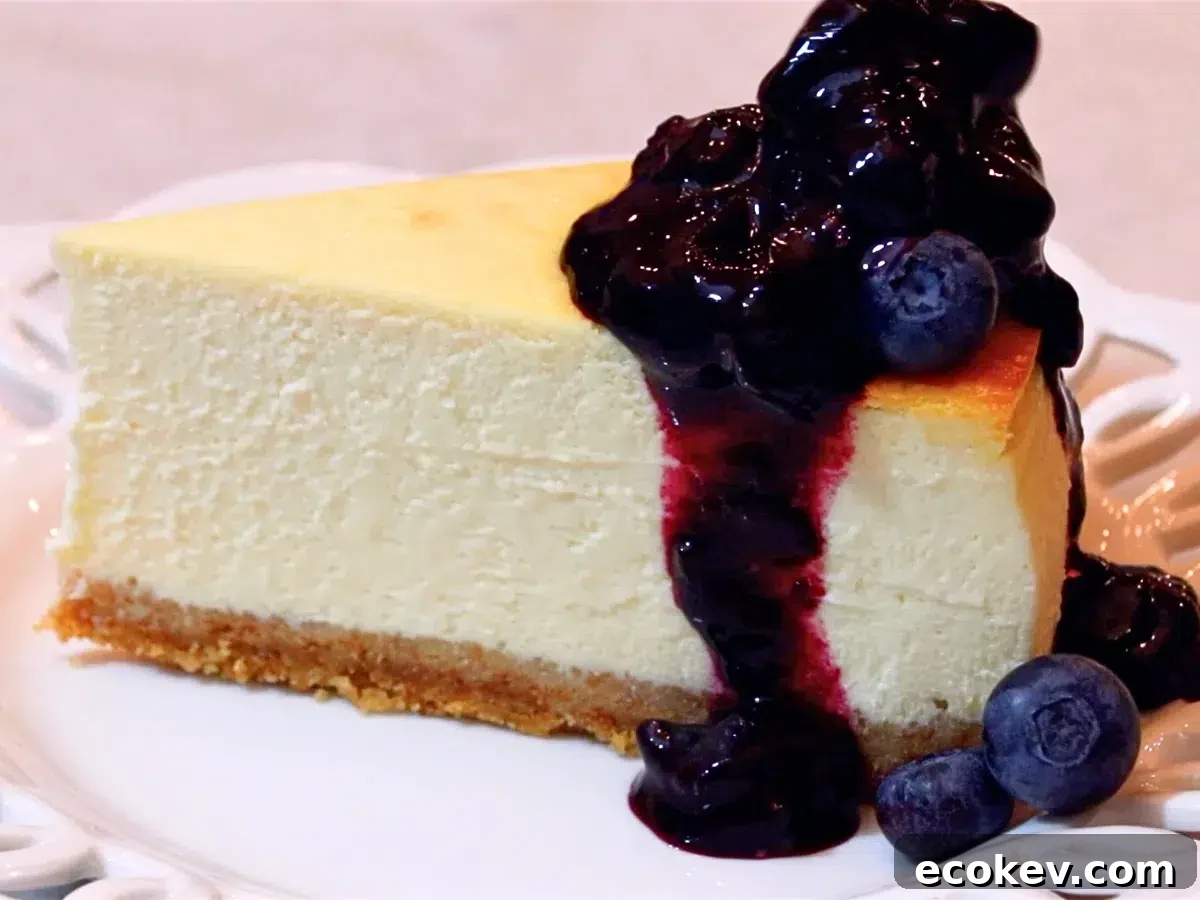
5 Reasons You’ll Love This Recipe:
- Incredibly smooth and creamy: The filling has a silky texture that’s the star of this cheesecake.
- Rich without being heavy: It’s indulgent but not overly dense.
- Tall, elegant presentation: Perfect for celebrations and special occasions.
- Not overly sweet: Balanced sweetness enhances the cream cheese flavor.
- Easy to make: The filling comes together in about 5–10 minutes with simple ingredients.
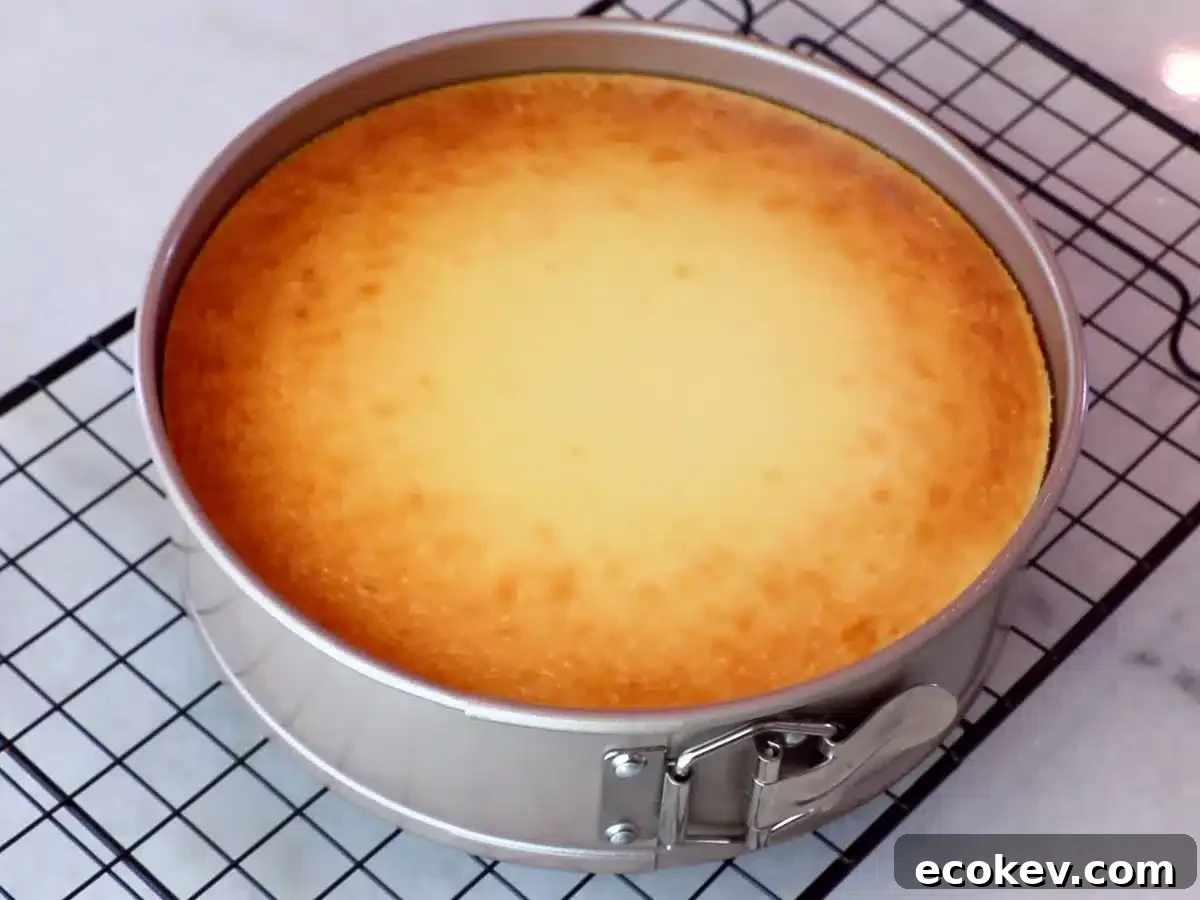
This cheesecake is versatile: make it in a springform pan, bake it crustless, or divide the batter into cupcakes. See the toppings section below for serving ideas.
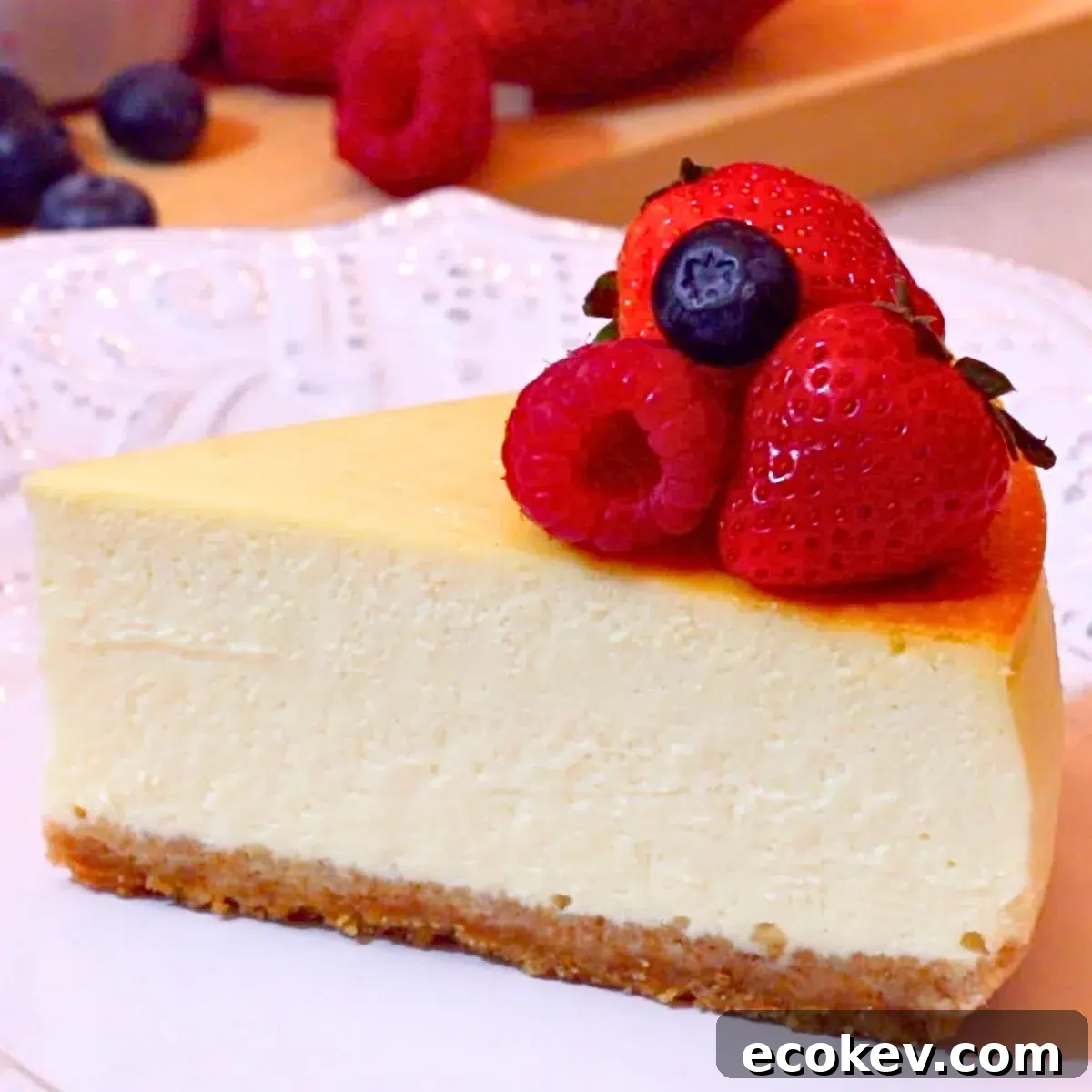
3 Secrets for an Amazing Texture
These three adjustments transformed my cheesecake’s texture and consistency.
1. Water bath
Baking the cheesecake in a water bath gives gentler, more even heat, producing an exceptionally smooth texture and reducing the chance of cracks. It adds a small extra step but delivers much better results.
2. More liquid + cornstarch
Adding more liquid, like heavy cream, together with cornstarch helps the filling set while staying light and creamy. Cornstarch stabilizes the mixture and improves texture compared to relying on eggs alone.
3. Sour cream
Sour cream adds a subtle tang and a refreshing finish while contributing to a silky consistency.
Video: Watch How to Make the Baked Cheesecake
Follow the step-by-step video tutorial to see each technique and timing in action.
Tips for the Ingredients
Cheesecake Crust
- Graham crackers: Use your preferred brand and crush them evenly for a consistent crust.
- Granulated sugar: A touch of sugar enhances texture and flavor.
- Unsalted butter: Melted butter binds the crumbs and gives a buttery crust.
Cheesecake Filling
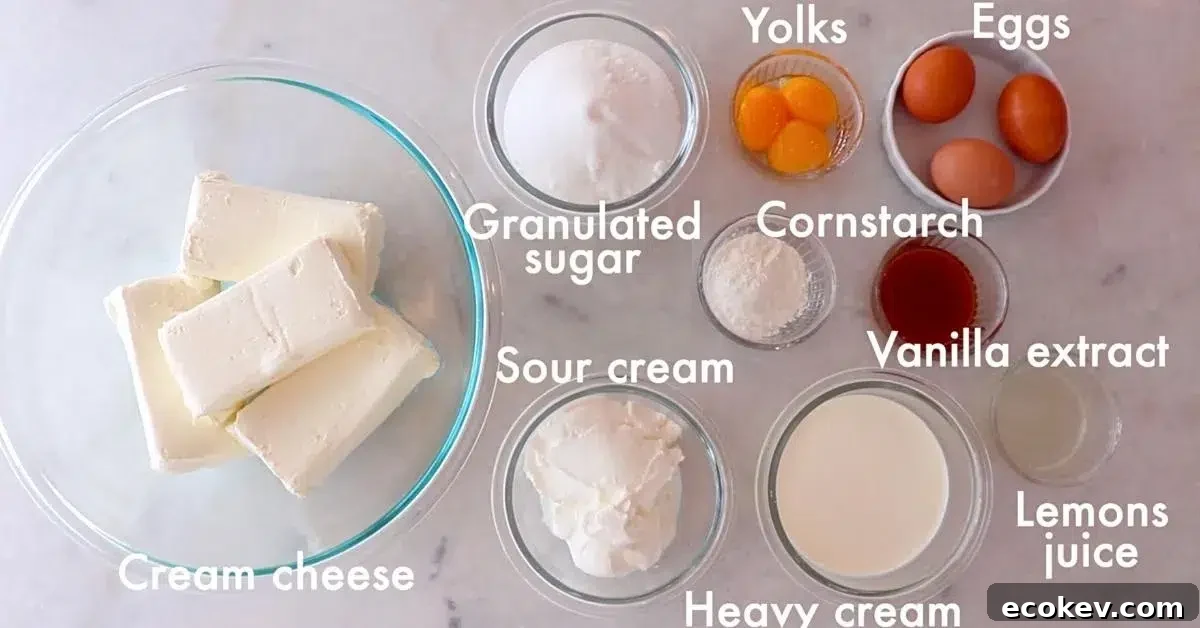
- Cream cheese: Use full-fat cream cheese, not the spreadable soft kind, for best results.
- Granulated sugar: White sugar like caster or regular granulated sugar works well.
- Sour cream: Adds brightness and creaminess.
- Heavy cream: Lightens the texture and softens the cream cheese flavor.
- Cornstarch: Stabilizes and creates a smoother, lighter set.
- Egg yolks and whole eggs: Provide structure and richness.
- Vanilla and lemon: Vanilla complements the filling; a bit of lemon juice (or zest) adds a fresh note—adjust to taste.
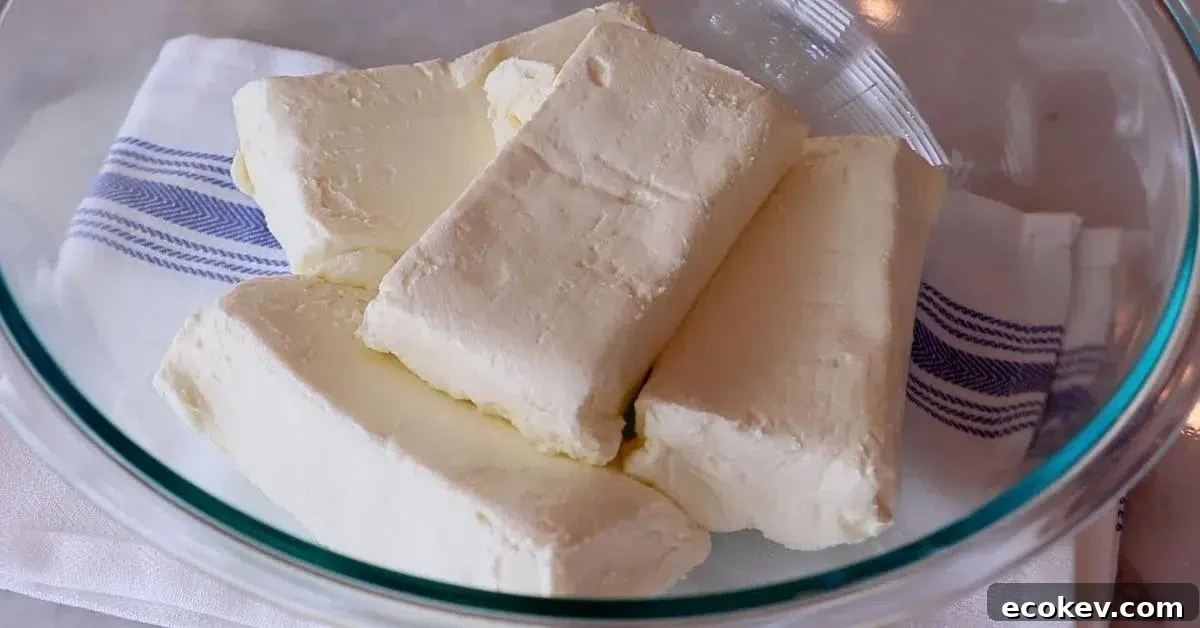
Use softened cream cheese
Bring cream cheese to room temperature before mixing. Cold, firm cream cheese doesn’t blend smoothly and can leave lumps. Depending on your kitchen, leave blocks out for 3–6 hours until fully softened.
Tools You’ll Need
- 9-inch springform pan
- Aluminum foil or oven bag
- Ziplock bag and rolling pin or food processor for crushing crumbs
- Large bowl and whisk or stand mixer with paddle attachment
- Rubber spatula
- Pot for hot water
- Large roasting pan or deep baking tin for the water bath
- Wire rack
How to Make New York Cheesecake
Preparation:
- Soften cream cheese at room temperature.
- Prepare hot water for the water bath.
- Melt butter for the crust.
- Lightly butter the inside of the springform pan to help release the cake later.
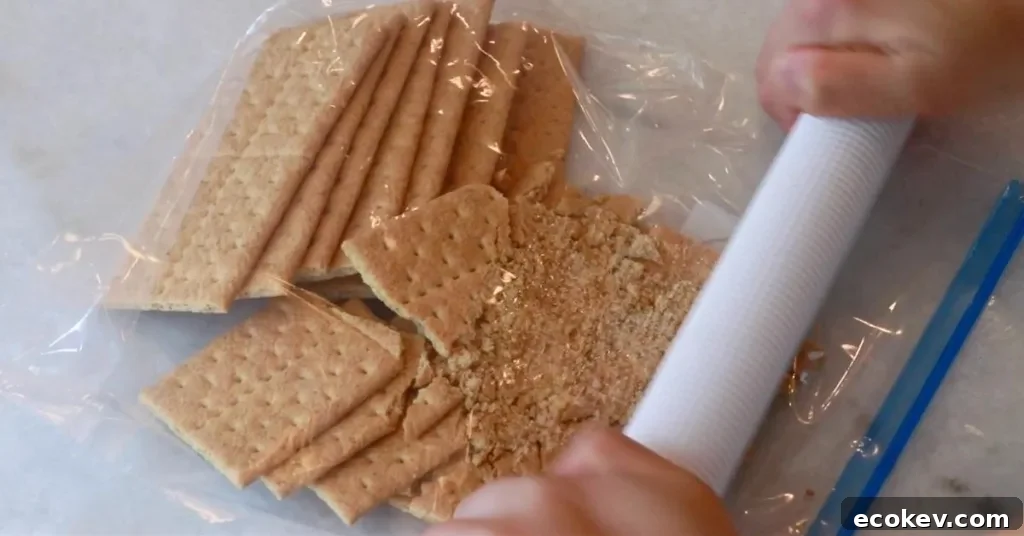
Mix the crust ingredients
Crush graham crackers in a ziplock bag with a rolling pin or pulse them in a food processor. Combine crumbs, melted butter, and sugar until evenly mixed.
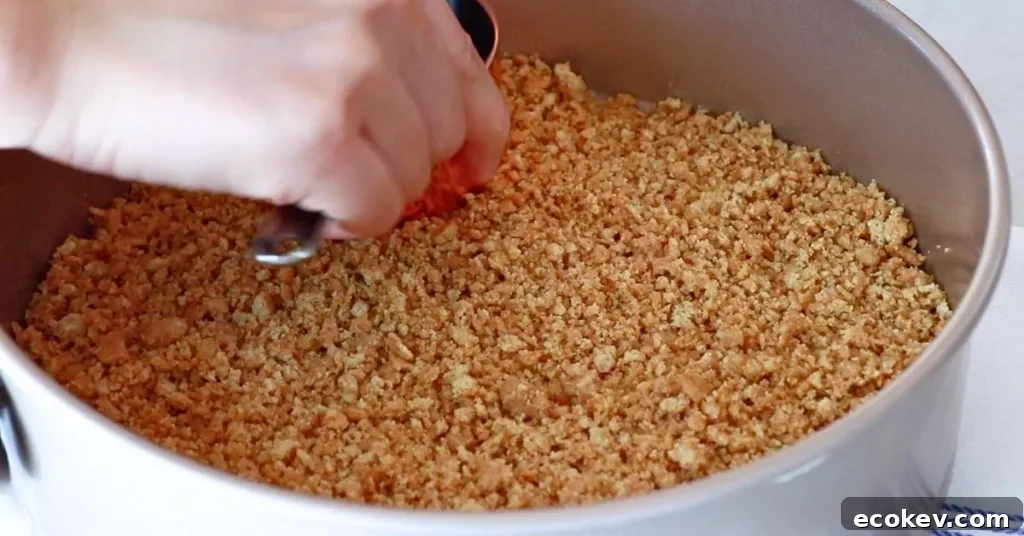
Form the crust in the pan
Press the crumb mixture firmly into the prepared pan using a flat object, such as a measuring cup, to compact the crust evenly.
Tip:
Press the crust firmly to avoid gaps or crumbling after baking.
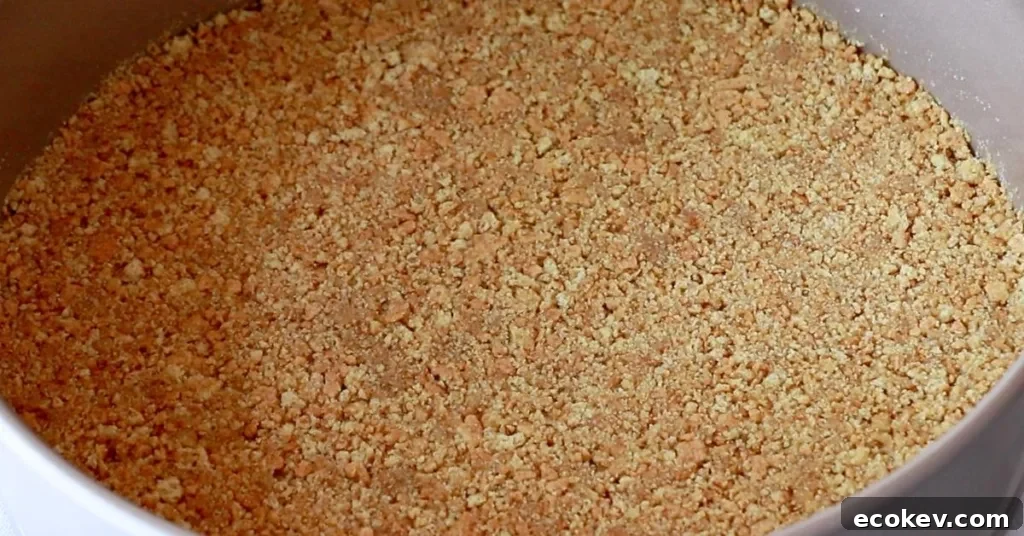
Prebake the crust (optional)
Wrap the springform pan sides with several layers of aluminum foil or use an oven bag to prevent water leaks. Prebake the crust at 340°F (171°C) for about 8 minutes until the edges are lightly golden, then cool completely. If you skip prebaking, chill the crust in the fridge until ready to use.
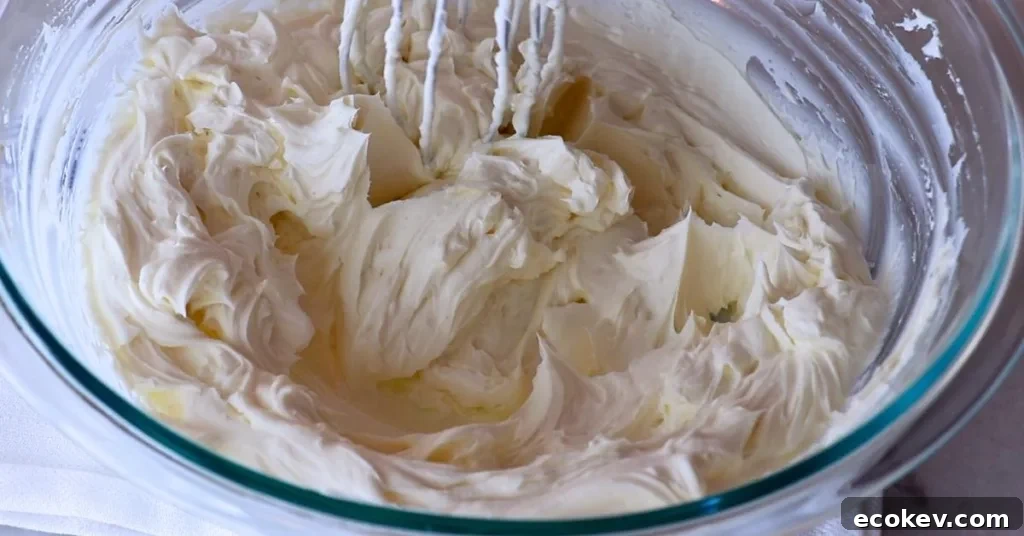
Mix cream cheese and sugar
Beat room-temperature cream cheese in a large bowl until smooth. Add granulated sugar and mix again until fully incorporated and silky.
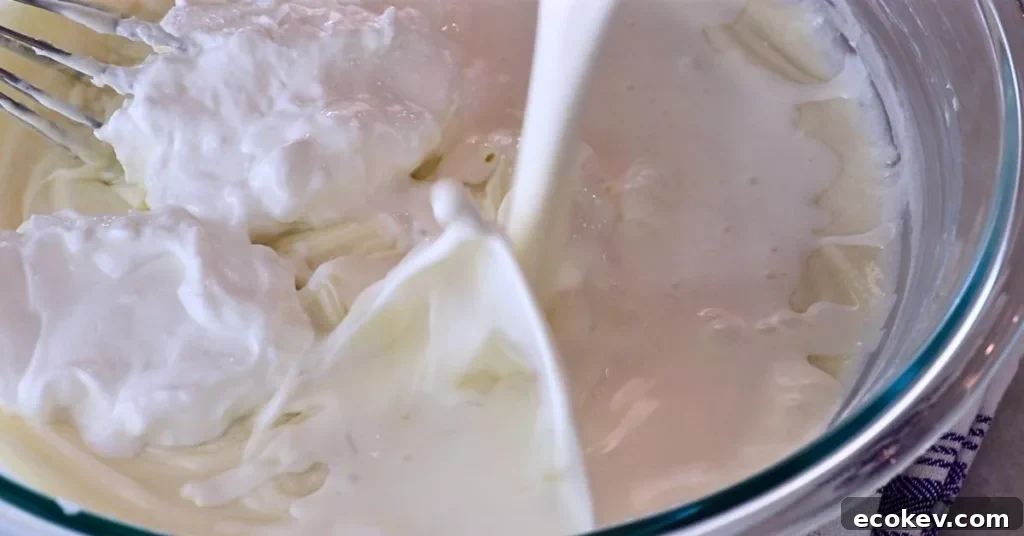
Add sour cream and heavy cream
Whisk in sour cream and heavy cream until smooth, scraping the bowl to ensure everything is evenly blended.
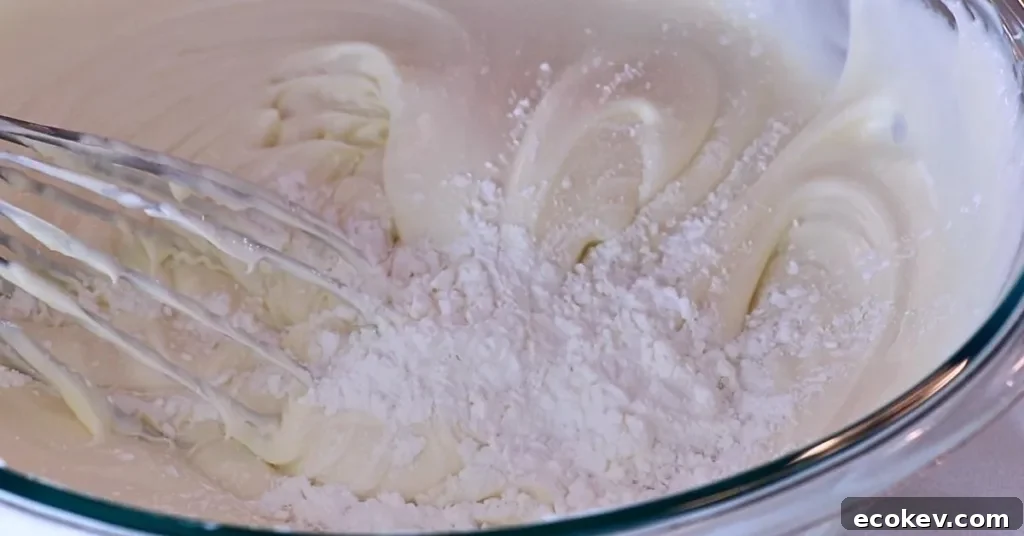
Add cornstarch and eggs
Whisk in cornstarch until there are no lumps. Add egg yolks and whole eggs, mixing gently until just combined. Avoid over-whipping to prevent incorporating excess air.
Tip:
Do not whip the batter too vigorously; trapped air can cause cracks or uneven texture.
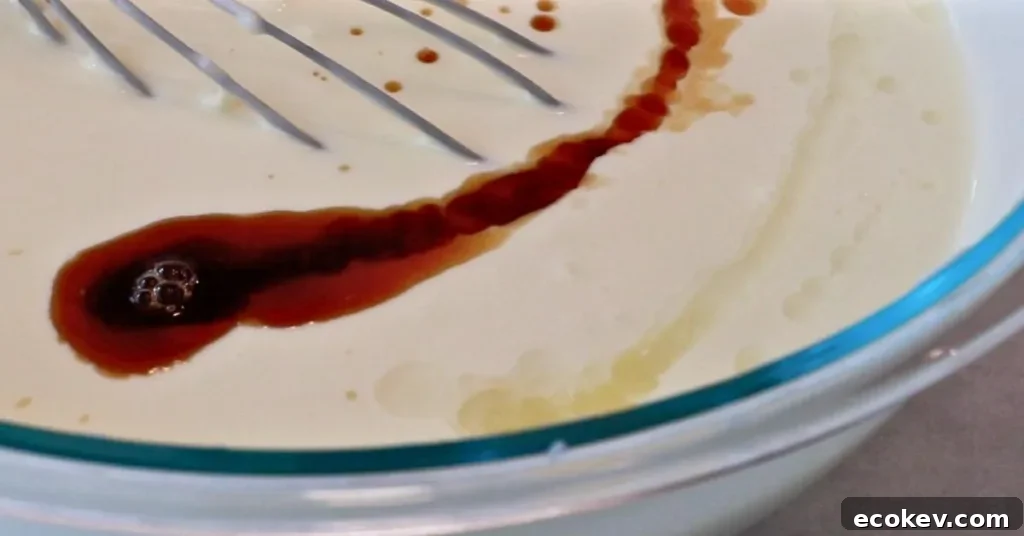
Add vanilla and lemon juice
Fold in vanilla extract and lemon juice, then scrape the bowl with a spatula to ensure a uniform batter.
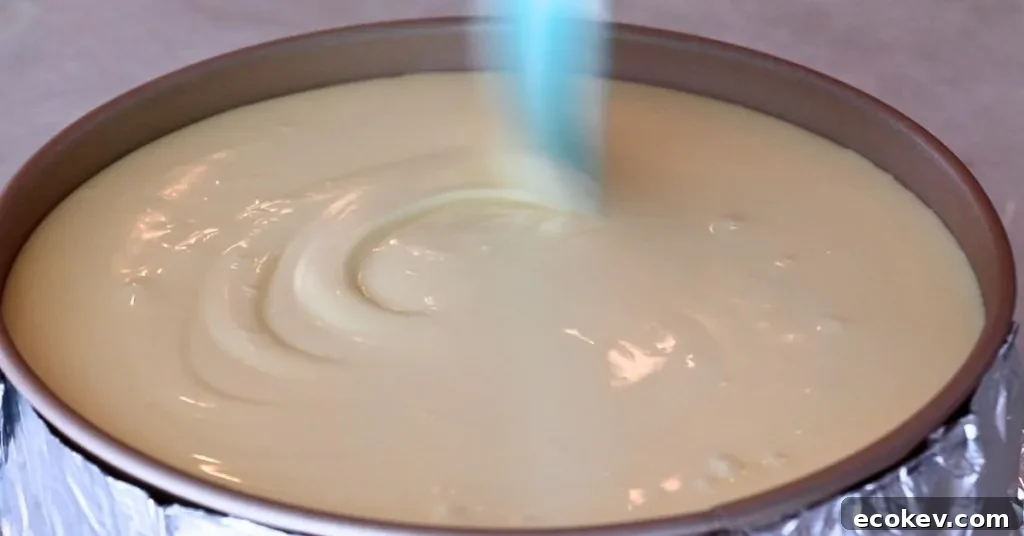
Pour the filling into the prepared pan
Pour the batter into the crust-lined pan. Place a thin towel or paper on the bottom of a roasting pan, set the cheesecake on top, then pour hot water into the roasting pan until it reaches about one-third of the springform height.
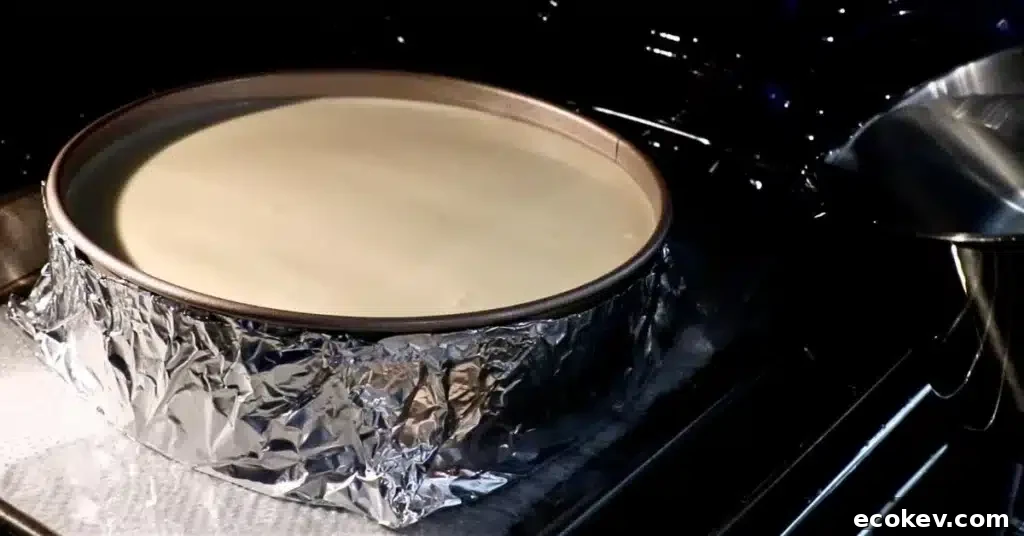
Bake the cheesecake
Preheat oven. Bake at 340°F (171°C) for 30 minutes in the water bath, then reduce to 310°F (154°C) and bake another 65–75 minutes. The center should wobble slightly like pudding when gently shaken. Do not open the oven while baking. When done, turn off the oven and crack the door open about an inch using a wooden spoon; wait 30 minutes before removing the cake. This gradual cooling helps prevent cracks and ensures the center sets.
Tip:
Starting at a higher temperature produces a light caramelization on the surface. If you prefer no browning, bake at the lower temperature from the start and extend the baking time slightly.
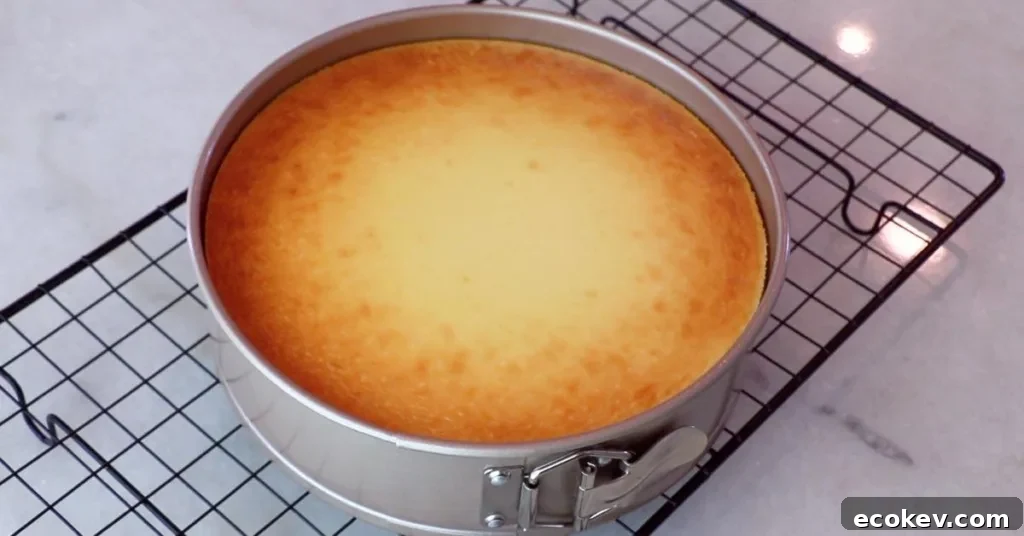
Chill completely
Cool the cheesecake on a wire rack, then refrigerate for at least 6 hours (overnight is best) before removing from the pan and serving.
How to Remove the Cheesecake from the Pan
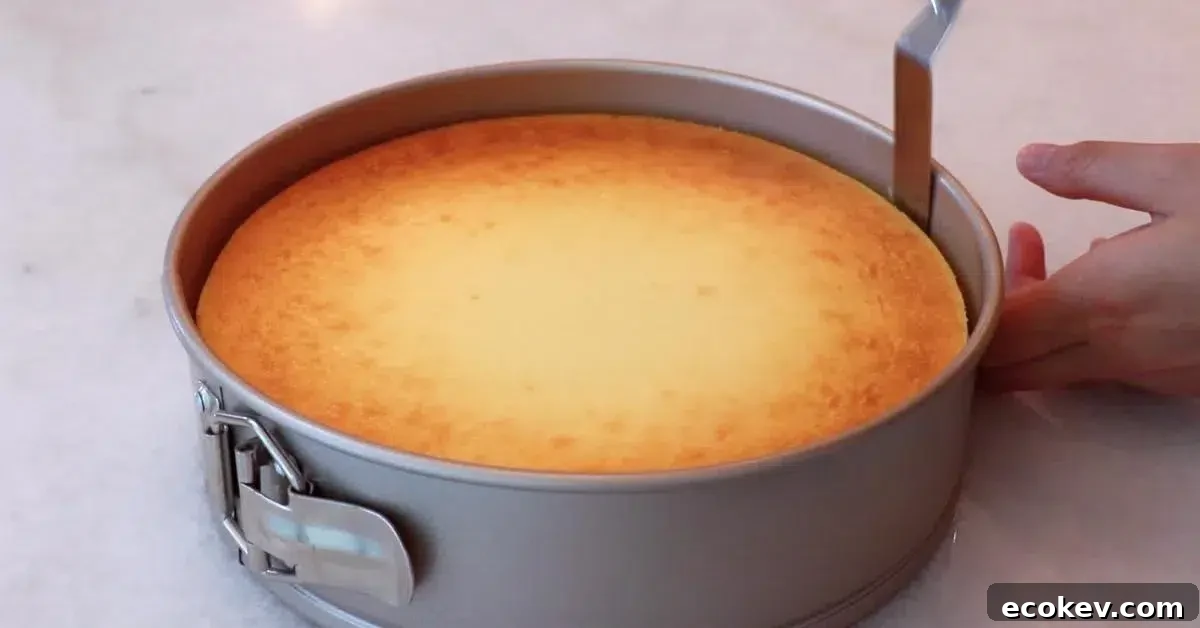
- Run a thin cake spatula or small knife around the edge to loosen the cake.
- Release and remove the springform ring.
- Slide a cake palette under the crust and gently separate it from the pan base.
- Transfer the cheesecake to a serving plate or board using the palette.
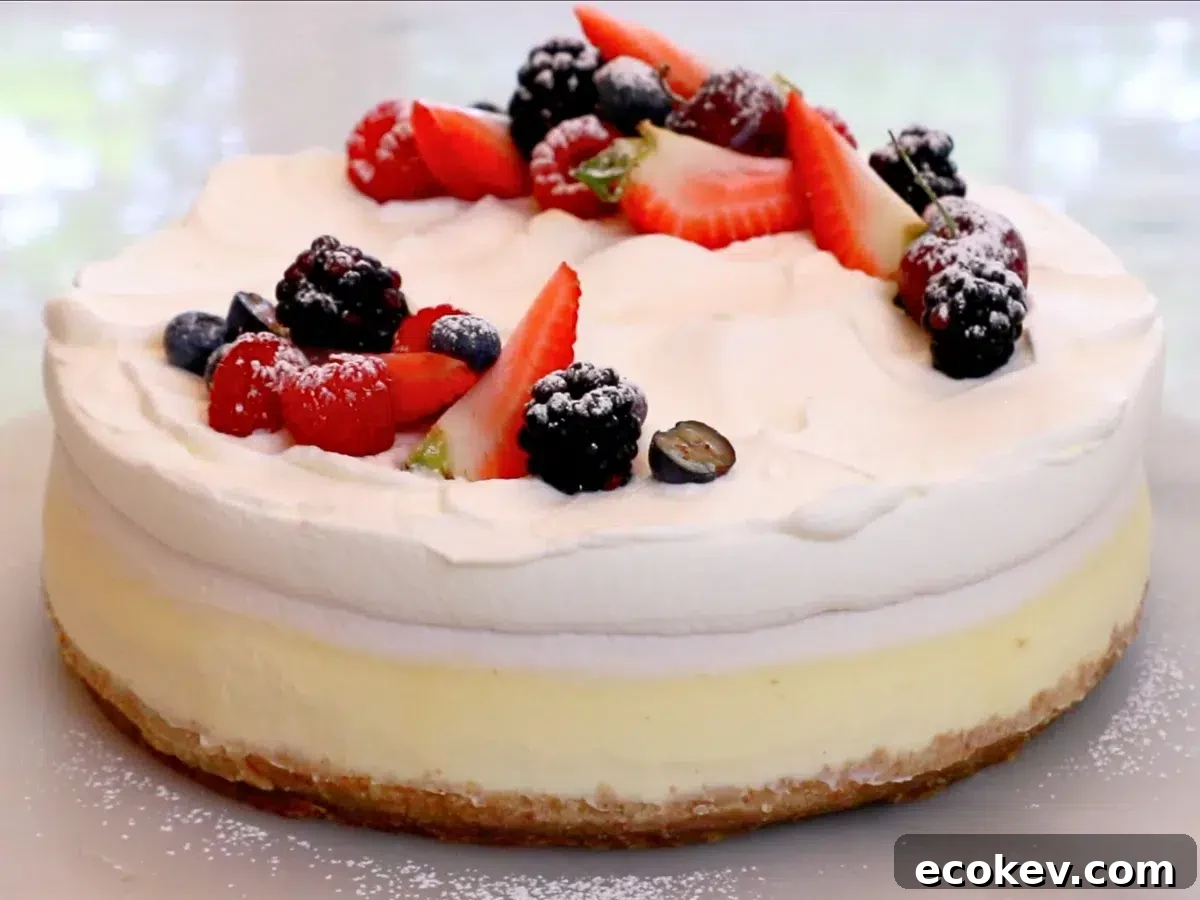
Toppings for New York Cheesecake
Top your cheesecake any way you like. Popular options include:
- Whipped cream
- Sour cream
- Lemon curd
- Fruit jams (strawberry, blueberry)
- Fresh fruit or fruit compote
- Caramel or chocolate sauce
- Cream cheese frosting or flavored whipped creams (mascarpone, chocolate)
Which topping is your favorite? Try different combinations to find your preferred balance of sweetness and brightness.
How to Slice Cheesecake
Follow these steps for clean slices:
- Warm a sharp knife under hot water.
- Wipe the blade dry.
- Slice with a steady motion.
- Wipe the knife between cuts and reheat if needed.
- Repeat until all slices are done.
Frequently Asked Questions
Wrap the cake tightly and seal any cut sides with plastic wrap to prevent drying. Store in the refrigerator for 4–5 days.
Cheesecake is best within a few days. Its flavor can deepen in the fridge, but it may become slightly denser over time.
Yes—omit the crust and follow the same filling and baking instructions.
Common causes include:
- Skipping the water bath: The water bath provides gentle, even heat and reduces cracking.
- High oven temperature: If the oven is too hot or the cake bakes too quickly, the surface can crack—try lowering the temperature.
- The cake stuck to the pan: As the cheesecake cools, it contracts; if it’s stuck to the sides, cracking can occur. Greasing the pan evenly and loosening the cake with a thin spatula just after baking helps prevent this.
More Classic Dessert Recipes
If you enjoy this New York cheesecake, consider trying other classic desserts such as apple pie, tiramisu, crème brûlée, fresh fruit tart, shortbread cookies, or crepes.
Did you try the recipe?
Please share your feedback in the comment section — I’d love to hear how it turned out for your gatherings and special occasions.
Thank you! – Aya