- Rethinking Calcium in Midlife
- Calcium’s Role in the Body: More Than Bone Health
- Calcium After 50: Why It Deserves More Attention
- How Calcium Deficiency Develops and Why It’s Easy to Miss
- Calcium Testing: What Blood Tests Can and Can’t Tell Us
- Why More Calcium Isn’t Always Better
- How Much Calcium Is Actually Needed?
- Calcium Needs Its Partners: Why Bone Health Is a Team Effort
- What Can Interfere With Calcium Absorption?
- How to Improve Calcium Absorption From Plant Foods
- 12 Non-Dairy Calcium-Rich Foods (With Bioavailability in Mind)
- Calcium After 50: Putting the Pieces Together
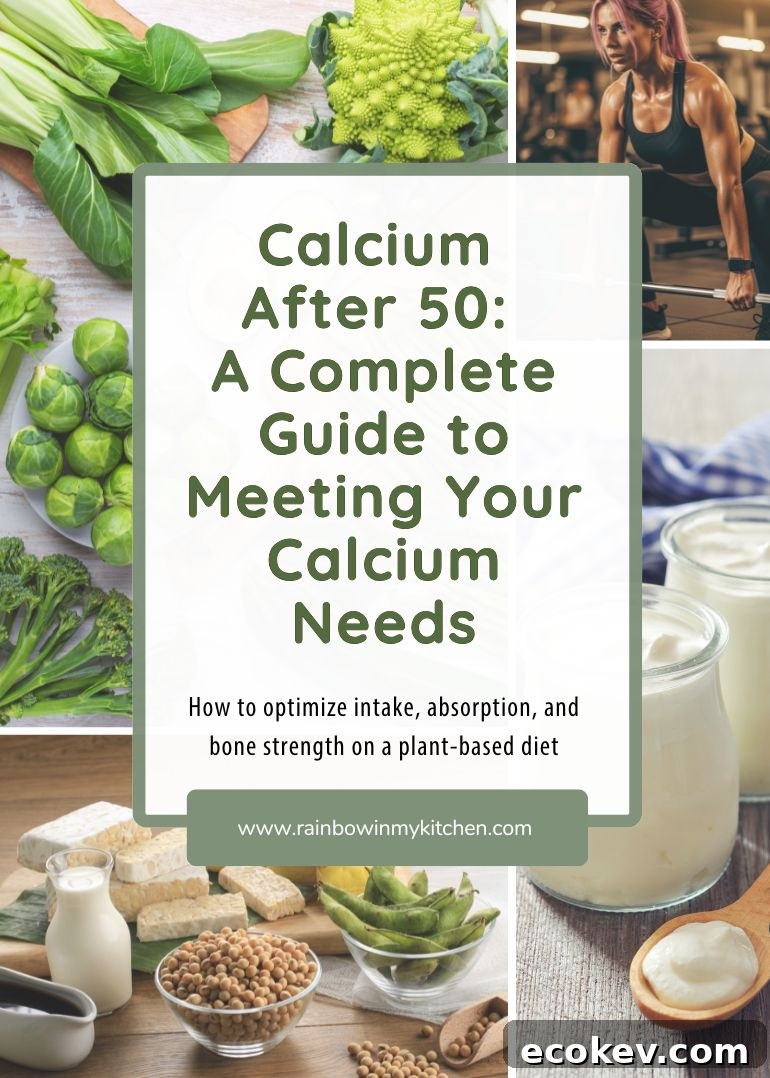
Rethinking Calcium in Midlife
Calcium is one of the most discussed nutrients in women’s health, yet many people are not taught how it truly functions. Common advice to “get enough” often focuses solely on bones and gives little guidance on absorption, balance, or long-term strategy. Intake alone is only part of the picture.
After age 50, hormonal changes affect how the body preserves bone, so absorption and regulation become more important than simply reaching a target number. What supported bone health in your 30s may need adjustment in midlife. Understanding these shifts is essential: strong bones rely on multiple nutrients and lifestyle habits, and more calcium is not always better.
This guide explains what changes after 50, how much calcium is generally needed, why absorption matters, and how to support skeletal health through food, complementary nutrients, and lifestyle rather than relying solely on high-dose supplements.
Calcium’s Role in the Body: More Than Bone Health
Calcium is the most abundant mineral in the body. About 99% of total calcium is stored in bones and teeth, providing structure and long-term skeletal stability. The remaining 1% circulates in blood and soft tissues and is crucial for:
- muscle contraction, including the heart
- nerve signal transmission
- blood clotting
- hormone release
- heart rhythm regulation
- blood vessel contraction and relaxation
Because these functions are vital, the body tightly controls blood calcium. If dietary intake is insufficient, calcium is taken from bone to keep blood levels normal. Over time, this compensatory process can weaken bone and raise fracture risk. Calcium is therefore foundational for whole-body health, not just bones.
Calcium After 50: Why It Deserves More Attention
After 50, calcium becomes more central to health discussions, especially for women. Declining estrogen during perimenopause and menopause increases bone breakdown and can outpace bone formation. This hormonal shift contributes to accelerated bone loss in midlife.
However, higher supplemental doses are not always the solution. Historically, high-dose calcium supplements were widely recommended to prevent osteoporosis. Current evidence supports a more balanced approach that emphasizes dietary sources, selective supplementation when needed, and attention to nutrient interactions.
The focus in midlife should be absorption, balance, and proper utilization—making sure calcium is available in forms the body can use and combining it with supportive nutrients and activity patterns.
How Calcium Deficiency Develops and Why It’s Easy to Miss
Calcium deficiency usually develops slowly over years when intake is low or absorption is impaired. Because blood calcium is tightly regulated, early deficiency rarely causes obvious symptoms. The body maintains normal blood levels by pulling calcium from bone, so low intake can go undetected for a long time.
When deficiency becomes more pronounced, it can cause muscle cramps, tingling, or weakness. More commonly, chronically low intake leads to gradual bone mineral loss and increased risk of osteopenia and osteoporosis, especially after menopause. Because bone loss is often silent, many people only learn about insufficient intake when bone density tests show measurable decline. That makes prevention—consistent intake and good absorption—key.
Calcium Testing: What Blood Tests Can and Can’t Tell Us
It’s a common misconception that a routine blood test will reveal whether calcium intake is sufficient. Blood calcium is normally kept within a narrow range, so levels typically remain normal even when dietary calcium is low or bone loss is occurring. The body will draw from bone to preserve blood calcium, masking long-term deficiency.
Therefore, while blood calcium testing can identify certain medical problems, it does not reliably indicate bone calcium stores or long-term dietary adequacy. Bone density testing, like a DEXA scan, is the standard tool for assessing bone strength and fracture risk over time. Understanding this difference clarifies why prevention focuses on steady nutrition, absorption, and lifestyle rather than blood values alone.
Why More Calcium Isn’t Always Better
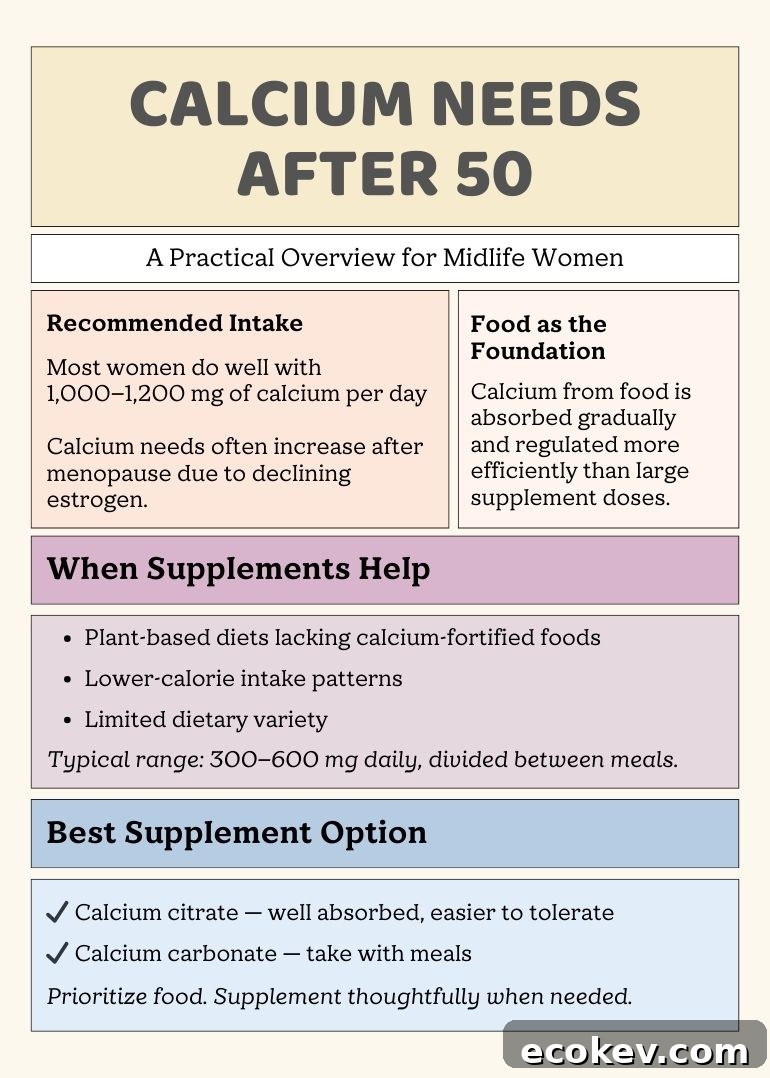
Calcium is essential, but more is not always better. Very high supplemental doses often add little benefit for bone strength and, in some studies, have been associated with potential cardiovascular concerns. Evidence is mixed, so a cautious, individualized approach is sensible.
How calcium enters the body matters. Food provides calcium gradually within the body’s natural regulatory systems, while large single-dose supplements can cause a quicker spike in blood calcium. Supplements are best used to fill real dietary gaps in modest amounts rather than replace a balanced, calcium-rich diet.
How Much Calcium Is Actually Needed?
Calcium needs during adulthood are relatively stable, though consistency becomes more important with age. Most adults’ recommendations do not change dramatically, but the margin for error narrows in midlife.
General Calcium Recommendations (Men and Women)
Typical guidelines advise:
- Adults 19–50: 1,000 mg/day
- Men 51–70: 1,000 mg/day
- Women 51 and older: 1,200 mg/day
These amounts include calcium from both food and supplements.
Calcium Needs After 50
Most women do not need a dramatic increase in calcium after 50. Aim for about 1,000–1,200 mg per day from a mix of whole foods, using supplements only if dietary intake is consistently low. When supplements are needed, modest doses (for example, 300–600 mg/day divided across meals) are often sufficient. Spreading calcium intake across the day supports better absorption and reduces the need for large single doses.
Best Supplement Forms
If supplements are necessary, calcium citrate is often preferred because it absorbs well even when stomach acid is lower. Calcium carbonate is more affordable but works best with food and may be less suitable for those with reduced stomach acid. Context matters: supplements should complement a nutrient-dense diet, not replace it.
Calcium Needs Its Partners: Why Bone Health Is a Team Effort
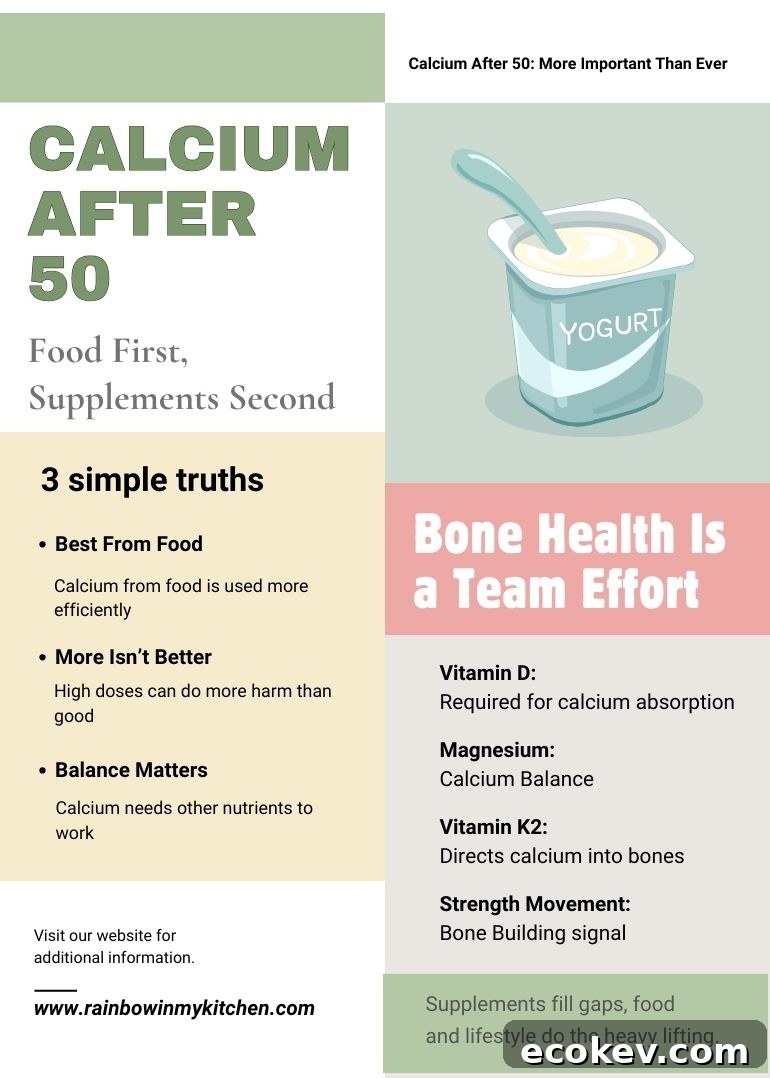
Proper absorption, regulation, and incorporation of calcium into bone require supportive nutrients and healthy habits. Without these partners, even adequate calcium intake may not yield expected benefits.
Vitamin D: Essential for Absorption
Vitamin D is critical for intestinal calcium absorption. Low vitamin D reduces absorption efficiency and is linked to muscle weakness and higher fracture risk. Adequate vitamin D also supports muscle strength and balance, helping reduce falls.
Magnesium: Supporting Balance and Bone Structure
Magnesium helps regulate calcium metabolism and contributes to bone structure. It also supports muscle and nerve function. Many people have insufficient magnesium intake, which can affect sleep, muscle tension, and bone support.
Vitamin K2: Activating Bone Proteins
Vitamin K2 activates proteins involved in bone mineralization and vascular health, helping ensure calcium is deposited into bone where it belongs.
Why This Matters in Midlife
Bone health is a multi-factorial process. When supportive nutrients are missing, calcium alone may not protect bone. Midlife bone support depends on a nutrient-rich diet, regular weight-bearing and resistance exercise, and considered supplementation when appropriate. Before starting new supplements, consult a healthcare professional to align choices with your health needs.
What Can Interfere With Calcium Absorption?
Meeting calcium needs depends on how much you absorb and retain. Several dietary, lifestyle, and physiological factors can reduce absorption or increase loss even if intake seems adequate.
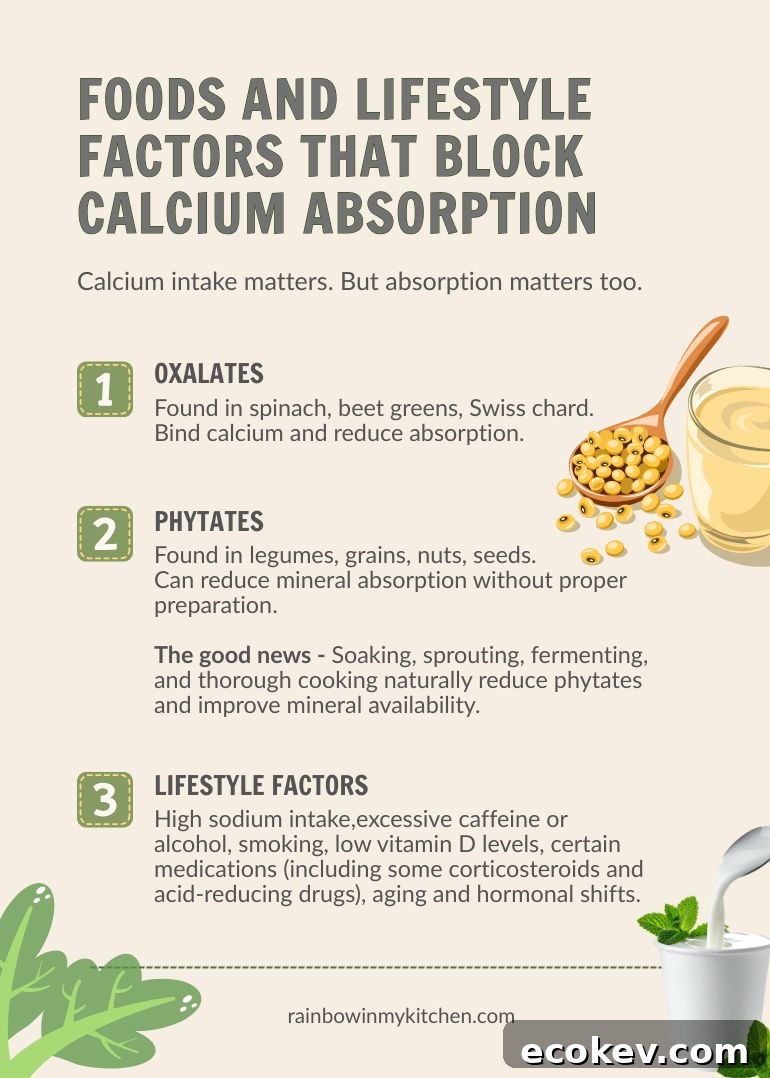
Oxalates and Phytates: Naturally Occurring Compounds in Plant Foods
Oxalates and phytates occur in many nutritious plant foods and can bind minerals like calcium, reducing absorption. Oxalates are high in spinach, beet greens, and Swiss chard and can make their calcium poorly available. Phytates in legumes, whole grains, nuts, and seeds can also limit mineral uptake unless foods are prepared to reduce phytate content.
This doesn’t mean avoiding these foods; rather, they shouldn’t be the sole calcium sources without appropriate preparation or pairing with lower-oxalate options.
Other Factors That Reduce Calcium Absorption
- High sodium intake increases urinary calcium loss
- Excessive caffeine or alcohol can modestly raise calcium loss over time
- Smoking negatively affects bone metabolism
- Low vitamin D impairs absorption
- Certain medications, such as corticosteroids and some acid-reducing drugs, can interfere
- Aging and hormonal shifts, particularly lower estrogen, affect calcium balance
These combined factors help explain why calculated intake may not reflect effective calcium status in the body.
How to Improve Calcium Absorption From Plant Foods
Traditional food preparation can increase mineral availability in plant foods:
- Blanch leafy greens to lower soluble oxalate content
- Soak and rinse beans, grains, nuts, and seeds to reduce phytates
- Sprout legumes and grains to further enhance mineral bioavailability
These simple techniques, along with a varied diet that includes low-oxalate greens and calcium-rich plant foods, help plant-based diets meet calcium needs effectively.
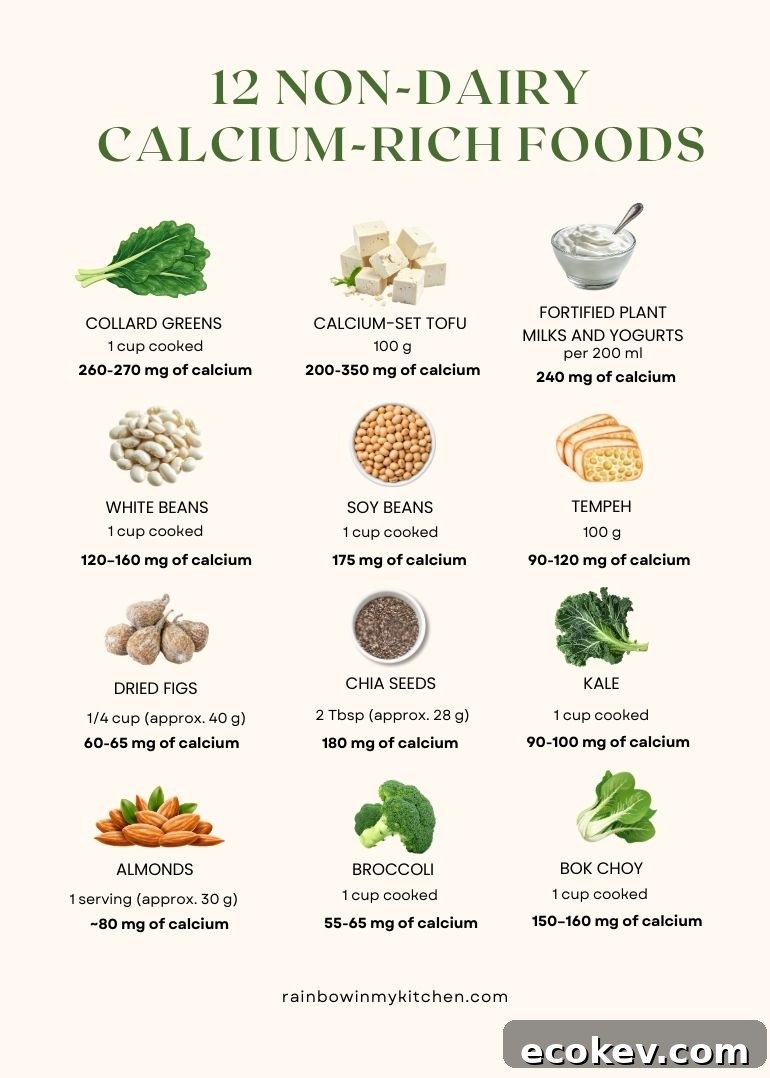
12 Non-Dairy Calcium-Rich Foods (With Bioavailability in Mind)
Calcium content and absorption vary by food. Below are plant-based sources chosen for both calcium amount and typical bioavailability.
1. Collard Greens
One cooked cup provides about 260–270 mg of calcium and is well absorbed due to low oxalate levels, making collards a reliable plant source.
2. Calcium-Set Tofu
Calcium-set tofu can provide roughly 200–350 mg per 100 g, depending on the product. When prepared with calcium salts, tofu’s calcium is comparably absorbable to dairy.
3. Fortified Plant Milks and Yogurts
Fortified plant milks and yogurts typically deliver around 120 mg per 100 ml, so a 200 ml serving supplies about 240 mg. These products, when well shaken, offer calcium in an absorbable form similar to cow’s milk.
4. White Beans
One cooked cup provides about 120–160 mg of calcium. Soaking and cooking improve availability by reducing phytates.
5. Soybeans
Cooked soybeans offer roughly 175 mg per cup plus protein and isoflavones that may support bone health.
6. Tempeh
Tempeh typically provides about 90–120 mg per 100 g. Fermentation lowers phytate content, modestly enhancing mineral absorption.
7. Dried Figs
A quarter cup (about 40 g) supplies around 60–65 mg of calcium. Absorption is moderate, but figs add fiber and other minerals.
8. Chia Seeds
Two tablespoons contain roughly 180 mg of calcium. Soaking chia can help reduce phytates and improve mineral availability.
9. Kale
One cooked cup provides about 90–100 mg of calcium with good absorption thanks to low oxalate content.
10. Almonds
A 30 g serving supplies around 80 mg. Phytates modestly reduce absorption, but almonds are a useful supplemental source when consumed regularly.
11. Broccoli
One cooked cup offers approximately 55–65 mg of calcium with very good absorption and a consistent contribution when eaten often.
12. Bok Choy
One cooked cup provides about 150–160 mg of calcium and is well absorbed due to low oxalate levels, making it a practical leafy green option.
A Note on High-Oxalate Greens
Spinach, beet greens, and Swiss chard contain calcium but also high oxalate levels that limit absorption. These greens remain nutritious but should not be relied on as primary calcium sources.
Calcium After 50: Putting the Pieces Together
After 50, calcium remains essential but is one part of a broader strategy. Bone is living tissue that responds to hormones, nutrients, and mechanical load. Adequate protein provides the framework for bone, while vitamin D, magnesium, and vitamin K2 support absorption, balance, and proper calcium placement. Missing any of these elements can reduce the effectiveness of calcium intake.
Movement—especially weight-bearing and resistance exercise—is equally important. Bones strengthen in response to mechanical stress, so activities like strength training, walking, hiking, and resistance workouts help maintain bone mass while preserving muscle, balance, and coordination. For women over 50, resistance training is particularly valuable to counter estrogen-related bone loss.
Strong bones in midlife are built through consistent nourishment, intentional movement, and supportive lifestyle choices over time, not by a single nutrient or supplement.
-
- Midlife Is Not a Crisis: It’s a Return to Yourself
- 8 Things Women After 45 Need to Know About Midlife Health
- Top 16 Plant-Based Protein Sources to Add to Your Plate