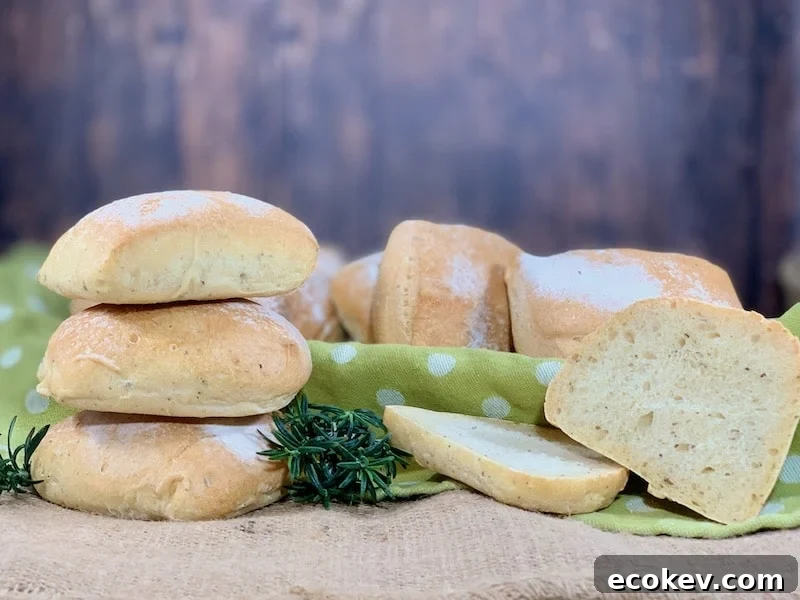
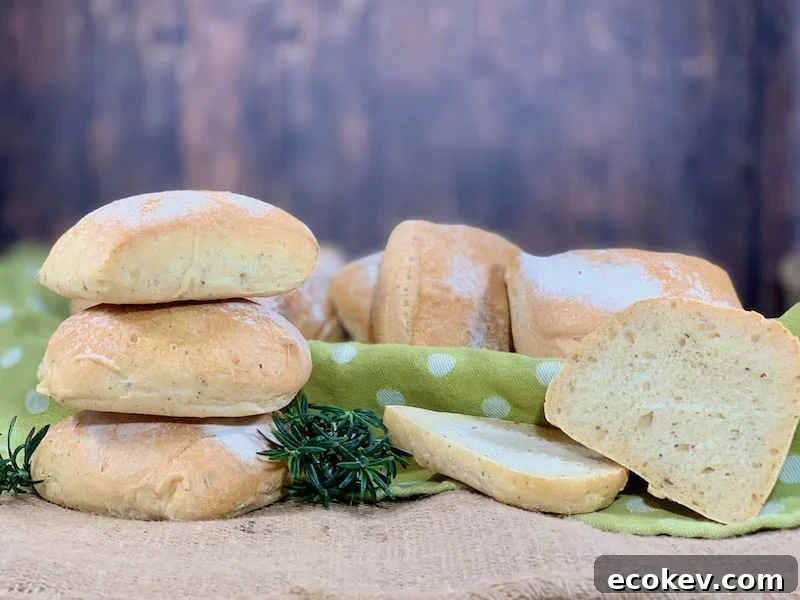
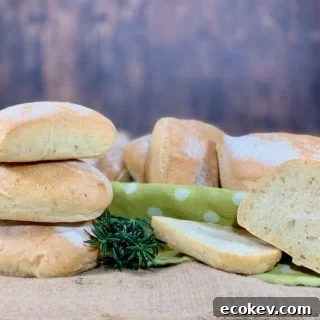
These tangy, herb-scented sourdough ciabatta rolls are perfect for sandwiches or as a side dipped in olive oil. You can tailor the herbs to suit any cuisine.
Hi, I’m Tammy. On my site I share my baking adventures — from breads to desserts — and I often use sourdough starter discard in creative ways. I also post tasting notes for scotch, whiskey and bourbon.
Home Baked Ciabatta Rolls
Baking bread at home is wonderfully grounding. From simple ingredients — flour, water, yeast and salt — you can create an aromatic loaf that fills the house with a yeasty, comforting scent. Ciabatta rolls build on that simplicity: olive oil, milk and herbs add flavor and tenderness, and a scoop of sourdough starter discard brings a subtle tang.
Home baking doesn’t have to be complicated. With a few basic tools and patience, you can make bakery-quality rolls that taste far better than supermarket varieties.
What is Sourdough Starter?
Sourdough starter is a living mixture of flour and water that captures wild yeast and bacteria from the environment. These organisms consume the flour’s sugars and produce carbon dioxide — which makes dough rise — and organic acids that give sourdough its characteristic flavor.
Traditionally, bakers kept and fed starter, using a portion to leaven each new batch of dough. If you keep feeding starter without discarding or baking with it, it will grow beyond what your kitchen can handle, so many bakers use or discard some starter regularly. Instead of wasting discard, try incorporating it into breads, pretzels, muffins or cakes to add flavor.
Baking with Sourdough Starter Discard
I rarely throw away unfed starter. I adapt many recipes to include discard — bagels, pretzels, English muffins, focaccia and even cakes and gingerbread. While discard may not always add as much leavening power as an active, fed starter, it contributes delightful sourdough tang and reduces waste.
How to Bake Herb Sourdough Ciabatta Rolls
Key ingredients and notes:
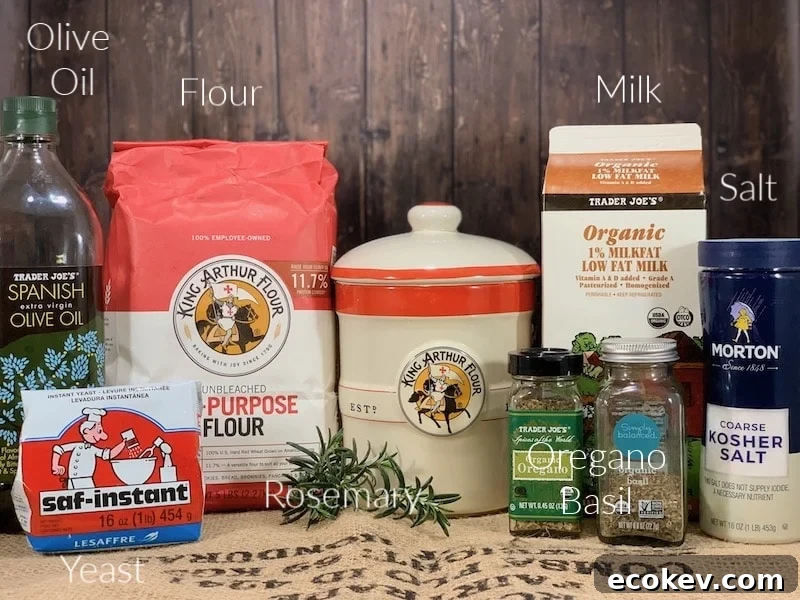
- Flour: High-gluten all-purpose or bread flour works best for structure and chew. Bread flour yields a chewier crumb.
- Sourdough starter: Fed or unfed (discard) both work. Fed starter can boost the rise if it’s vigorous.
- Water and Milk: Lukewarm liquids hydrate the dough; milk softens the texture. Replace milk with water for a chewier result.
- Olive oil: Adds richness and flavor; extra virgin is preferable but not required.
- Salt: Essential to balance flavor.
- Mixed herbs: Customize with rosemary, oregano and basil for Italian-style rolls, or try thyme, sage or herbes de Provence. Use fresh, dried or a mix.
- Yeast: Helpful when using unfed starter to ensure good rise.
Equipment You’ll Need
- Stand mixer with dough hook (or knead by hand or use a bread machine).
- Bench scraper or sharp knife for portioning.
- Two half-sheet pans to give rolls space to expand.
- Silpat or parchment for easy release and cleanup.
- Large frying pan to hold water in the oven and create steam.
- Spray bottle for misting the rolls before baking.
Expert Tips
- For a well-browned crust, place a skillet filled with about two cups of water in the oven before preheating. The heated water creates steam that improves crust color and oven spring.
- After the oven indicates it’s preheated, let it heat an extra 20–30 minutes to ensure consistent temperature throughout.
- Ciabatta dough should be slacker than typical white bread to produce an open, airy crumb. Add flour sparingly in two-tablespoon increments if the dough is too sticky; too much flour will close the holes.
- Rotate pans quickly halfway through baking to promote even browning. Work fast to retain steam.
- Feel free to experiment with herb combinations; choose herbs that complement your intended sandwich fillings or meal.
The process involves mixing and kneading a fairly slack dough, letting it rise until doubled, shaping into rolls, proofing briefly, then baking with steam. The result is golden, herb-speckled rolls with a pleasant sourdough tang.
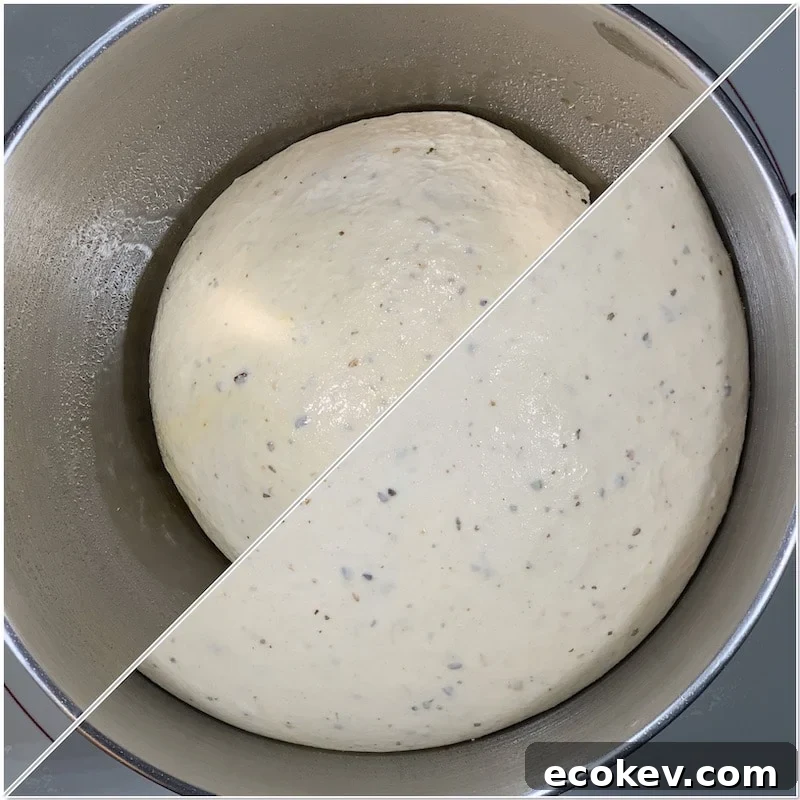
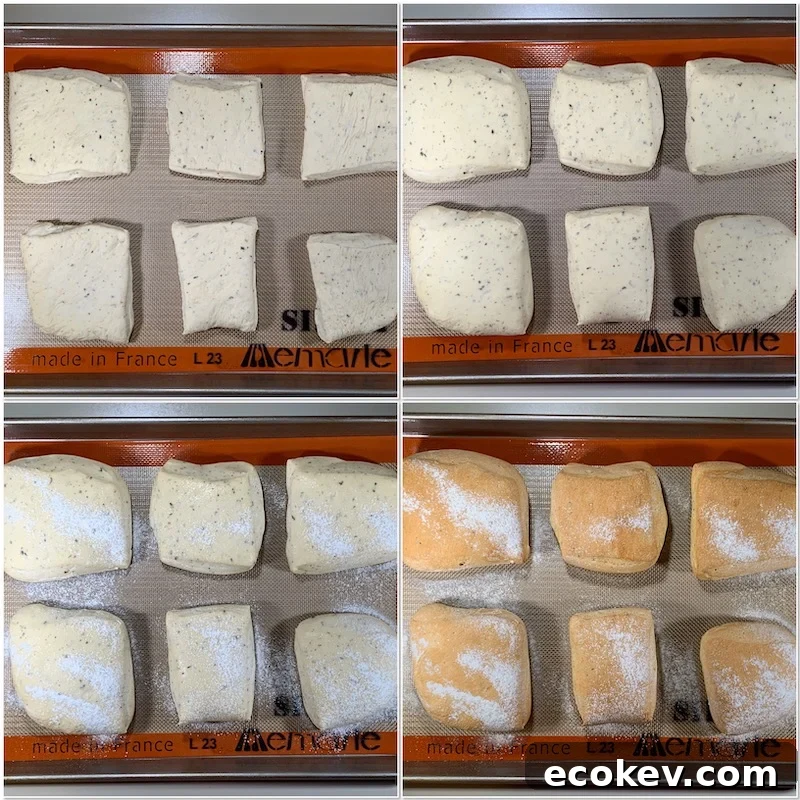
After the first rise, gently portion the dough into individual rolls and allow them space to puff up on the baking sheet.
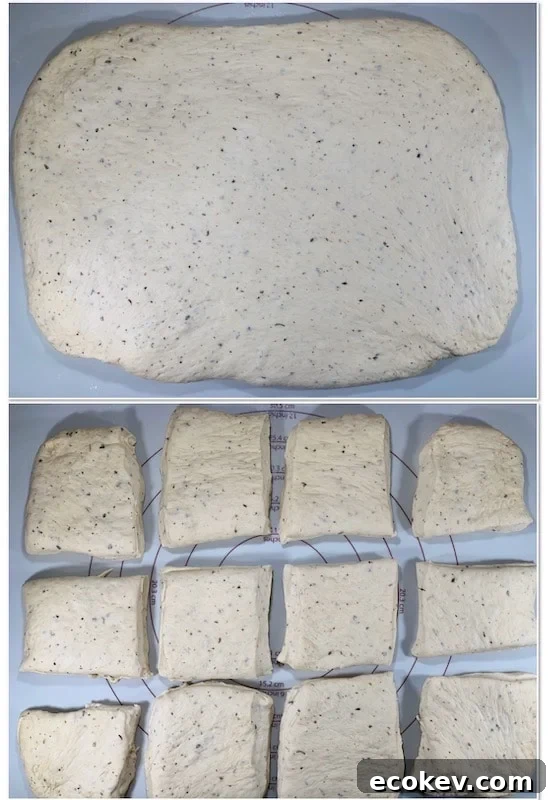
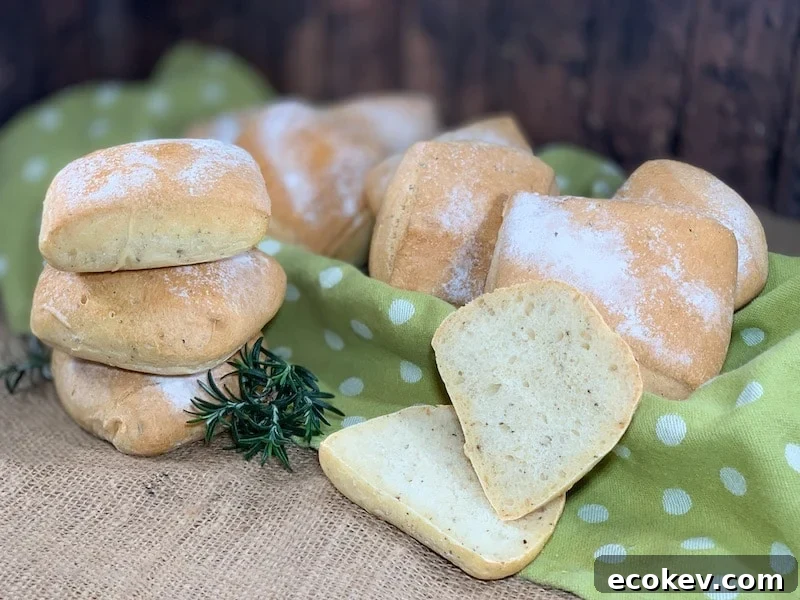
Give each roll room to rise. When baked, they develop a crisp, golden crust and an open interior.
Using Sourdough Ciabatta Rolls
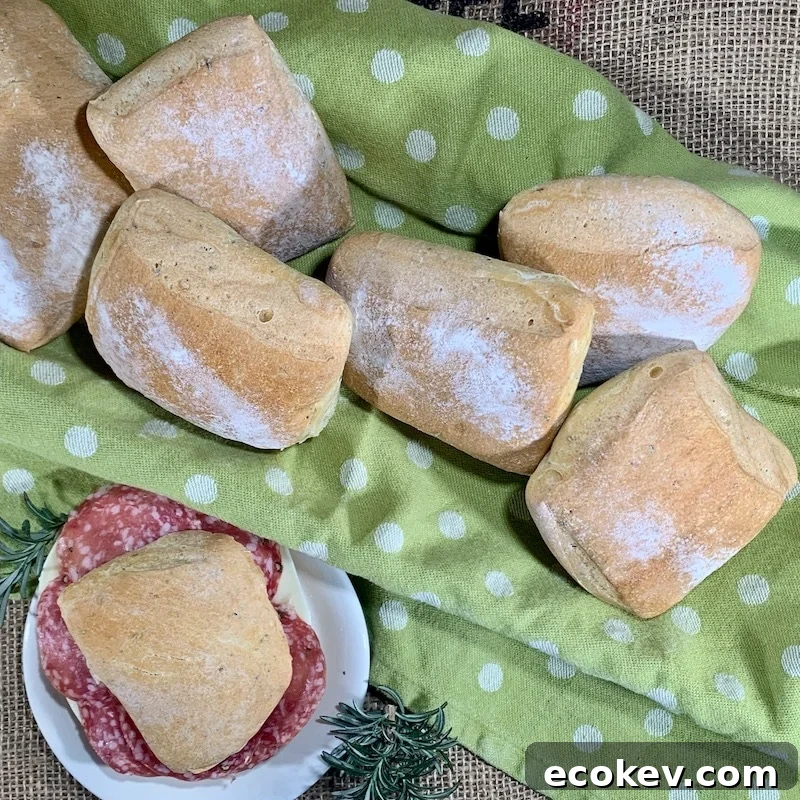
These rolls are more flavorful than supermarket options — fragrant with herbs and brightened by sourdough tang. Uses include:
- Sandwich rolls for salami and provolone, grilled vegetables, or deli-style fillings.
- Sliced and toasted with garlic butter to accompany pasta, soups or stews.
Making these ciabatta rolls is a great way to get back to basics in the kitchen while using sourdough discard to reduce waste. The result is a delicious, versatile roll you’ll bake again and again.
Stay Updated! Sign up for weekly emails to receive the latest recipes and kitchen inspiration.
Herb Sourdough Ciabatta Rolls
Adapted from King Arthur Flour
Equipment
- stand mixer fitted with a dough hook
- bench scraper
- half sheet baking pans (2)
- Silpat silicone mat or parchment paper
- large frying pan
- spray bottle
Ingredients
- 6 to 7 cups all purpose flour (723g to 844g)
- 1 cup sourdough starter (225g), fed or unfed, room temperature
- 1-1/4 cups lukewarm water (283g)
- 3/4 cup lukewarm milk (170g)
- 1 tablespoon olive oil (14g)
- 1 tablespoon salt
- 1 tablespoon mixed herbs, chopped
- 2 teaspoons yeast
Instructions
- In a stand mixer bowl combine all dough ingredients, starting with 6 cups (723g) of flour. Knead with the dough hook until the dough is smooth but slack. Add more flour only as needed in two-tablespoon increments to achieve a satiny, elastic dough that remains slightly loose.
- Place the dough in an oiled bowl, cover and let rise in a warm spot about 1–2 hours, until doubled. A proofing box or an oven with the light on works well.
- Gently deflate the dough and turn it onto a lightly floured surface.
- Pat the dough into a 9 x 16-inch rectangle and cut into twelve roughly 3 x 4-inch rolls using a bench scraper or knife. Aim for even sizes but don’t worry about perfection.
- Place six rolls on each lined half-sheet pan, spacing them to allow expansion. Cover with a towel and let rise until puffy, about 30 minutes.
- While the rolls proof, preheat the oven to 425°F. Place a large frying pan filled with water on the bottom rack to create steam as the oven heats.
- Spray the rolls with water and dust a light layer of flour on top. Bake 15 minutes, then rotate pans quickly for even browning. Lower oven to 375°F and bake 15–20 more minutes until deep golden brown.
- Remove the rolls, turn off the oven, return the rolls to the cooling oven with the door cracked a few inches, and let cool completely.
Notes
- Fed starter can improve rise, but unfed discard adds flavor and works fine.
- Choose herbs to suit your meal: rosemary, oregano and basil for Italian; thyme and sage for heartier fare.
- To preserve ciabatta’s open crumb, keep the dough slack and add flour sparingly. Start with less flour and add small amounts as needed.
- Rotate pans mid-bake to encourage even color, working quickly to retain steam.
- Preheat the oven thoroughly (an extra 20–30 minutes after it reaches temperature) for consistent results.
Nutrition
Calories: 273 kcal |
Carbohydrates: 53 g |
Protein: 8 g |
Fat: 2 g