[pinit]
Everyone enjoys coloring eggs for Easter — it’s messy, creative, and always full of surprises. After years of dip-dying, I wanted to try something different. After browsing craft blogs and Pinterest, I decided to make silk-dyed eggs and gathered a few other interesting techniques to try.
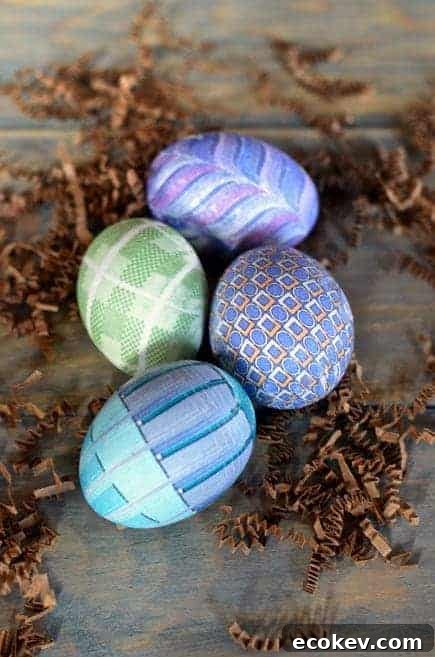
I first saw the idea for silk-dyed eggs on Our Best Bites and was skeptical it would work as well as shown. It did — the results are stunning. These eggs are so beautiful you may want to keep them on display all year. The trick is to choose bright, bold patterns and colors — the more unusual the silk, the more striking the eggs. Thrift stores are the best source for silk scraps and ties: they offer a wide variety of patterns at low cost.
Note: silk-dyed eggs are decorative only; fabric dyes aren’t food safe. To preserve them, blow out the eggs so they don’t spoil and can be displayed for years. You can thread twine or ribbon through a blown egg to make an ornament. How to blow out eggs: follow a reliable tutorial on blown egg ornaments.
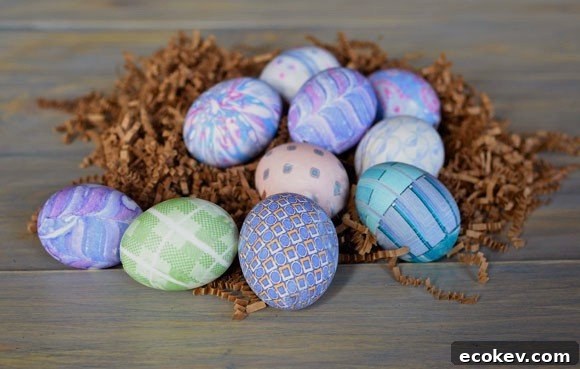
What You Will Need:
- Eggs (white shells give the best color)
- A clean screw, paper clip, and straw (for emptying the eggs)
- 100% silk scraps — ties, handkerchiefs, bandanas, or any silk pieces
- Light-colored cotton fabric (an old sheet or pillowcase works well)
- White vinegar
- Rubber bands or string
- A large pot or saucepan
- Scissors
How to Assemble:
- Blow out the eggs completely so they won’t spoil. (See a blown-egg tutorial if needed.)
- Cut silk into squares large enough to wrap each egg (about 4×4 inches is a good starting point).
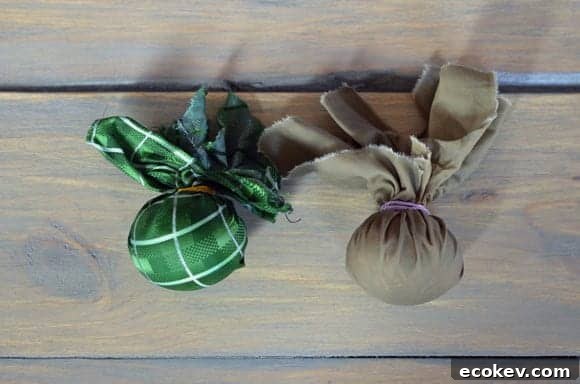
- Place the brightest side of the silk against the egg, pull the fabric up around it, and secure it with string or a rubber band.
- Add a second layer of lightweight cotton fabric over the silk and tie it in place; this keeps the silk firmly against the egg.
- Place the wrapped eggs in a pot and add at least 2 inches of water above them plus about 1/4 cup white vinegar.
- Because blown eggs float, turn them frequently or weigh them down gently with a plate so they stay submerged.
- Simmer the eggs for 20–25 minutes to transfer the dye from the silk to the shell.
- Carefully remove the eggs from the water and allow them to cool.
- Gently remove the fabrics to reveal the finished patterns — the results are often more impressive than expected.
More Creative Egg-Decorating Ideas
Try other methods to expand your Easter decorating repertoire. Here are some ideas to consider exploring on their own:
- Natural egg dyes made from foods and plants for soft, organic tones.
- Decoupage eggs using patterned paper or napkins for layered designs.
- Washi tape eggs for quick geometric patterns and bright accents.
- Stenciled eggs for crisp shapes and motifs.
- Tissue paper egg dyeing for vibrant, textured color.
- Glittered eggs for festive sparkle and shine.
Each of these techniques offers a different look and level of effort. Combine methods — for example, silk-dyed eggs accented with small stencils or a touch of glitter — to create unique, personalized decorations. Whatever method you choose, have fun with color and pattern, and keep experimenting until you find the styles you love most.