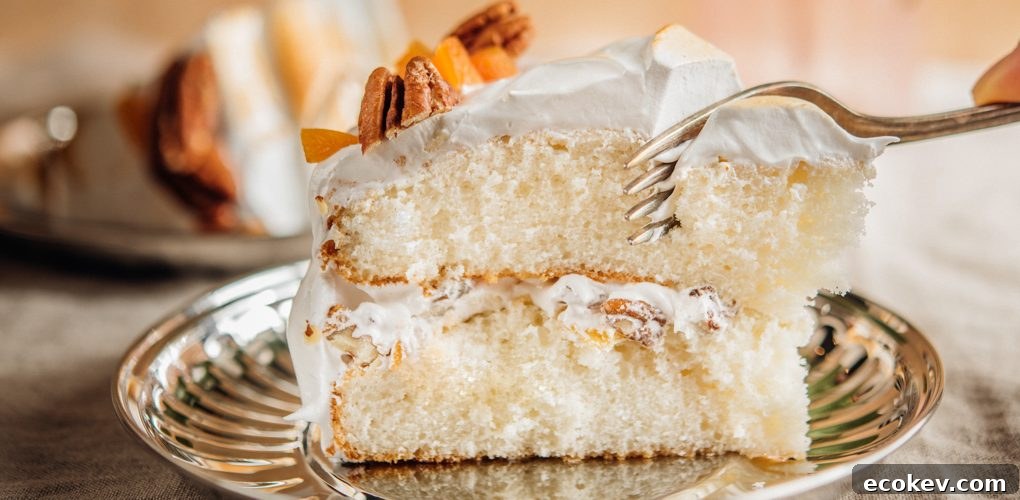
Cake flour is finer and softer, producing a delicate, even-textured cake. It is milled from fine, soft winter wheat rather than the tougher spring wheat used for all-purpose flour. At Swans Down, for example, the flour is sifted repeatedly to achieve an extra-fine consistency.
Cake flour also has the lowest protein (gluten) content and the highest starch content of common flours. Lower gluten means less chew and stretch, which is desirable for cakes that should be light and tender. Higher starch and lower protein help create the softest, fluffiest cakes possible.
Enjoy this slice of cake-flour science.
Rose Levy Beranbaum, a widely respected American baking expert and author, discussed cake flour in her classic baking guide The Cake Bible (1988). Her observations explain how the properties of cake flour influence cake texture and performance:
- Because of its finer granulation, cake flour absorbs fat and moisture more quickly than flours made from harder wheat. The size of the gas cells formed in a cake affects the quality of the crumb and depends on how much the batter expands during baking before the cells break. That expansion is influenced by the particle size of the flour, the batter’s pH, and the type of shortening used.
- Cake flour is typically bleached by chlorination, which lowers its pH compared with unbleached flours. This slight acidity enhances sweetness and contributes to a finer, more velvety crumb because it lowers the temperature at which proteins coagulate. As a result, the structure can better support higher amounts of sugar, butter, and heavier mix-ins like chopped nuts or chocolate.
Can I substitute other flours for cake flour?
The short answer is: sometimes, but with caveats. Baking is a precise process, and cake flour generally contains about 6% protein. Substituting a flour with 10–15% protein will change the cake’s texture and final structure. While there are home remedies and substitution methods that can approximate cake flour, most experienced bakers recommend using true cake flour when a recipe specifies it to get the intended lightness and crumb.