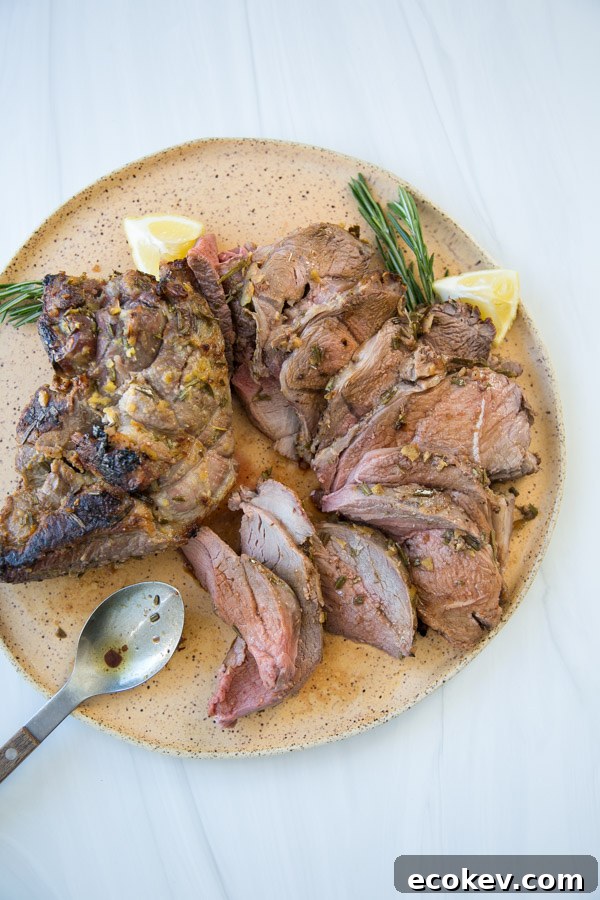
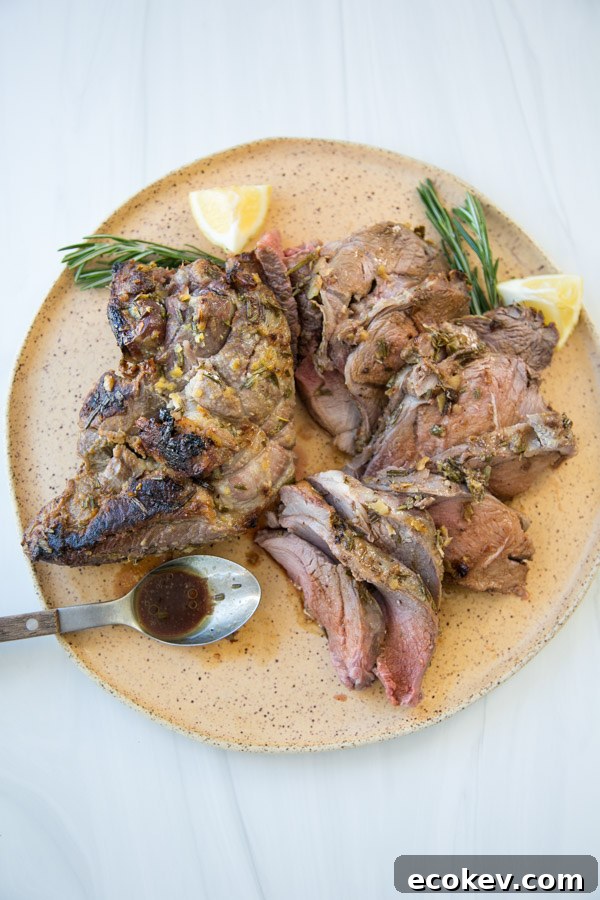
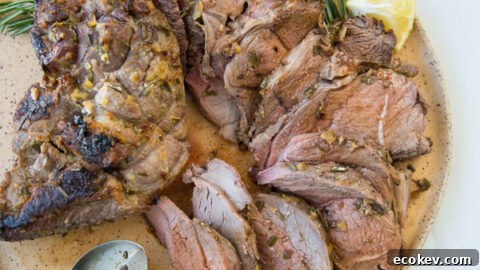
This boneless leg of lamb is marinated with lemon zest, garlic, and rosemary, then slow-roasted for tender, juicy medium-rare slices. The simple gluten-free herb marinade also works well with thyme, oregano or mint. For a complete meal, roast halved baby potatoes in the pan with the lamb’s fat for crispy, flavorful potatoes.
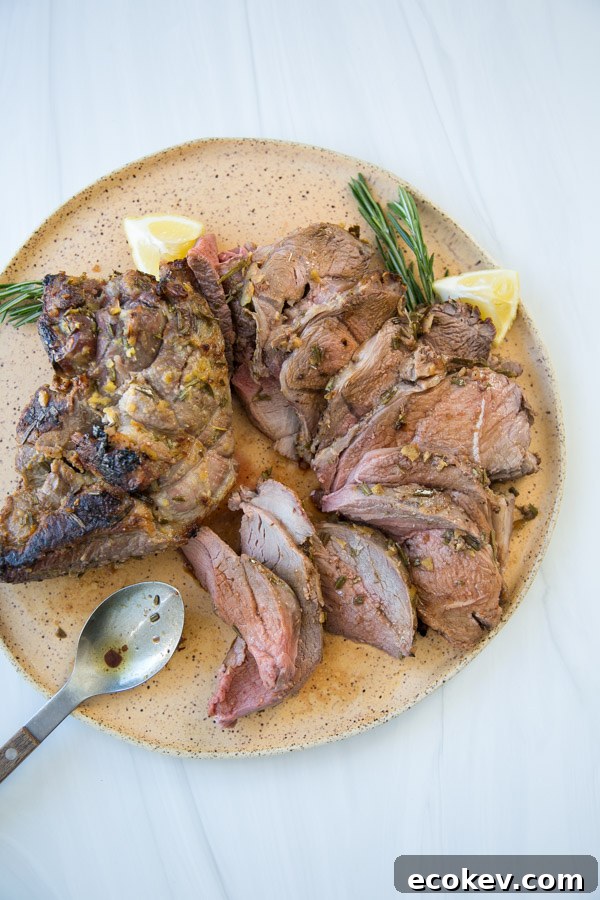
I used to roast large cuts constantly when I catered events, so big roasts still feel celebratory to me. Now, when there’s a holiday or a dinner worth pulling out the stops for, I love making a show-stopping slow-roasted boneless leg of lamb. It’s easier to handle than a bone-in leg and lets the marinade penetrate more evenly.
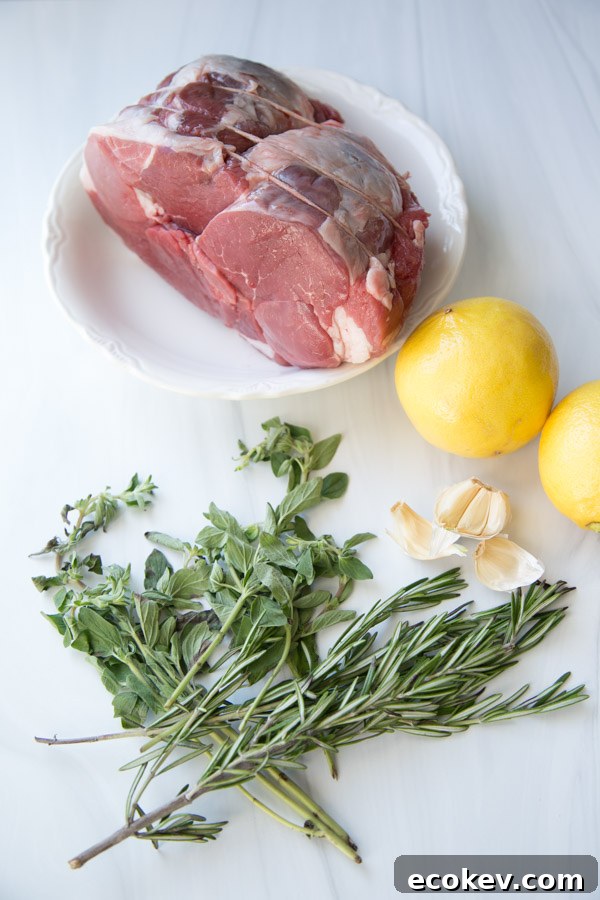
The Best Marinade for Roasted Lamb
One of my favorite past marinades combined preserved lemons and dried herbs, but preserved lemons can be hard to find. For this recipe I streamline the flavors with fresh lemon zest and juice plus garlic and rosemary to create a bright, herb-forward crust that complements lamb beautifully.
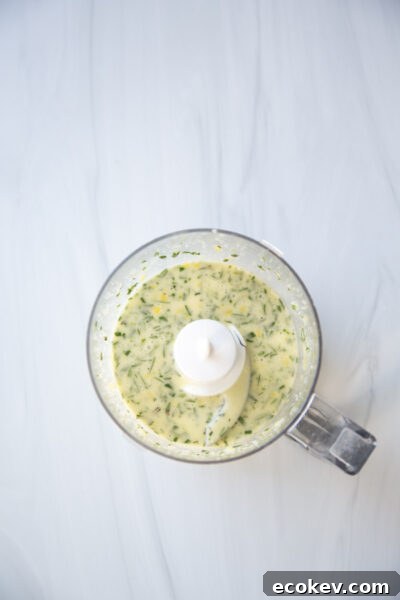
Using both lemon zest and juice gives a layered citrus note: zest adds a floral, aromatic lift while the juice brings acidity. When zesting, avoid the white pith — it can be bitter. I like using a peeler to remove larger pieces of zest, then pulse them with the herbs in a small food processor for a coarse, easy paste.
If rosemary isn’t your favorite, swap in another woody herb like thyme or oregano. For a more classic Mediterranean pairing, use mint for a fresher, greener finish. Marinating overnight yields the most flavorful results, but even an hour at room temperature will impart good flavor and help tenderize the meat.
How to Roast a Boneless Leg of Lamb in the Oven
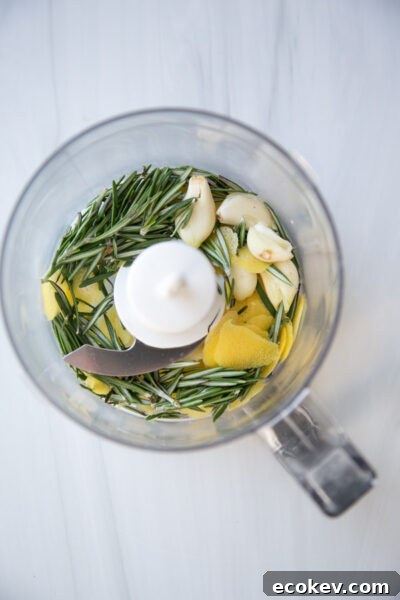
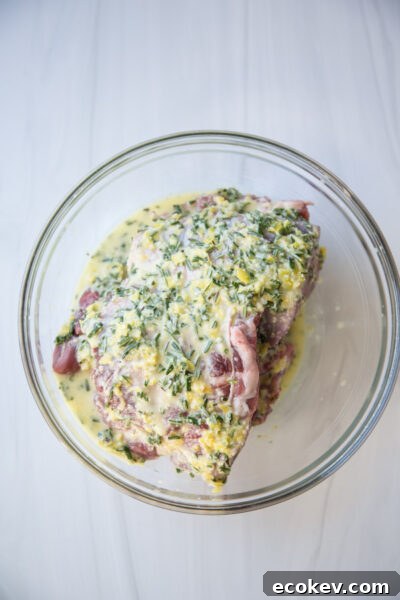
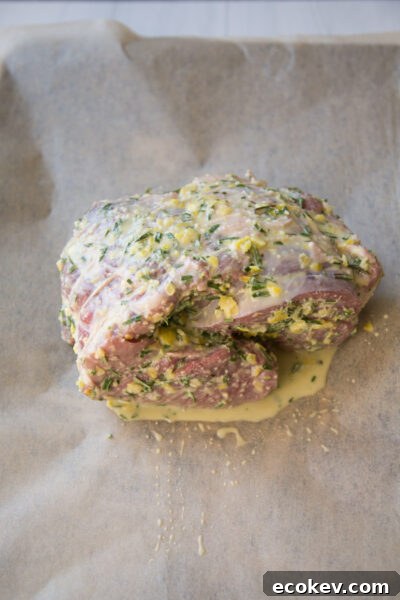
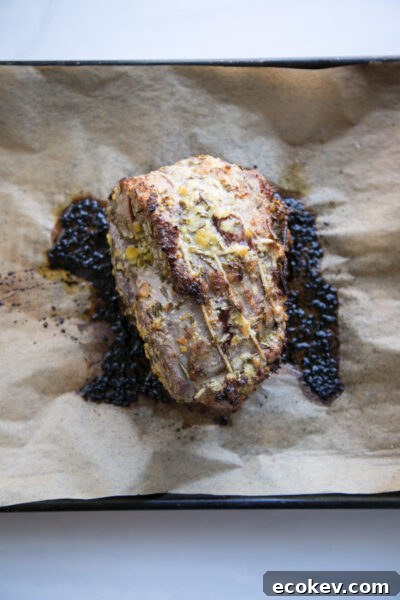
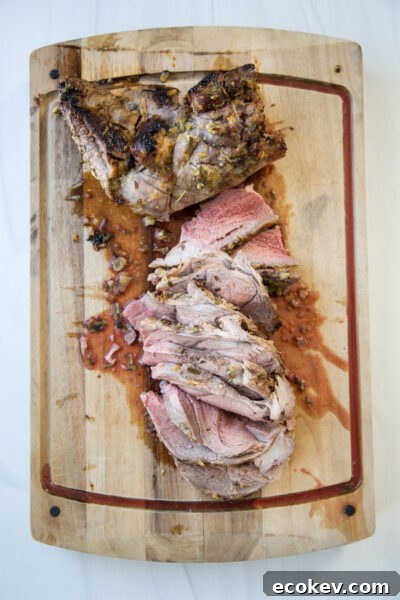
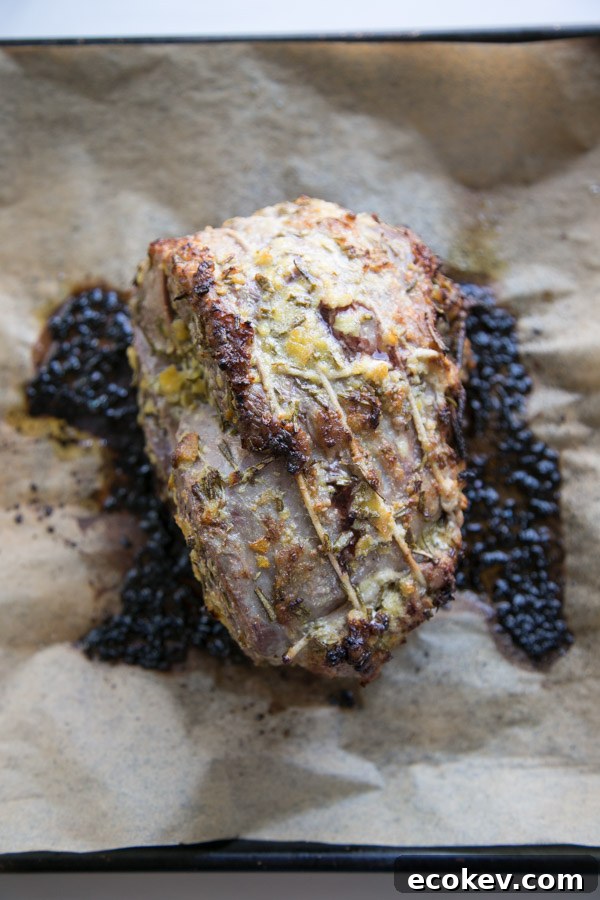
The roasting method is straightforward: score excess fat and any tough sinew, press the herb-lemon paste into the surface and marinate, then roast. I like to begin at a higher temperature for a short time to develop color, then lower the oven to finish cooking gently so the interior stays juicy.
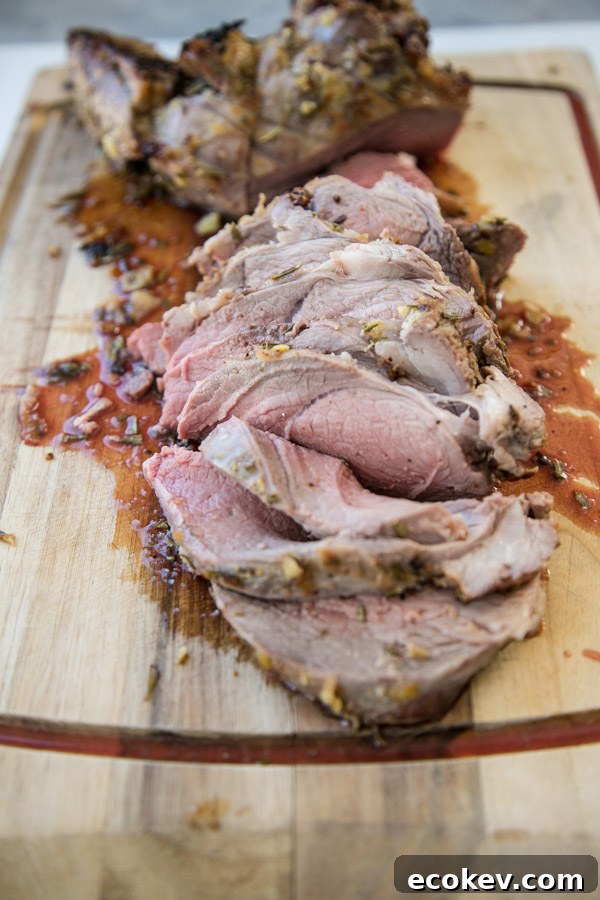
For medium-rare, remove the lamb when the internal temperature reaches 130–135°F and let it rest. As it rests, carryover heat will bring it to the perfect doneness while the juices redistribute, resulting in tender, even slices.
What Type of Lamb to Buy
Most butcher shops will remove the bone and roll the leg for you, often tying it with kitchen twine. If your butcher leaves it unrolled, you can easily coat it with the marinade, then roll and tie it yourself so the herb paste gets into every fold.
To roll, orient the roast so the narrower end folds into the thicker part and tie with 4–5 lengths of twine spaced about 1–2 inches apart. If your roast arrives already tied, simply work some marinade into any seams or the center cavity with your fingers before cooking.
If you prefer a bone-in roast, the recipe still works—plan on roughly an extra 15 minutes of cook time for medium-rare, or rely on internal temperature rather than time.
What to Serve with Your Boneless Leg of Lamb
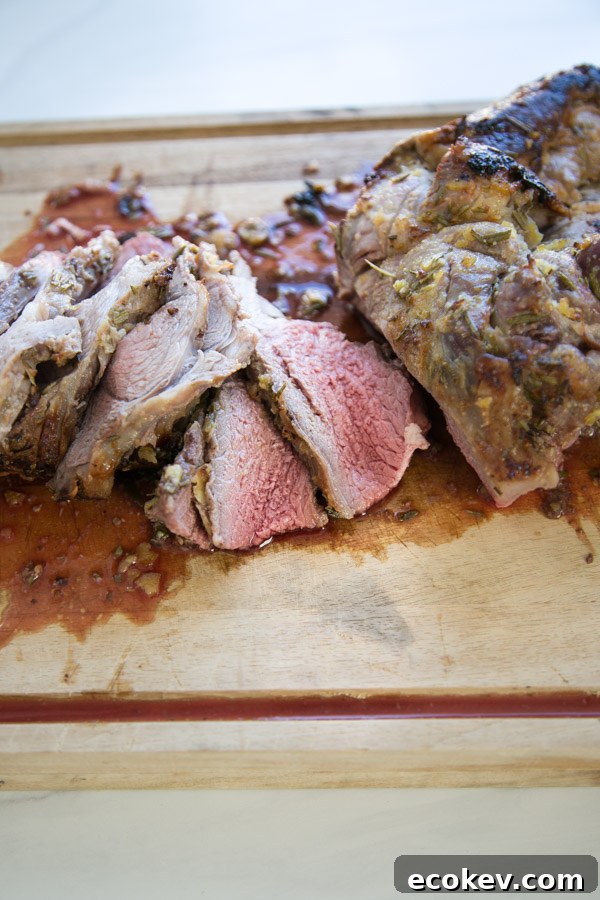
The pan fat left after roasting is excellent for potatoes. Toss halved baby potatoes in the roasting pan with the rendered fat and any remaining marinade, then roast at 425°F for 20–30 minutes while the lamb rests. They come out crisp on the outside and infused with lamb flavor.
Other classic sides include scalloped potatoes or roasted broccoli with a bright pesto. The lamb is flavorful enough on its own, but a spoonful of full-fat Greek yogurt mixed with herbs is a nice cooling accompaniment. If you don’t use the fat for potatoes, pour the pan juices over the sliced lamb for rich flavor.
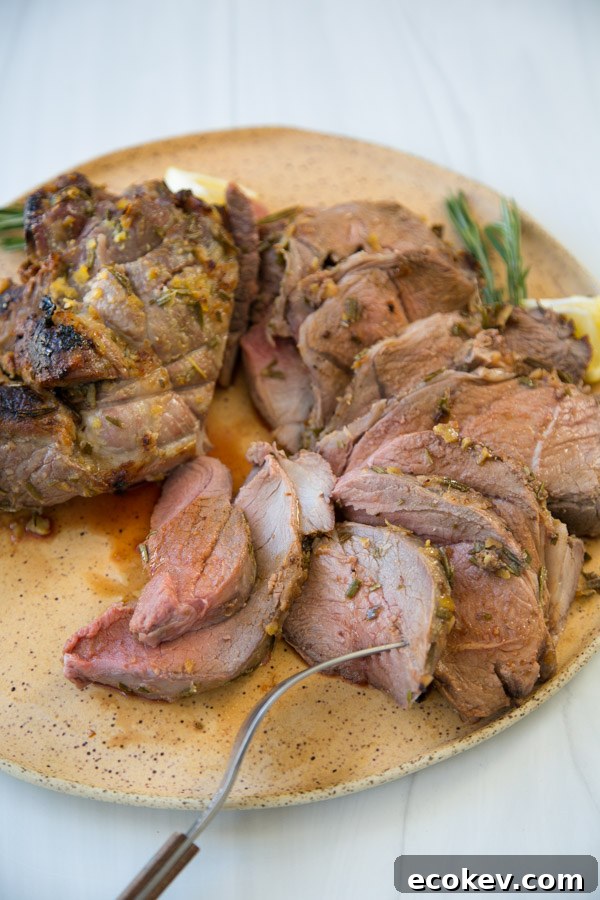
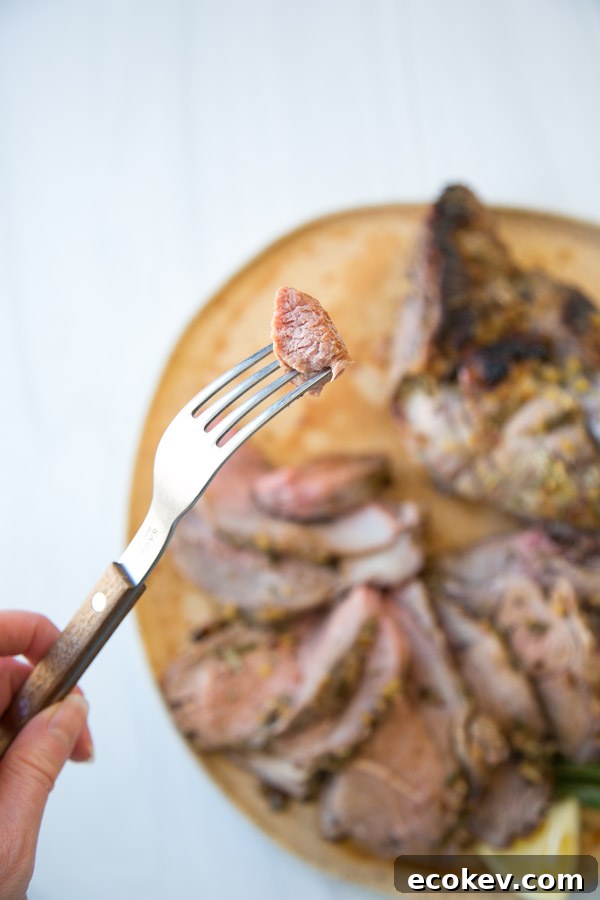
This roast is simple, elegant, and forgiving. It makes a memorable centerpiece for a holiday or special dinner and pairs well with straightforward, seasonal sides. Read on for the full recipe and instructions.
With health and hedonism,
Phoebe
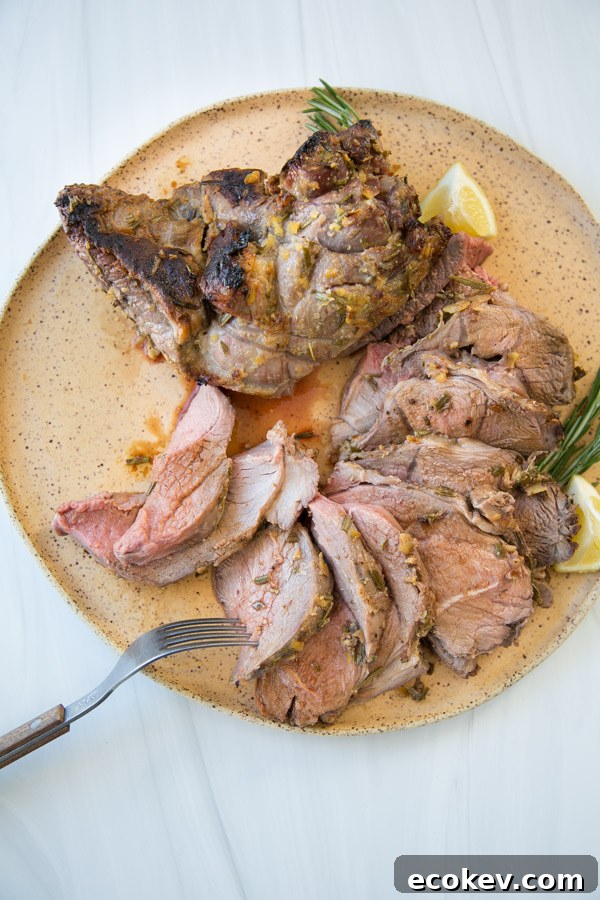
Lemon-Herb Slow Roasted Boneless Leg of Lamb
print recipe
Ingredients
- One 3 to 5 pound boneless leg of lamb
- 2 lemons
- 4 garlic cloves crushed
- 1/4 cup loosely packed rosemary thyme or oregano leaves (or a mix)
- Sea salt
- ¼ cup olive oil
Instructions
-
Place the lamb on a work surface. Trim any very thick fat and score the remaining fat and sinew with shallow slits about 1/4 inch apart to help render the fat and let the marinade penetrate. If the roast is tied, take care not to cut the twine.
-
Zest both lemons with a microplane or peeler, avoiding the white pith.
-
In a small food processor combine the lemon zest, garlic, rosemary, 1 tablespoon sea salt, olive oil and the juice of 1 lemon (about 1/4 cup). Pulse until the mixture forms a coarse paste. You can also use a mortar and pestle for a rustic paste.
-
Place the lamb in a large bowl and rub the paste all over, working it into folds and any cavity. If tied, use your fingers to press some of the mixture inside the roast.
-
Marinate at least 1 hour at room temperature, or cover and refrigerate overnight for deeper flavor.
-
Preheat the oven to 425°F when ready to cook.
-
If the lamb is not tied, roll it width-wise so it forms a thick roll and tie with 4–5 pieces of kitchen twine spaced about 2 inches apart.
-
Place the lamb on a baking sheet or roasting pan with the fattier side up. Roast 15 minutes at 425°F, then reduce the oven to 350°F and continue roasting another 45–60 minutes, depending on thickness, until the internal temperature reaches 130–135°F for medium-rare. A general guide is about 15 minutes per pound.
-
Remove the roast and transfer to a carving board. Let it rest at least 30 minutes. Cut and discard the twine, then thinly slice the lamb against the grain. If helpful, unroll the roast to make smaller slices.
-
Pour any pan juices over the sliced lamb and serve warm or at room temperature, with roasted potatoes or your preferred sides.
 If you make this, tag @phoebelapine and #feedmephoebe – I’d love to see it!