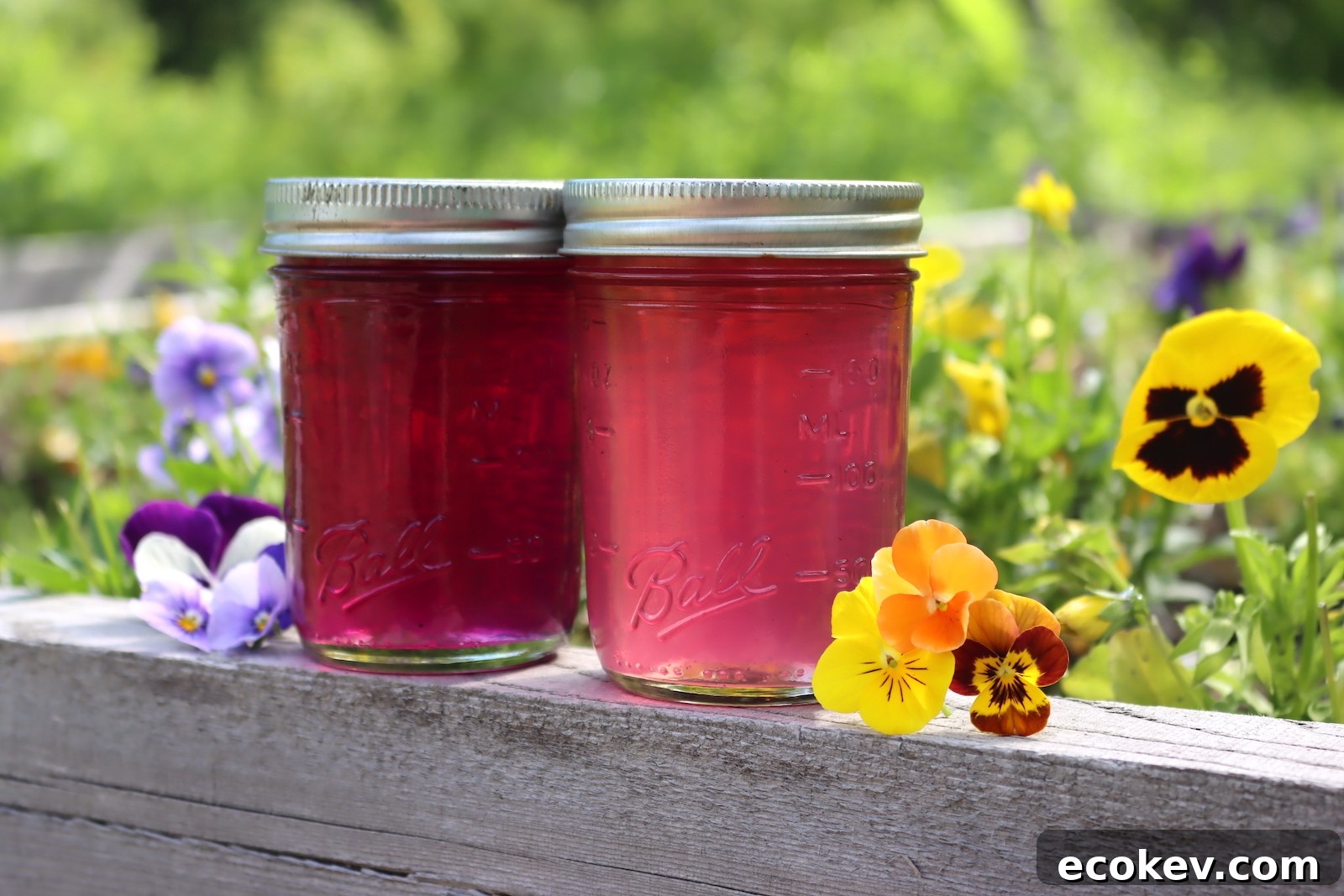
Pansy jelly is a delicate spring floral jelly made from edible pansy flowers. All violas are edible—both cultivated pansies and wild violets—so this recipe works well with garden pansies as well as wild violets.
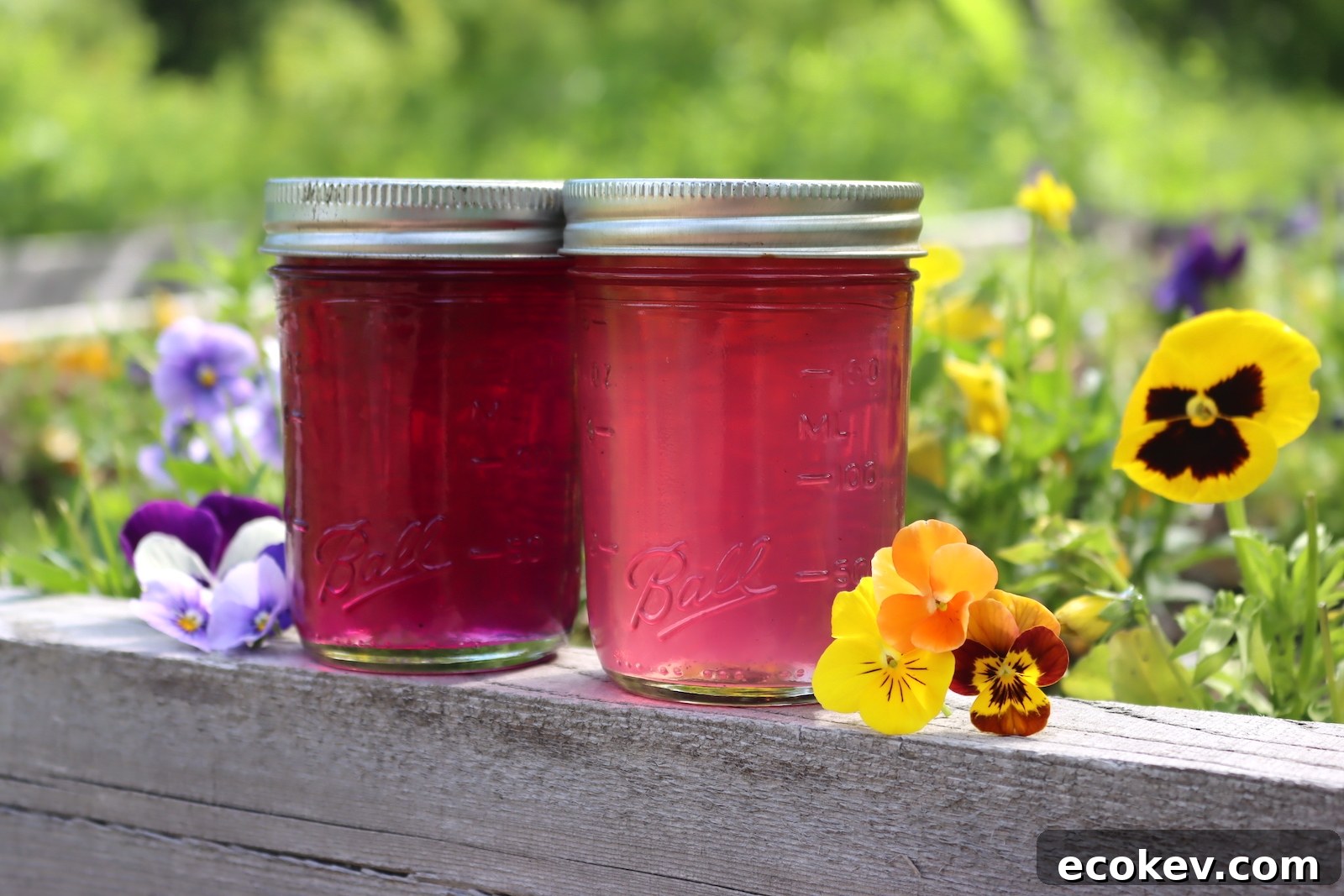
Pansies are among the earliest garden flowers in spring. They tolerate light frosts and bloom long before many other garden plants are even planted. I love their bright color at the start of the season, when the lawn and beds are still waking up.
Beyond their cheerfulness, pansies are edible. They make a lovely addition to salads, can be candied for dessert decorations, and are perfect for making pansy jelly.
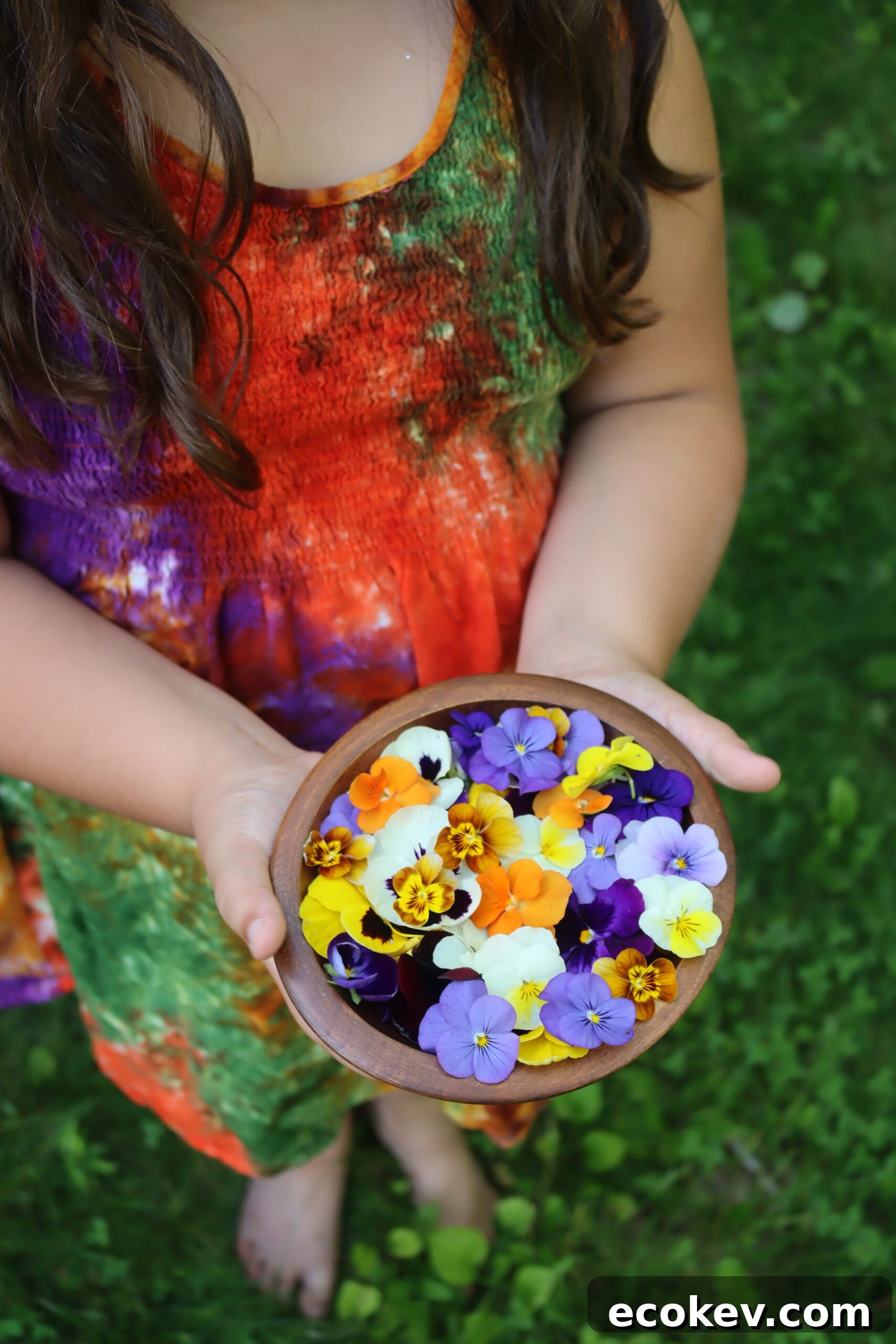
All viola species are edible, including the tiny wild violets. Wild violet jelly is delicious, but the small flowers mean collecting enough can be time-consuming. Garden pansies are larger and more plentiful, so you can harvest enough blossoms for a batch in minutes rather than hours.
This pansy jelly tastes like fresh spring berries with a light floral aroma. The flowers’ pigments contribute both color and flavor—similar anthocyanin compounds are found in berries—so the result is a sweet, berry-like jelly even before berry season arrives.
A Quick Look at the Recipe
- Recipe Name: Pansy Jelly
- Recipe Type: Flower jelly
- Canning Method: Waterbath canning (optional)
- Prep/Cook Time: About 30 minutes total
- Canning Time: 10 minutes
- Yield: 4 to 5 half-pint jars (8 oz each)
- Jar Sizes: Quarter pint, half pint, or pint
- Headspace: 1/4 inch
- Ingredients Overview: Edible pansy flowers, water, lemon juice (or citric acid), sugar, and pectin
- Difficulty: Easy — essentially making a strong floral tea and setting it with pectin
Harvesting Pansies for Flower Jelly
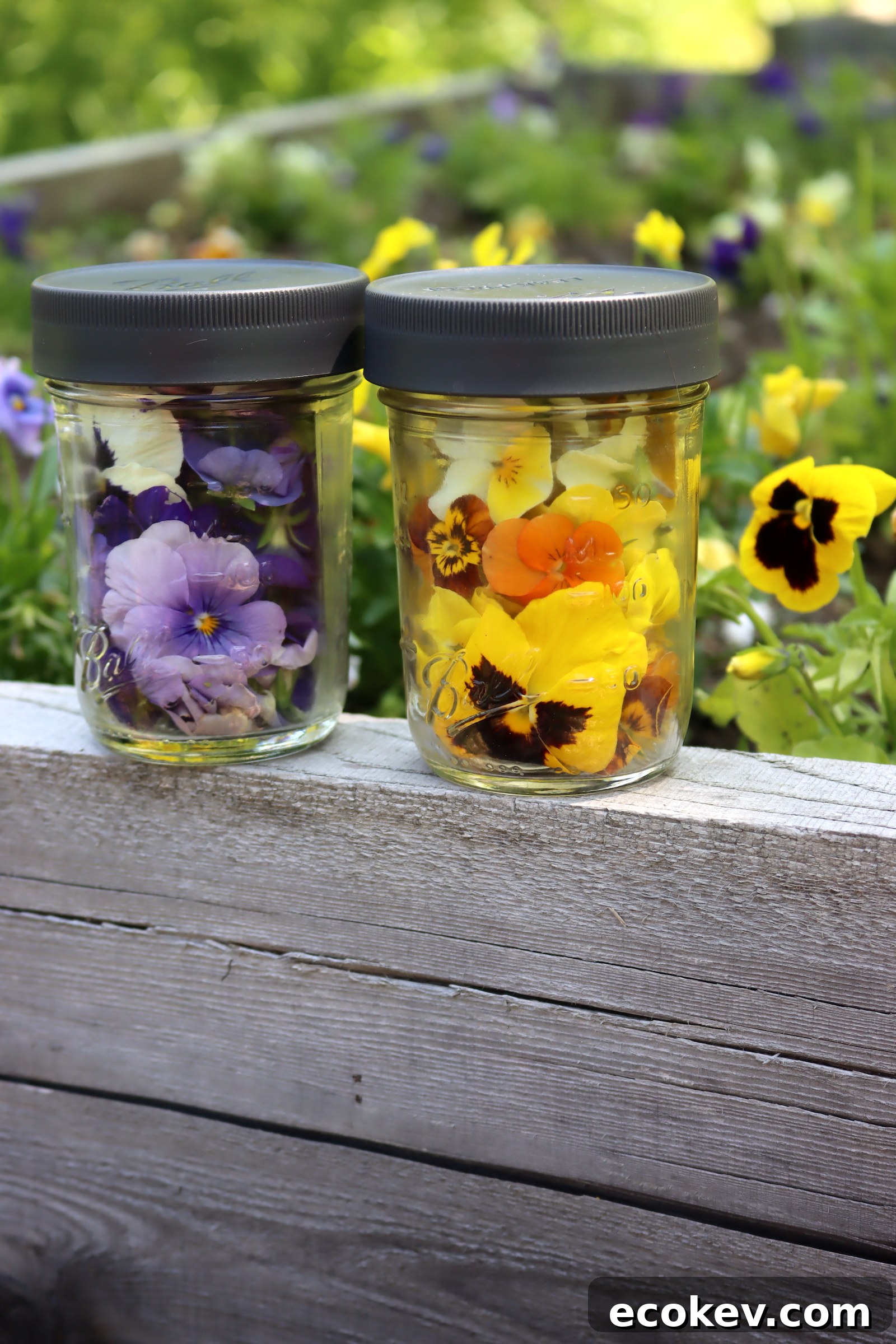
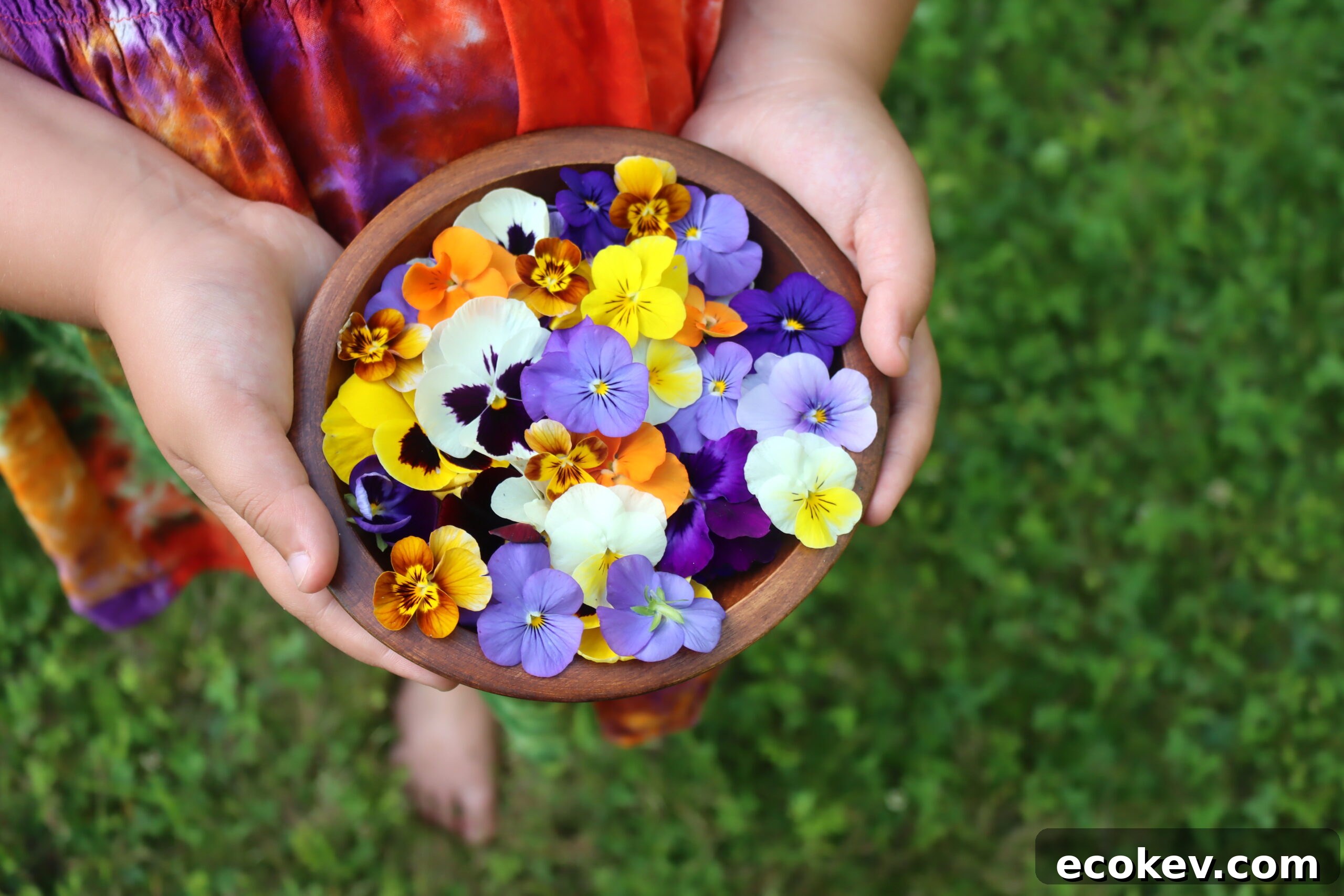
Harvest blossoms directly into a heatproof jar or container. For a full batch using one standard box of powdered pectin (1.75 oz), you’ll want roughly 4 cups of loosely packed pansy flowers—about one quart jar full. For smaller batches, scale the blossoms and pectin accordingly.
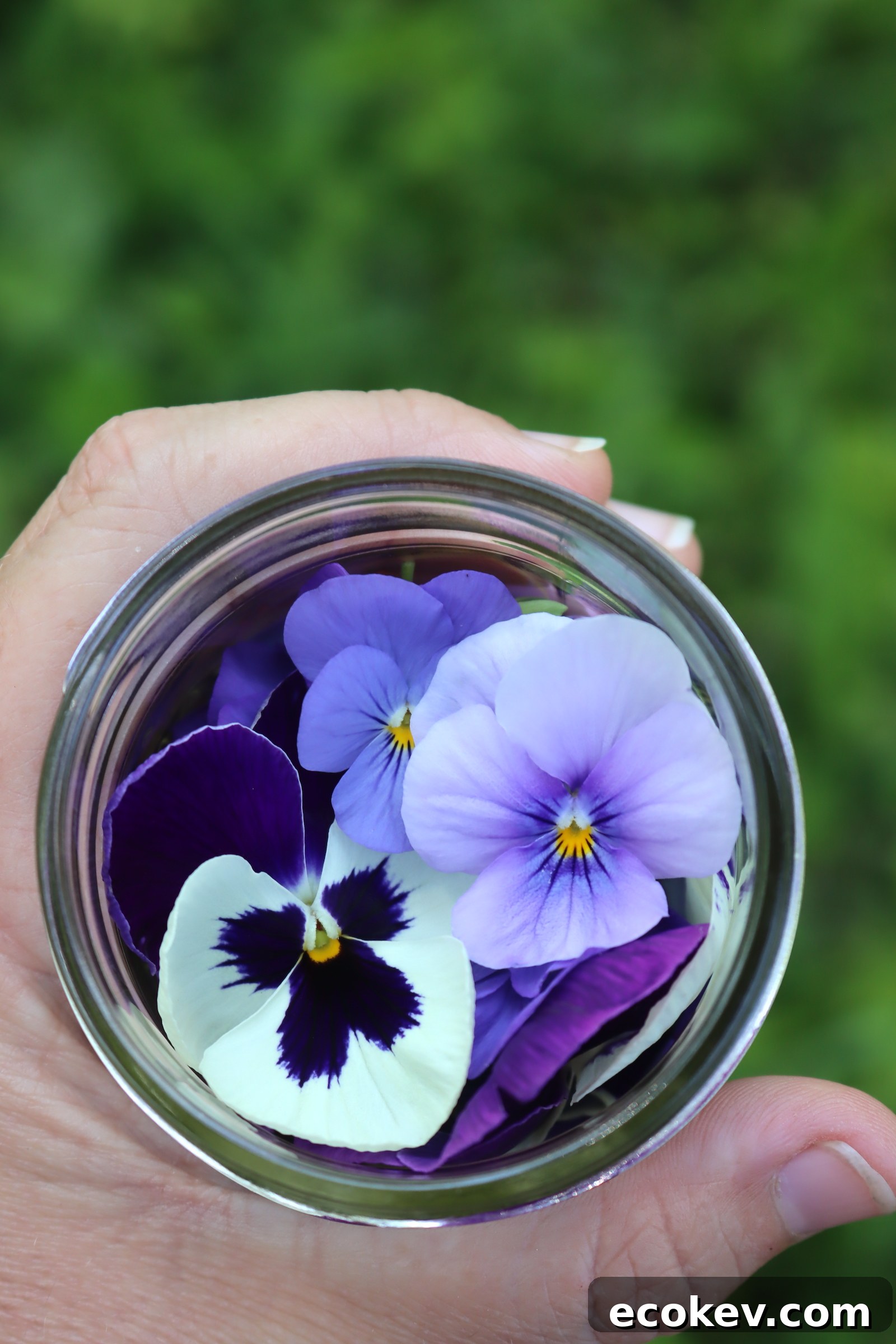
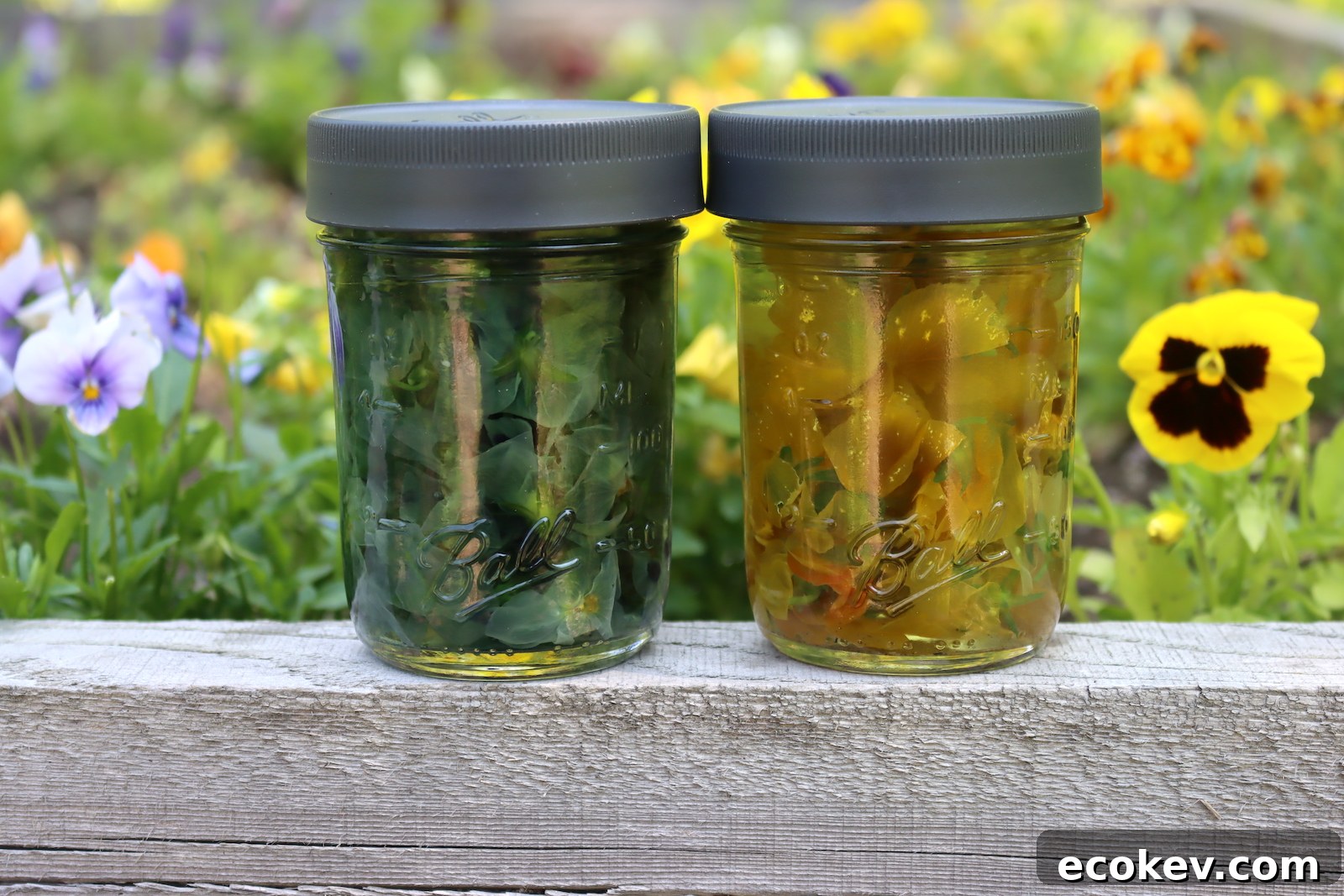
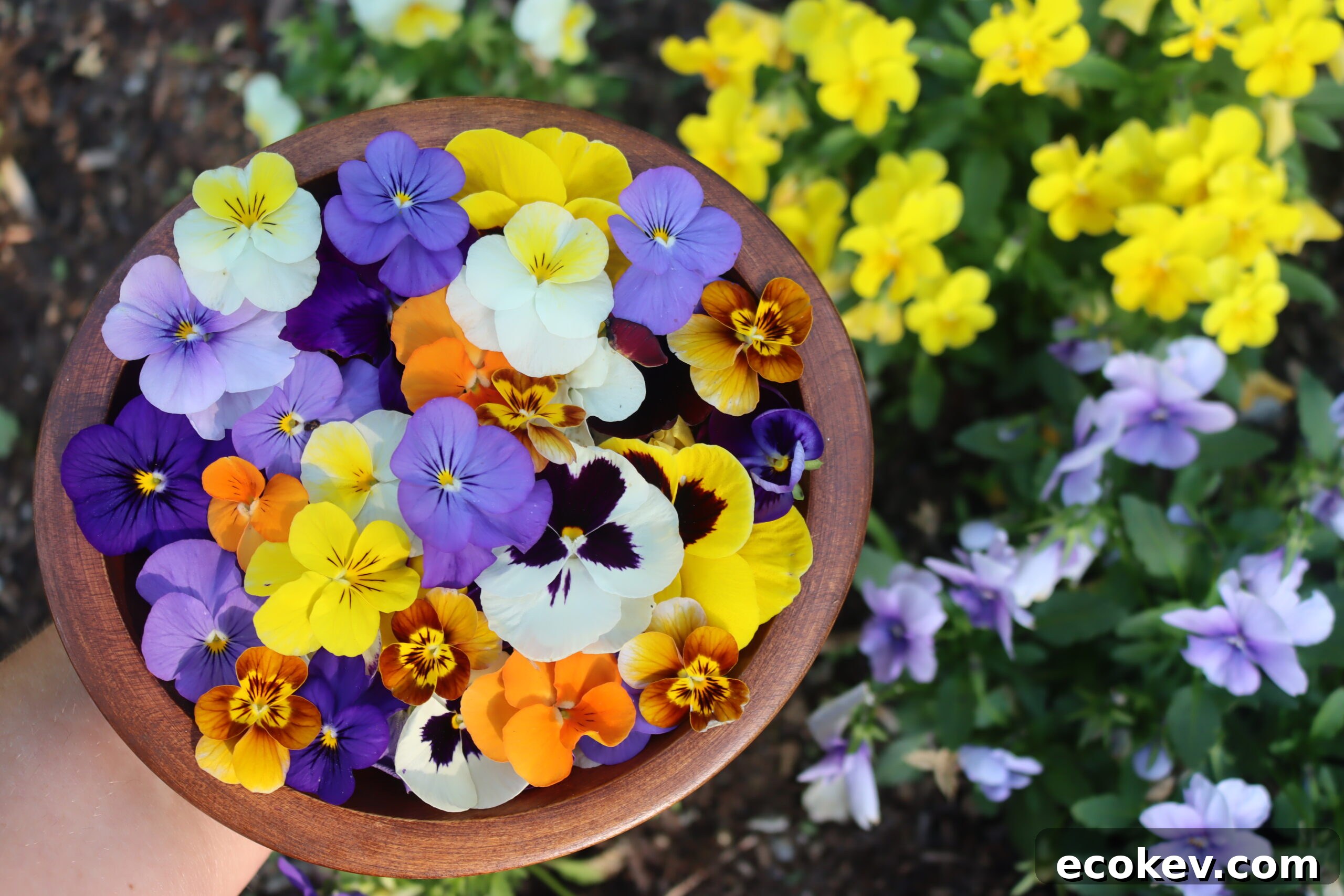
I like to pick pansies by color to see what shade of jelly they might yield. Pansy petals come in a wide range—from bright yellow to very dark purple—but when steeped the tea often appears turquoise or blue-green.
After adding lemon juice or citric acid, the blue-green tea shifts to pink, red, or purple—so even yellow or orange pansies can produce rosy jelly. The initial tea color may surprise you, but it’s normal and shifts with acidity.
What Does Pansy Jelly Taste Like?
Pansy jelly tastes like fresh spring berries with a gentle floral note. The pigments and related flavor compounds in pansy petals are similar to those in blueberries and strawberries, producing a sweet, fruity profile. Lemon juice brightens the flavor and balances the sweetness, while also helping the pectin set and ensuring a safe pH for canning.
Ingredients for Pansy Jelly
For approximately 4–5 half-pint jars (8 oz each):
- 4 cups pansy blossoms (loosely packed)
- 4 cups water
- 2 tablespoons lemon juice (or 1/2 teaspoon citric acid)
- 1 to 4 cups sugar (see notes below about pectin type)
- 1 box (1.75 oz / 6 tablespoons) powdered pectin (regular or low-sugar)
If you prefer a smaller batch, use half the amounts: about 2 cups flowers and 2 cups water; adjust pectin according to the brand instructions.
Lemon juice not only enhances color and flavor but lowers pH to help pectin set and to make the jelly safe for canning. If you prefer a neutral acid, use citric acid powder—about 1/4 teaspoon citric acid per tablespoon of lemon juice (this recipe needs about 1/2 teaspoon citric acid for 2 tablespoons lemon juice).
Standard powdered pectin usually requires a 1:1 ratio of liquid to sugar, so with 4 cups of pansy tea you’d need 4 cups of sugar for a full-sugar set. Low-sugar pectin will gel with less sugar, so you can reduce sweetness if desired. Follow the pectin brand directions for best results.
How to Make Pansy Jelly
1. Harvest about 4 cups of pansy blossoms into a heatproof jar or bowl.
2. Pour 4 cups of boiling water over the blossoms and steep for 10–20 minutes to make a strong floral tea.
3. Strain the tea into a saucepan or jam pot, pressing gently to extract color and flavor. Add 2 tablespoons lemon juice (or the citric acid equivalent). The tea may be blue-green before the acid is added; it will shift color after acid is incorporated.
4. Bring the tea to a full boil. Stir in the powdered pectin and boil for 1 minute to dissolve and activate the pectin. Note: Do not add sugar until after the pectin has been boiled for 1 minute.
5. Add the sugar (amount depends on your pectin choice), stirring to dissolve. Return to a hard boil and boil for 1 minute.
6. Remove from heat and ladle the hot jelly into prepared jars, leaving 1/4 inch headspace.
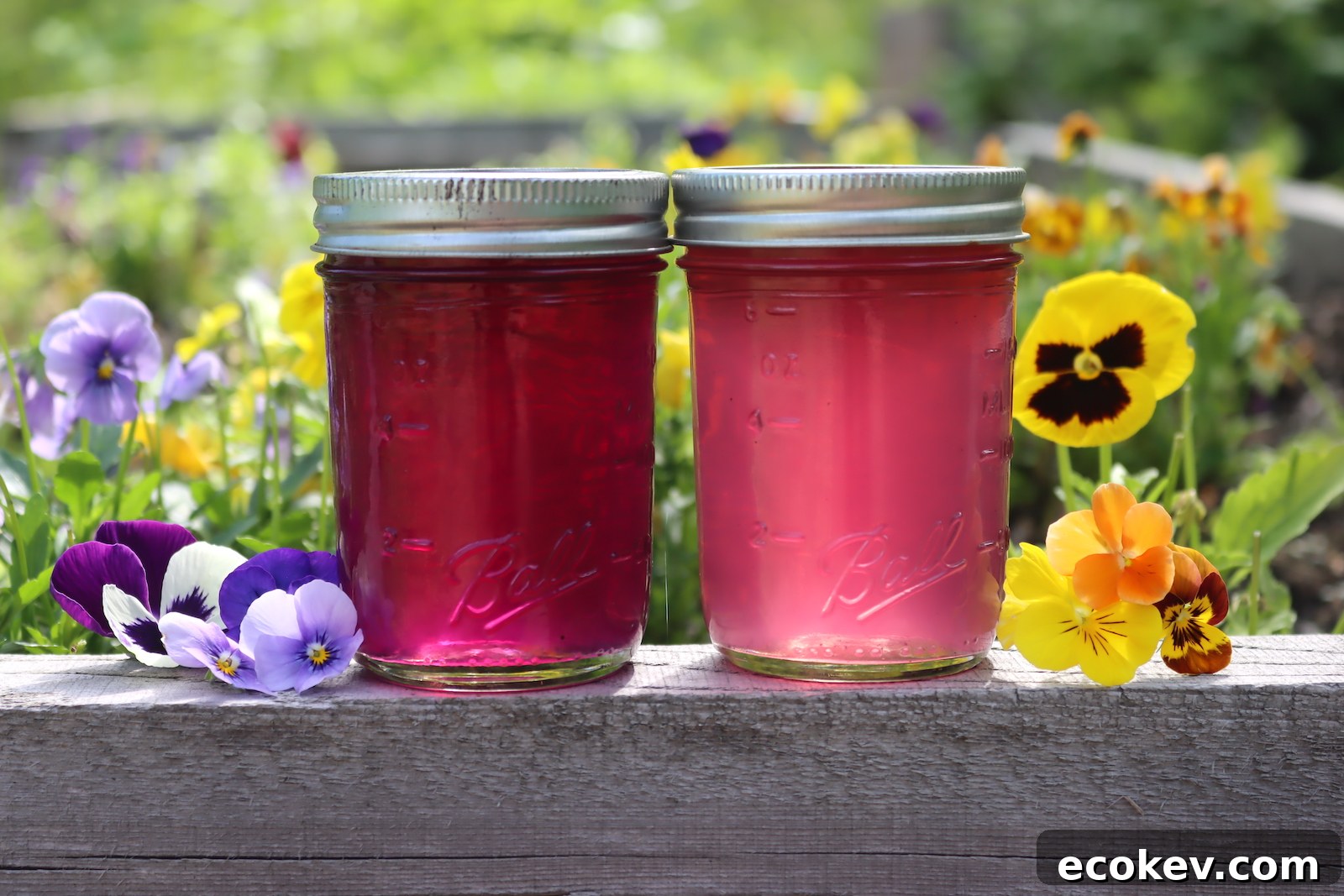
Canning Pansy Jelly
Canning is optional. Refrigerate unopened jars for several weeks or freeze in freezer-safe containers for up to six months. For shelf-stable storage, process jars in a water bath canner for 10 minutes (15 minutes above 6,000 feet). Ensure you used sufficient lemon juice or citric acid so the acidity is appropriate for safe canning.
After processing, remove jars and cool on a towel at room temperature. Properly sealed jars will keep quality on the pantry shelf for 12–18 months. Refrigerate after opening.
Pansy Jelly Variations
Pansies pair well with other floral petals. Mixing pansy petals with dandelion petals adds a honey-like note for a honey-berry flavor. Lavender can be used for a stronger aromatic jelly; combining a few cups of pansies with a small amount of lavender (for example 1 tablespoon) gives color from pansies and bold flavor from lavender—though the lavender will dominate the taste.
Pansy Flower Recipes
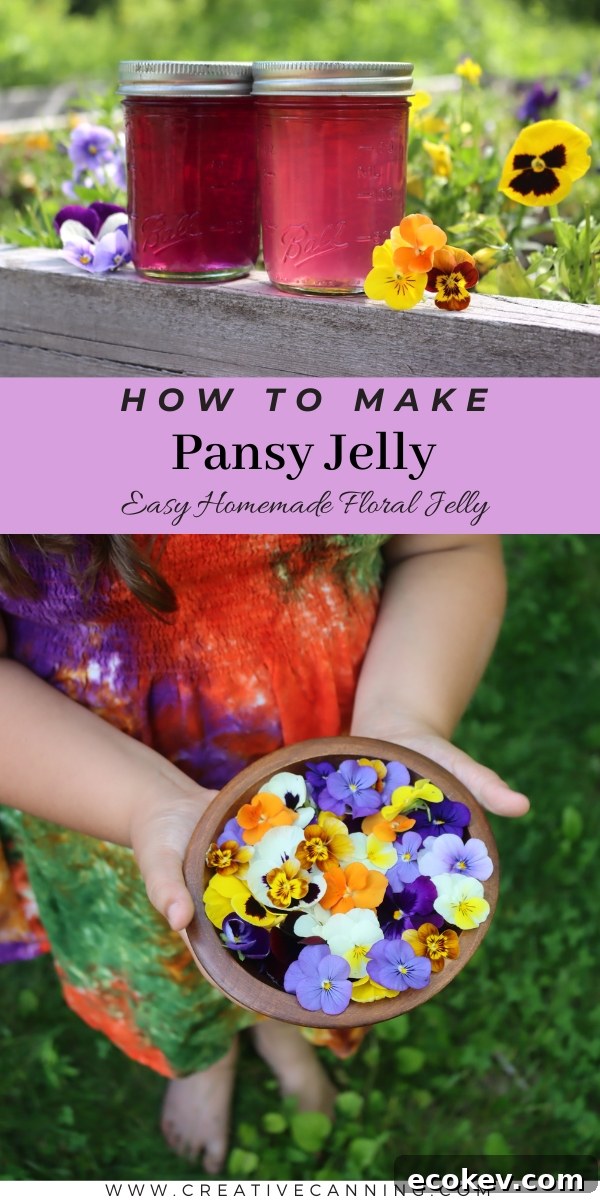
Pansies can also be used in many other preparations: toss petals into salads, candy them for desserts, or infuse syrups and butters for floral flavoring.
Notes:
- Use only flowers you are sure are edible and have not been sprayed with pesticides. Avoid roadside or contaminated sources.
- If you have allergies or medical conditions, test a small amount before making large batches. Some flowers have medicinal properties that could interact with medications or conditions.
- Sugar quantity affects yield and texture. Regular pectin typically requires a 1:1 liquid-to-sugar ratio; low-sugar pectin allows reduced sugar. Follow your pectin brand instructions for best results.